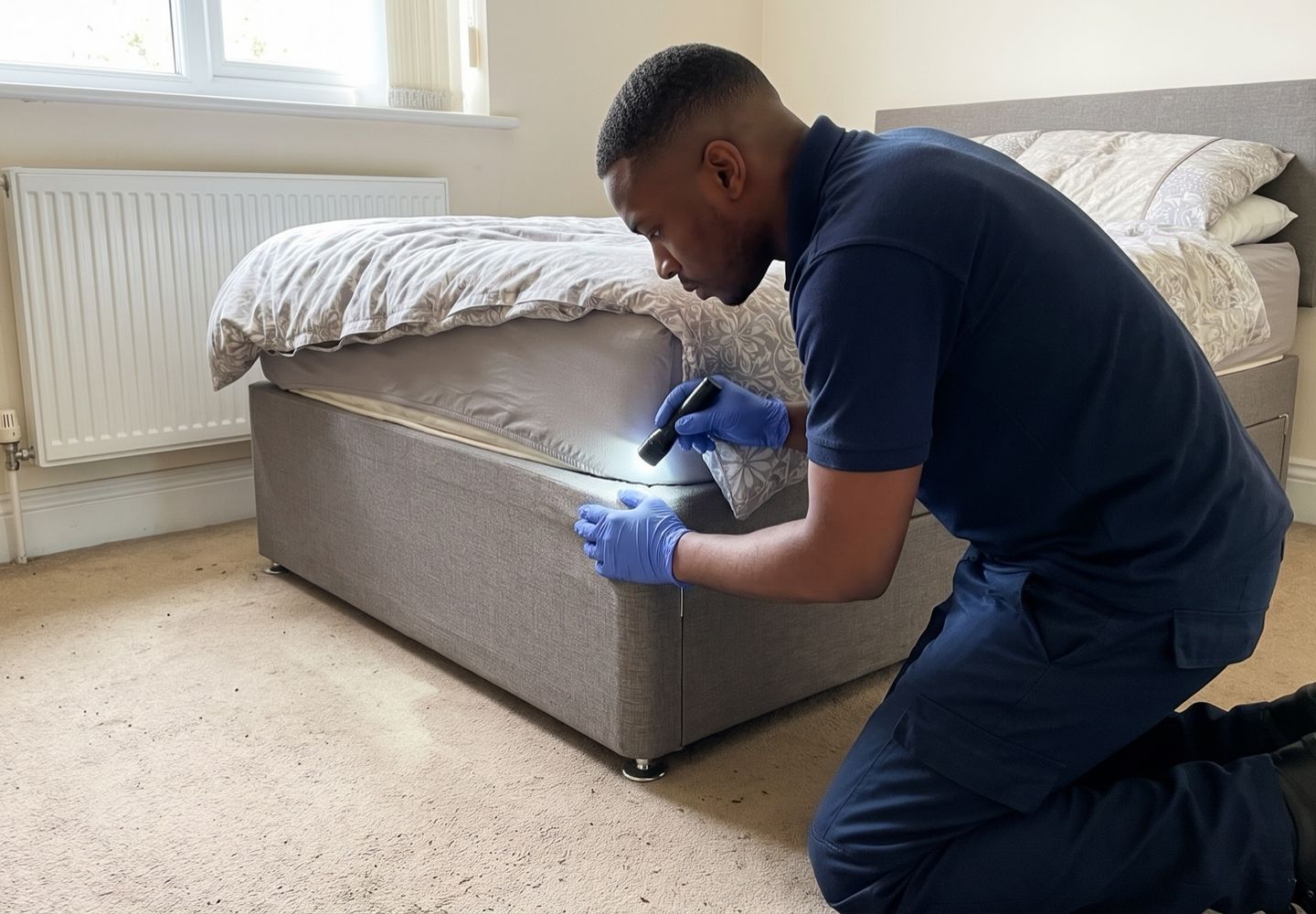
Manchester Pest Solutions clears bed bugs from Fallowfield shared houses, flats and family homes across M14. We inspect every bedroom and sofa, treat seams and crevices, then return two to three weeks later for bugs that hatch afterwards, working with tenants and landlords. Call or message us and we'll offer the earliest slot we have, often the same day.
Why bed bugs travel so easily around Fallowfield
Bed bugs don’t appear out of nowhere; they’re carried in, and Fallowfield gives them plenty of lifts. More than half the people living here are students, and over six thousand residents are in their twenties, an age when people move house often, sleep on friends’ floors and fill a car with bags at the end of term. Each of those moves is a chance for a bug tucked into a seam or a suitcase lining to end up in a new bedroom.
September is the obvious pinch point. Lots of households change over at the same time, rooms are handed from one tenant to the next, and mattresses, bed frames and sofas get passed around. Then there’s the street furniture. The Fallowfield Brow, the terraced streets across from the campus, has an ongoing flytipping problem. A mattress dumped on a pavement may be dumped precisely because it had bugs in it.
Not everyone here is a student, of course. Many people arrived to study and stayed, and bed bugs picked up in a shared house can follow someone into their first flat or a family home a few roads away.
What we usually find in a Fallowfield shared house
In a terrace let room by room, the first bedroom with bites is rarely the only one involved. Bugs gather in mattress seams, the joints of cheap flat-pack frames and behind headboards, but they also creep along skirting boards and across the landing into the next room. A lounge sofa that’s had a guest sleeping on it after a night out is another favourite spot.
So we look at the whole house on the first visit: every bedroom, the landing, the living room and anywhere someone has slept. That tells us whether it’s one room or several, and it gives your landlord or agent a clear written picture of what needs treating.
How the job runs with housemates and a landlord
The process mirrors the one on our main bed bug removal page. After the inspection, each person with a room to be treated gets a short prep list: wash bedding and nearby clothes on a hot cycle, seal them in clean bags and get everything off the floor around the bed. In a shared house it helps if everyone does this on the same day, so the bugs have nowhere untreated to retreat to.
On the first treatment we work along the seams, joints and cracks where the bugs shelter, steaming mattresses and upholstery that shouldn’t be sprayed. A second visit two to three weeks on catches the nymphs that have hatched since, before they’re old enough to breed. A heavier problem may need a final check. Until then, each housemate should carry on sleeping in their own bed rather than piling into whichever room seems clear.
Landlords and letting agents are welcome to book and coordinate the job directly, and we’re glad to arrange access with tenants. You’ll get a written record after every visit, which is handy if there’s any question later about who pays.
Families and pets on the same streets
Fallowfield has around two and a half thousand residents under 18, so plenty of the homes we treat have children in them. We ask about babies, pregnancy, asthma and pets before we start. Nobody, the dog or cat included, goes back into a treated room until the surfaces are dry, and a fish tank in the room needs a cover and its pump switching off. Cots and children’s mattresses get steam and a hot wash instead of spray whenever that’s practical.
Keeping them out after the next move
Most prevention in Fallowfield comes down to the moving-in and moving-out cycle:
- check the mattress seams and bed frame in your new room before you unpack, and photograph anything odd for your check-in report;
- leave furniture on the street where it is, however tempting;
- after a weekend away or a festival, open your bag in the bathroom or on a hard floor and run the clothes through a hot wash before they go near the bed;
- a zip-up bed bug cover on the mattress leaves them no seams to shelter in on the outside.
If you think you’ve brought bugs back from a shared house, put it in writing to your landlord or agent and get in touch early. If the bites are mostly round your ankles and the cat won’t stop scratching, fleas are the likelier culprit, and our flea removal service deals with those.
What we tend to find in Fallowfield
- Over half the people living locally are students, so the September changeover brings a burst of luggage, mattresses and second-hand furniture into shared terraces all at once.
- Over six thousand of the ward's residents are aged 20 to 29, an age group that moves house a lot, and every move gives bed bugs another chance to hitch a ride.
- The Fallowfield Brow's terraced streets across from the campus have an ongoing flytipping problem, and a sofa or mattress dumped outside is one of the ways bed bugs pass between houses.
- In a terrace let room by room, bugs can move along the landing and between bedrooms, so we check the neighbouring bedrooms as well as the bed in the room with the bites.
- Many residents arrived as students and stayed, which means bugs picked up in a shared house can follow someone into their first flat or family home a few streets away.
What happens when you call us
- 1
Tell us what you've found
Call or message us with what you've seen. A photo of spots on the mattress, or a bug stuck to clear tape, really helps, and we'll ask who sleeps where, including babies and pets.
- 2
A proper inspection
We check the mattress seams, bed frame, headboard, skirting, sofa and the rooms either side, so we know whether it's one bedroom or the whole house or flat.
- 3
Getting the room ready
You'll get a short prep list: hot-wash the bedding and clothes, bag them up clean, clear under the bed and keep belongings in the room rather than moving them elsewhere.
- 4
First treatment
Treatment goes into the seams, joints and crevices where bed bugs hide, with steam on mattresses and soft furnishings where a spray isn't right. You'll know which rooms to keep out of and for how long.
- 5
Second treatment
We come back about two to three weeks later to deal with the young bugs that hatched from eggs the first visit couldn't reach.
- 6
Final check and advice
If the problem was heavy or had spread, a final check shows whether anything's left. We leave a written note of what we found and did, plus tips to stop bed bugs coming home again.
Bed Bug Removal in Fallowfield: your questions
We moved into our Fallowfield house in September and the bites started straight away. Were the bugs already here?
They may well have been. Bed bugs can survive for months without a meal in a heated house, so a room left empty over the summer can still hold bugs waiting for the next person. Equally, someone in the new household may have brought them in luggage or second-hand furniture. Whichever it is, let your landlord or agent know in writing, with photos and dates, and avoid swapping rooms while you wait. Our inspection usually shows how far it has spread, which helps everyone agree on the next step.
Only one of my housemates is getting bitten. Do we really need the whole house looked at?
Looked at, yes; treated, only where we find signs. Some people barely react to bites, so the housemate with marks may not be the only one sharing a room with bugs. We check the bedrooms either side, the landing and any sofa someone has slept on, then treat the rooms that need it. Treating one room and ignoring the rest is how bed bugs end up moving between bedrooms for a whole term, so it pays to get the full picture on the first visit.
Someone has dumped a mattress and a sofa on our street. Could they have bed bugs?
They could, and there's no easy way to tell from the pavement. Furniture left outside is one of the commonest ways bed bugs travel from house to house, and the Fallowfield Brow's streets have an ongoing flytipping problem. Please don't take it in, however good it looks, and report the flytipping to the council. If something has already come indoors, keep it in one room, don't sleep on it and give us a call so we can check it.
We're all going home for Christmas. Will leaving the house empty starve the bed bugs?
Sadly not. Adult bed bugs can go a long time without feeding, so a few weeks away won't clear them, and the empty bedrooms simply wait for you to come back. It's better to plan treatment for when people are living in the house, because the bugs come out to feed and cross the treated surfaces. If you'll be away between our two visits, tell us when you're back and we'll fit the second treatment around it.
Should I sleep in a different room if I have bed bugs?
No, keep sleeping in your own bed if you can. Bed bugs find people by the warmth and carbon dioxide we give off, so if you move to the sofa or a housemate's room they tend to follow, and you end up with two infested rooms instead of one. Staying put also means the bugs have to cross the surfaces we've treated to reach you, which is a big part of how the treatment works. Wash your bedding hot, pull the bed a little away from the wall and keep the duvet off the floor.
Is it possible to get rid of bed bugs overnight?
Not usually, and we'd rather be straight with you about that. Treatment kills the bugs it reaches, but eggs tucked into crevices often survive and hatch over the following week or so, which is why we plan two visits about two to three weeks apart. Whole-room heat treatment can kill every stage in a single day in some homes, but it still needs a check afterwards. Realistically, expect it to take a few weeks, and doing the prep and aftercare makes a real difference.
What kills 100% of bed bugs?
No one method is certain to get every bug, but heat is the most reliable thing. A 60°C wash followed by at least 30 minutes in a hot tumble dryer kills every stage in bedding and clothes, and steam kills the bugs and eggs it touches on a mattress or sofa. The hard part is reaching every bug, because they squeeze into joints, seams and gaps about as thin as a bank card. No single spray does it all, partly because many bed bugs now cope with common insecticides. That's why we combine methods and come back to catch anything that hatched in between.
More help in Fallowfield
Last updated: