Manchester Pest Solutions gets rid of cockroaches in flats, houses, cafés and shops across Manchester and Greater Manchester. We find where they're hiding, treat with gel baits placed out of reach of children and pets, and come back to check they've gone. Call or message us and we'll offer the earliest slot we have, often the same day.
How do I know if I’ve got cockroaches?
Most people find out the same way. You switch the kitchen light on late at night and something small and brown shoots under the cooker. Cockroaches hide by day and feed in the dark, so one sighting nearly always means more tucked away behind the fridge, under the sink or in the boiler cupboard.
Other signs worth looking for:
- tiny dark droppings, like ground pepper or coffee grounds, along the backs of shelves and in cupboard hinges;
- small brown egg cases, shaped a bit like a purse and only a few millimetres long;
- pale, papery skins left behind as the young grow;
- a stale, musty smell once numbers build up;
- cockroaches out in daylight, which usually means their hiding places are full.
It helps to know which kind you have, because they live differently. German cockroaches are the small, light brown ones with two dark stripes behind the head. They like warmth and moisture, so they live inside and behind kitchen appliances, along hot pipes and in bathroom boxing, and they can climb glass. Oriental cockroaches are larger, glossy and nearly black. They prefer cooler, damper places such as drains, cellars and the voids under ground-floor rooms, and because they can’t climb smooth surfaces you’ll often find one stranded in the bath.
Why do cockroaches turn up in Manchester homes?
Not because your home is dirty. Cockroaches want three things, warmth, water and somewhere to hide, and plenty of Manchester homes offer all three.
More than a quarter of households in the city live in purpose-built flats, and blocks share heating pipes, waste stacks, risers and ceiling voids. German cockroaches use those like corridors. The converted mills and warehouses of Ancoats, the Northern Quarter and Castlefield can add plenty of boxed-in pipework for them to hide in. If your home is above or next to a café, restaurant or takeaway, cockroaches can move between the two through shared walls, drains and service gaps, however well both are kept.
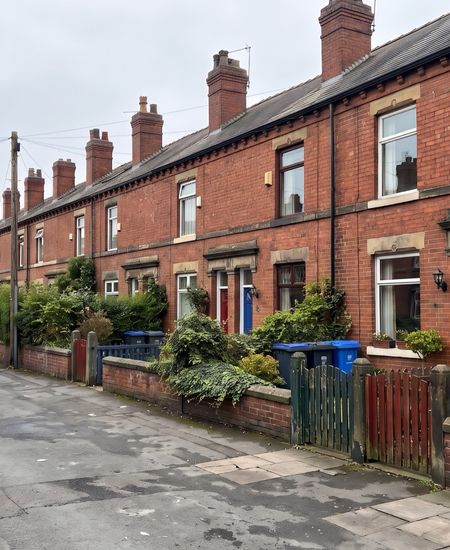
In the red-brick terraces of Longsight and the late-Victorian two-up two-downs of Levenshulme, with their rear kitchens and back entries, we’re more likely to meet the oriental cockroach. Old drains, cellars and suspended timber floors suit it, and it can come up through cracked drain connections, gaps around waste pipes and the voids under kitchen units.
Then there’s what we carry in ourselves. A second-hand fridge, a stack of delivery boxes or a suitcase from a shared house can bring in a German cockroach carrying an egg case, and with so many students moving in and out of shared houses in Fallowfield and Rusholme, it’s easy to inherit someone else’s problem. And in a heated flat they breed all year round, so there’s no quiet season to wait for.
What happens when you call us?
You tell us what you’ve seen and where, and a photo helps a great deal. We’ll offer the earliest slot we have, often the same day.
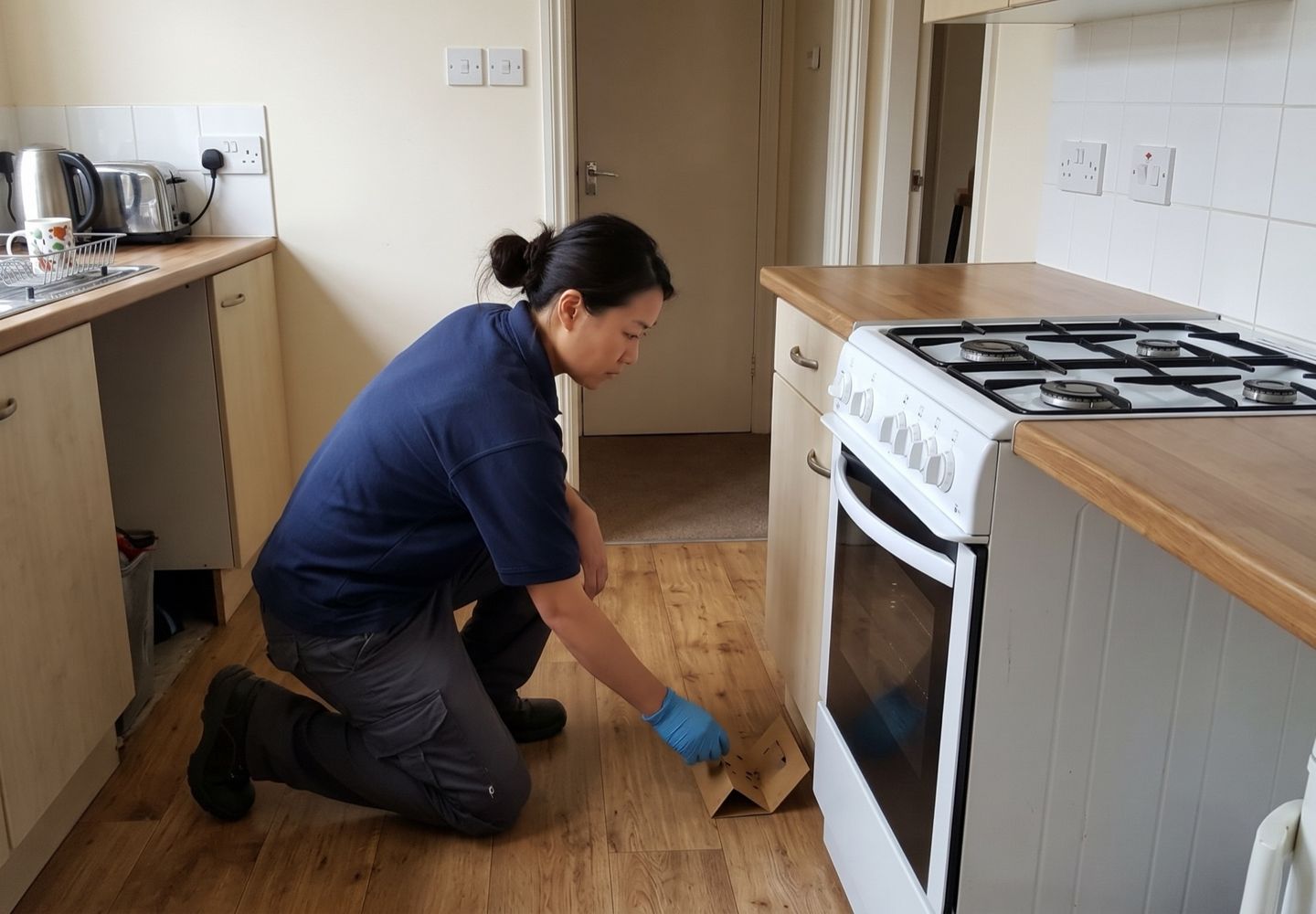
On the first visit we start by looking, not spraying. With a torch we check under the sink, behind kickboards, around the cooker, fridge and washing machine, inside the boiler cupboard and along pipe boxing. A few small insect monitors show how far the cockroaches have spread and give us something to compare against next time.
The main treatment is professional gel bait, put down in dots smaller than a grain of rice in the cracks, hinges and gaps where cockroaches shelter. They eat it, go back to where they hide, and others pick it up from them, so it reaches the ones you never see. Where it’s useful we add an insect growth regulator, which stops young cockroaches maturing and breeding. For oriental cockroaches, or deep voids behind panels and under floors, we may use a residual spray or dust in places nobody can touch. Before we leave we show you where everything is and what to leave alone.
Is it safe with children and pets in the house?
Gel bait is the reason cockroach treatment is far gentler than it used to be. It goes in tiny amounts inside hinges, cracks and the backs of appliances, not on worktops or floors you touch, and it’s placed well out of reach of crawling babies, curious toddlers and cats or dogs.
Before we start, we ask who lives in the home: babies, children, anyone pregnant, anyone with asthma, and pets including rabbits, birds, reptiles and fish. If a spray is needed, we keep it to the places that need it, tell you which rooms to keep everyone out of and for how long, and cover fish tanks and switch off their air pumps while we work. Getting rid of cockroaches also helps anyone with asthma, because their droppings and shed skins are a known trigger.
How many visits will it take?
Usually three, spread over six to eight weeks. The reason is egg cases. A German cockroach carries her egg case, usually holding around 30 eggs, until shortly before it hatches. Oriental cockroaches stick theirs down in sheltered corners, and in a cool house they can take two months or more to hatch. No treatment reliably gets inside an egg case, so the first visit deals with the cockroaches that are there and the follow-ups catch the next generation as it appears.
At each follow-up we check the monitors, top up eaten bait and look for hiding places we missed, signing off once the monitors stay clear. A problem shared across a block of flats won’t be finished until the neighbouring flats and communal areas are dealt with too.
How do I stop cockroaches coming back?
Most of it comes down to water, food and gaps. Fix dripping taps and leaks under the sink, because cockroaches can last a long time without food but not without water. Keep food in sealed containers, don’t leave pet food down overnight, and now and then clear the crumbs from behind the toaster and the sides of the cooker. A lidded kitchen bin, emptied often, makes a real difference.
Seal gaps around pipes where they pass through walls and floors, and behind kickboards. We’ll fill the small ones we find and tell you about anything bigger. In a terrace, a cracked drain or a loose waste pipe connection needs repairing by the owner, or it will keep letting oriental cockroaches in. Check second-hand appliances and furniture before they come inside, and flatten and recycle cardboard boxes rather than storing them.
When does DIY stop being enough?
Supermarket sprays and foggers kill the few cockroaches they hit and push the rest deeper into walls, or into the flat next door. German cockroaches have built up resistance to many common insecticides, and spray near any bait puts them off eating it. Shop-bought bait stations can sort out a couple of stray sightings if they’re placed close to where the cockroaches hide.
It’s time to call us if you’re seeing cockroaches in daylight, if sightings carry on for more than a couple of weeks, if you live in a flat, if someone at home has asthma, or if you prepare food for customers. One word on sticky traps: since April 2024 it has been an offence in England to use a glue trap to catch rats or mice without a licence. If you’ve seen mice as well as cockroaches, keep sticky boards off the floor so a mouse can’t get stuck on one. Leave the monitoring to us; we place our insect monitors with that in mind.
Is it my landlord’s job or mine?
If you rent, it depends on why the cockroaches are there. In most tenancies in England, your landlord must keep the home fit to live in and keep the structure, drains and pipework in repair, and pests are one of the hazards councils assess when they inspect a rented home. So where cockroaches come through a broken drain or a gap in the structure, were there when you moved in, or are spreading through a whole block, it’s usually the landlord’s or the managing agent’s to sort out. Where an infestation comes down to how the home is being used, your tenancy agreement may put it on you.
Either way, tell your landlord in writing straight away and keep photos; if nothing happens, you can ask the council’s housing team to look into it. Check Manchester City Council’s website for current pest control services and charges. Landlords and agents are welcome to book us direct: we’ll arrange access with tenants and leave a written note of what we used and where.
Small shops, cafés and takeaways have legal duties under food hygiene law to control pests, so a cockroach problem there needs dealing with quickly and properly recorded. Our commercial pest control page covers that side of things.
What happens when you call us
- 1
Tell us what you've seen
Ring or message us with what you've spotted and where. A photo of one cockroach, even a squashed one, usually tells us which kind it is and how to plan the visit.
- 2
A proper look round
With a torch we check under the sink, behind kickboards and appliances, in the boiler cupboard and along pipe boxing, and set small insect monitors to see how far it has spread.
- 3
Targeted treatment
Tiny dots of professional gel bait go into cracks, hinges and gaps where cockroaches shelter. Where it's needed, we add a growth regulator, or a spray or dust in voids nobody can reach.
- 4
Plain advice for you
We show you where everything is, what to leave alone and what helps: no shop sprays, food sealed away, drips fixed and the gel spots left where they are.
- 5
Follow-up visits
We come back two to three weeks later to check the monitors, top up bait that has been eaten and catch the young cockroaches hatching from egg cases.
- 6
Proofing and sign-off
We seal the small gaps we find around pipes and units, flag bigger repairs for you or your landlord, and sign off once the monitors stay clear.
How many visits? Usually three visits over six to eight weeks: the first treatment, then follow-ups two to three weeks apart to catch cockroaches hatching from egg cases. Oriental cockroaches, heavy infestations and problems shared across a block of flats can take longer.
Cockroach Removal: questions people ask us
Does having cockroaches mean my home is dirty?
No, and please don't let embarrassment stop you ringing. Cockroaches need warmth, water and somewhere to hide, and a spotless kitchen in a block of flats can still get them from a neighbour's flat or a shared riser. They also arrive in second-hand appliances, furniture and cardboard boxes. Crumbs and grease make an infestation easier to sustain, so we'll give you some kitchen advice, but we're not there to judge. Plenty of perfectly clean homes get them.
How do I tell German cockroaches from oriental cockroaches?
Size and colour are the quickest clues. German cockroaches are small, around 11 to 16 mm, light brown with two dark stripes just behind the head, and they can run up glass and glazed tiles. Oriental cockroaches are bigger, roughly 20 to 25 mm, shiny dark brown to black, slower, and they cannot climb smooth surfaces, so you often find them stuck in a bath or sink. German ones live around kitchen appliances and pipework; oriental ones prefer drains, cellars and ground-floor voids.
Are the cockroaches in my flat coming from next door?
Quite possibly. Flats share heating pipes, waste stacks, service risers and ceiling voids, and cockroaches travel along them without ever using a door. If you're seeing them mostly around pipework, a neighbour's flat or a communal bin store may be the source. Treating your flat still helps, but if the problem is building-wide it will keep coming back until the neighbouring flats and communal areas are treated too, so it's worth telling your landlord or managing agent early.
What do I need to do before you arrive?
Stop using shop-bought sprays and powders, ideally a few days beforehand, because they make cockroaches avoid the bait we use. Clear the cupboard under the sink and any cupboards where you've seen them, so we can get a torch into the corners. Put food away in sealed containers. Let us know about pets, fish tanks, anyone pregnant or anyone with asthma or allergies, so we can plan the treatment around them. You don't need to empty the whole kitchen.
Why am I seeing more cockroaches after the treatment?
For the first week or two that's normal and usually a good sign. The bait makes cockroaches unsteady, so they wander out into the open, sometimes in daylight, before they die. Later, young ones hatch from egg cases that were protected during the first visit, which is exactly why we come back. Sweep up any dead ones but leave the gel spots alone. If you're still seeing plenty of live adults after two or three weeks, ring us and we'll look at bringing the next visit forward.
Can I clean my kitchen after the treatment?
Yes. Wipe worktops, hobs and floors as normal; keeping crumbs and grease down actually helps, because the bait has less competition. What you shouldn't do is wipe away the small gel spots or spray cleaner and bleach into the cracks and hinges where we've treated. If a residual spray was used along skirting boards or floor edges, we'll tell you how long to leave those areas before mopping. If you're not sure about a particular spot, take a photo and ask us.
Do cockroaches bite or spread disease?
They very rarely bite people. The real problem is contamination: cockroaches walk through drains and waste, then over worktops, plates and food, and they can carry bacteria such as salmonella on their bodies. Their droppings and shed skins also contain allergens that can trigger asthma, which matters most for children and anyone who already has breathing problems. That's why we'd always say deal with cockroaches promptly rather than wait and see, especially in a kitchen where food is prepared.
Will Manchester City Council deal with cockroaches?
Manchester City Council runs its own pest service for homes inside the city boundary, and cockroaches are on its list. Check your council's website for current pest control services and charges. Housing association tenants should report it to their landlord first. The other Greater Manchester councils set their own rules on what they treat and charge, so check your borough's website for the current position.
I run a small café. Can you help?
Yes. Small shops, cafés and takeaways get the same friendly service as homes, with visits arranged around your opening hours. Food businesses are legally required to have adequate pest control, and environmental health officers can take action, including closing premises, where an infestation puts customers at risk. We'll treat, help you put proofing and housekeeping right, and give you a written record of each visit for your food safety paperwork. Our commercial pest control page explains ongoing cover in more detail.
Cockroaches near you
- Rusholme & Moss Side
- Longsight
- Manchester City Centre
- Chorlton
- Didsbury
- Fallowfield
- Levenshulme
- Salford
- Stockport
- Bury
- Cheadle & Cheadle Hulme
- Eccles & Swinton
- The Heatons
- Prestwich & Whitefield
- Sale
- Stretford
- Urmston
- Withington
- Wythenshawe & Northenden
- Ashton-under-Lyne
- Bramhall & Hazel Grove
- North Manchester (Blackley, Moston & Harpurhey)
Last updated: