Manchester Pest Solutions helps households all over Stockport, including Edgeley, Reddish and Cheadle Hulme, with mice, rats, squirrels, wasps and cockroaches. We find out how pests are getting in, use methods chosen to be safe around children and pets, and seal the gaps afterwards. Call or message us to book and we'll offer the earliest slot we have.
Terraces, villas and a mill village
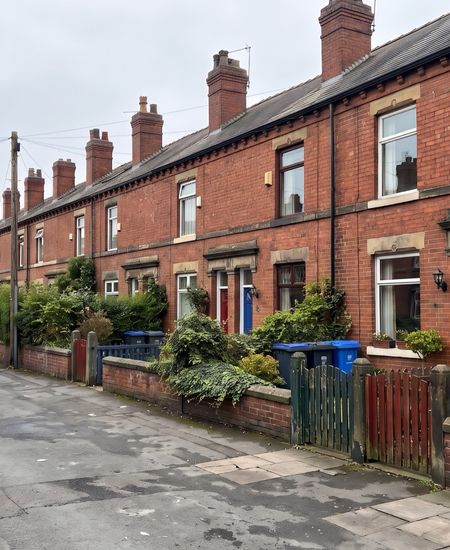
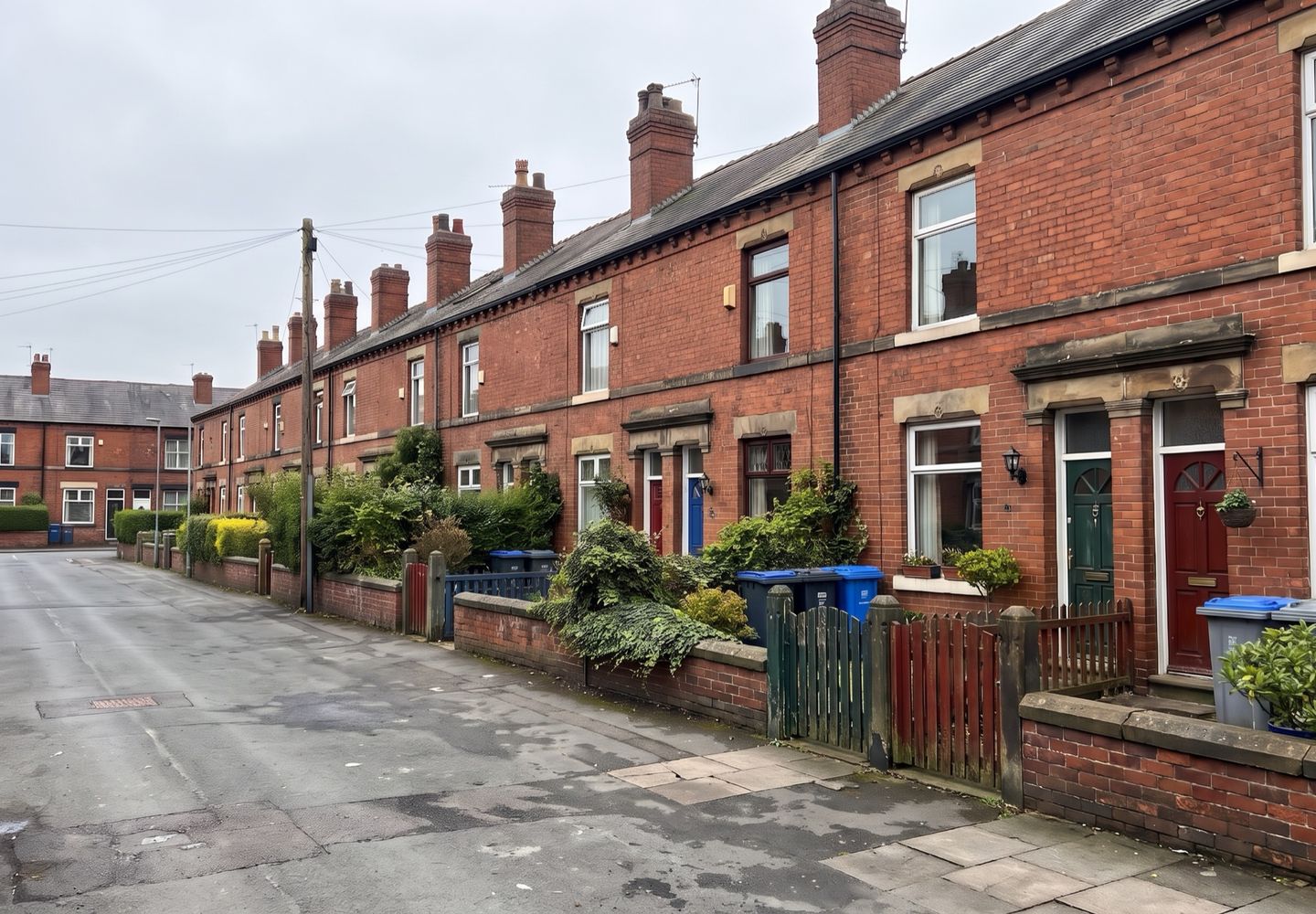
Edgeley is mostly Victorian terraced housing, set out in rows around Alexandra Park. Terraces of that age share party walls, roof spaces and often a continuous void beneath suspended timber floors, so a mouse that gets in at one end of a row can turn up several doors along a few weeks later. When we’re called to an Edgeley terrace, we ask whether the neighbours have noticed anything too, because clearing one house and leaving the rest of the row rarely holds.
Heaton Moor tells a different story. Most of its streets went up between 1852 and 1892, tree-lined and spacious, with infilling carrying on into the Edwardian years, and Heaton Moor Road itself is lined with big houses in generous plots. More house means more roof, more loft and more places where later work has left a gap: a boiler flue, a replacement soil pipe, an extension tied into old brick. Mature trees beside the roofline give squirrels a way up. With squirrel removal in a house like this, the job usually comes down to finding the hole at the eaves and closing it once they’ve left.
Reddish has its own slice of history in the model village built for workers at Houldsworth Mill, designed mostly by Alfred Waterhouse alongside St Elisabeth’s Church. Homes of that age tend to share the weak points of Edgeley’s terraces: tired airbricks, old pointing and generations of pipes pushed through the brickwork.
Estates, tower blocks and new apartments
Brinnington was farmland until the council built homes there in the 1950s and 1960s, and it’s still mostly council-owned, with high-rise flats among the houses. Regeneration has added 53 shared-ownership homes where the Top Shops used to be. Blocks of flats bring their own problems. Pipework and service ducts run through every floor, shared bin areas feed the whole building, and pests that settle in one flat, cockroaches and mice especially, can reach the next without ever going outside.
Town-centre living is newer. Stockport Interchange, which opened in March 2024 where the bus station used to stand, between Wellington Road and the viaduct, includes an apartment block alongside the bus station and the Viaduct Park rooftop. New buildings start out tight, but groundworks churn up the soil, and rats and mice that lived quietly under an old site go looking for the nearest warm building.
Rivers under the shops, canals to the east
Stockport is where the Goyt and the Tame meet to become the Mersey. Through the middle of town the river runs in a culvert, and Merseyway, the main shopping street, sits on top of it. Add the Ashton Canal’s Stockport branch, which opened in 1797 and is now partly filled in, the mill tunnels dug under the town to bring water from the Goyt, and the wartime air-raid shelters, and the centre has more hidden space underground than most towns. Brown rats swim well and are at home in drains and culverts, so when rats appear in a house near the centre, the drains are among the first things our rat control visits look at.
Out east, the Lower Peak Forest Canal crosses the Goyt on Marple Aqueduct and climbs a flight of 16 locks through Marple. Towpaths and canal-side gardens offer rats water, cover and the odd dropped sandwich.
Floods move rats too. The council has published investigation reports on the flooding of December 2024 to January 2025, covering spots such as Gatley Brook and Offerton Green, with earlier reports on 2016 and 2019. When water fills burrows along a brook, rats head for higher, drier ground, and that can mean the shed, the decking or the void under a kitchen floor.
Green space right on the doorstep
Green space makes up around 45% of the borough, with 14 local nature reserves. Reddish Vale Country Park, with its ponds and brick viaducts, sits just west of Brinnington, and Woodbank Park lies in Offerton. All that green brings wildlife close to the house: mice in the hedges looking for a warmer spot as autumn sets in, squirrels in the trees, and wasps building in sheds and roof spaces through the summer.
Safe for children, pets and hedgehogs
Stockport Council’s rat advice explains that rodenticide use outside is restricted to protect wildlife. With so many gardens running down to parks and reserves, that matters to us as well. In family homes we start with traps inside covered or locked boxes, use bait only where it’s really needed and only inside tamper-resistant boxes fixed in place, and never leave anything loose for a toddler, a dog or a hedgehog to find. Before choosing a method we’ll ask about everyone at home, pets too, and we’ll walk you round every box before we go.
What do the bin changes mean for pests?
Two council changes are worth knowing about. Blue-bin collections go fortnightly from December, and since 1 April 2026 you need a paid permit to put garden waste in the green bin.
A longer gap between collections isn’t a problem in itself. Overfull bins with lids that won’t shut, and bags stacked alongside, are. Rinse food packaging before it goes in, squash things down so the lid closes, and keep anything with food on it indoors until collection day. If you decide against the garden-waste permit, think about where the clippings end up. A loose heap by the fence or behind the shed makes a dry, sheltered nest site, while a closed compost bin on a mesh base doesn’t.
Can I get the council to deal with it?
Many councils run a pest control service for residents, but what is covered, who can book and the charges all vary and can change, so check the council’s own pest control pages before you book. If you rent, report the problem to your landlord first. If you would rather book a private firm, call or message us and we’ll offer the earliest slot we have.
Is it my landlord’s job in a Stockport let?
Private renting has grown here: 14.4% of households rented from a private landlord in 2021, up from 11.4% ten years earlier, and another 13.3% lived in social housing. If you rent, tell your landlord or letting agent about pests in writing as soon as you can. Gaps in the structure, broken airbricks and damaged drains are normally the landlord’s to put right, while keeping food sealed and bins under control falls to whoever lives there. We can send our visit notes to both of you, so nobody is arguing over what was found.
Getting to you across the borough
Every SK district in the borough is on our patch. Our pages on Cheadle and the Heatons go into more detail on those areas, and just over the boundary into Manchester, our Levenshulme page covers the terraces to the north-west. We won’t promise a time we can’t keep, but we’ll always offer the earliest slot we have. Traders in the Market Hall and independent cafés near Merseyway get the same friendly service, and our commercial pest control page explains how that works.
Common pests in Stockport homes
Mice
Victorian terraces such as the rows around Alexandra Park in Edgeley share party walls and underfloor voids, so mice coming in for the winter can work their way along a whole row rather than stopping at one house.
Rats
For rat control here we survey first, trace how pests are getting in and seal those routes as well as treating, so the problem does not simply come back.
Squirrels
Tree-lined streets, large gardens and 14 local nature reserves give grey squirrels an easy route onto roofs, and the lofts of big Victorian houses in the Heatons make warm, quiet places to nest.
Wasps & Hornets
For wasp nest removal here we survey first, trace how pests are getting in and seal those routes as well as treating, so the problem does not simply come back.
Cockroaches
In blocks of flats such as Brinnington's high-rise towers, cockroaches can move between homes along shared pipe runs and service ducts, so the best results come from treating affected flats together.
We also deal with:
Can I get Stockport Metropolitan Borough to deal with it?
Check the Stockport Council website for current pest control services, who can book and what it charges, because these change. If you rent, ask your landlord who is responsible for treatment.
Check the council's pest control page (we last checked it on 2026-10-24).
Why Stockport gets the pests it does
- Edgeley is made up largely of Victorian terraced streets around Alexandra Park, and had 14,182 residents at the 2021 count. [Wikipedia]
- Heaton Moor's tree-lined streets were mostly built up between 1852 and 1892, with infilling into the Edwardian years; Heaton Moor Road is lined with big houses set in generous plots, and homes now stand where Stockport College's Buckingham Road campus used to be. [Wikipedia]
- Brinnington was farmland until local-authority housebuilding in the 1950s and 1960s, and most of its homes are still council-owned, high-rise flats among them. [Wikipedia]
- Private landlords housed 14.4% of Stockport households at the 2021 Census, against 11.4% in 2011; 71.1% of households were owner-occupiers and 13.3% were in social rented homes. [Office for National Statistics]
- Blue-bin collections in Stockport are moving to fortnightly from December, and since 1 April 2026 households have needed a paid permit to put garden waste in the green bin. [Stockport Council]
- The Goyt and the Tame meet at Stockport to become the Mersey, which runs in a culvert beneath Merseyway, the town's main shopping street. [Wikipedia]
- On the borough's eastern side, the Lower Peak Forest Canal is carried over the Goyt by Marple Aqueduct, then rises through Marple on a 16-lock flight to its junction with the Macclesfield Canal. [Wikipedia]
- There are 14 local nature reserves in the borough, Reddish Vale Country Park, Woodbank Park and Etherow Country Park among them. [Wikipedia]
- Stockport Council has published flood investigation reports on the floods of December 2024 to January 2025, with sections on places including Gatley Brook, Offerton Green and the River Mersey. [Stockport Council]
Pest control in Stockport: your questions
Does Stockport Council deal with pests, and is it free?
Many councils run a pest control service for residents, but what is covered, who can book and the charges all vary and can change, so check the council's own pest control pages before you book. If you rent, report the problem to your landlord first. If you would rather book a private firm, call or message us and we'll offer the earliest slot we have.
Do you cover the whole borough, including Cheadle Hulme, Marple and Reddish?
Yes. We work across Stockport's SK1 to SK8 postcode districts. That takes in the town centre, Edgeley and the Heatons in the middle of the borough, Marple and Romiley out to the east, Bramhall and Hazel Grove to the south, and Cheadle and Cheadle Hulme to the south-west. SK12 addresses such as Poynton and Disley carry a Stockport postmark but fall under Cheshire East Council, so the council details on this page don't apply there. Ring us anyway and we'll tell you what we can do.
I rent privately in Stockport. Is pest control my landlord's responsibility?
Often, at least in part. Private renting has grown in Stockport, with more than one in seven households renting from a private landlord at the last census. In England the landlord is normally responsible for repairs to the structure and outside of the home, drains included, so mice or rats getting in through holes or broken pipework usually come back to them. Your side of it is day-to-day housekeeping and telling them early. Put it in writing, with photos. We're happy to send our findings to your landlord or letting agent so everyone works from the same report.
Can you get rid of squirrels in the loft of an older Heaton Moor house?
Yes. Tall trees and large gardens around Heaton Moor's Victorian houses give grey squirrels an easy run onto roofs, and a loft with a gap at the eaves or beside a soil pipe is warm, dry and quiet. We find the entry points, deal with the squirrels humanely and proof the gaps once they've gone. Grey squirrels are an invasive non-native species, so catching one and letting it go somewhere else is against the law. Chewed wiring is the real worry, so it's not one to leave.
The council won't treat bees. What should I do about a nest?
Council services and charges change, so check the council's own website for the current position, and if you rent, ask your landlord first.
Is treatment safe if my garden backs onto a park or nature reserve?
Yes, and it shapes how we work. Stockport has 14 local nature reserves and plenty of homes back onto parkland, so hedgehogs, birds and pets share the garden with any rats. The council's own guidance says rat poison use outdoors is limited for wildlife's sake. Outside, we rely mainly on traps inside locked boxes and on proofing, and any bait we do use stays locked away where children, dogs and wildlife can't reach it. Every box gets pointed out to you before we leave, and none of it stays once the job's finished.
We've got cockroaches in a high-rise flat. Can you treat just our flat?
We can, but in a block it's rarely the whole answer. Cockroaches hide in warm, dark spaces behind kitchen units, boilers and fridges, and travel between flats along shared pipework and service ducts, so neighbours often have them too. In Stockport's high-rise blocks, Brinnington's council-owned towers included, the best results come when the landlord arranges treatment for affected flats together. Check Stockport Council's website for current pest control services and charges. Otherwise we can treat your flat and talk to your landlord or managing agent about the rest.
Neighbourhoods in Stockport
Sources (10)
Last updated: