Manchester Pest Solutions treats silverfish in homes, flats and small shops across Manchester and Greater Manchester. We work out which kind you've got, find the damp or hiding places behind them, and use baits kept out of reach of children and pets. Call or message us and we'll offer the earliest slot we have, often the same day.
How do I know it’s silverfish?
Most people first spot them late at night: you switch the bathroom light on and something small and silvery wriggles off, a bit like a fish, under the skirting board or behind the bath panel. They avoid light, so you rarely see them in the day.
What to look for:
- Common silverfish: about a centimetre long, teardrop-shaped, shiny silver-grey, with three bristly tails. They stay where it’s damp, so bathrooms, kitchens, under sinks and in cellars.
- Grey silverfish, sometimes called long-tailed silverfish: bigger, duller and greyer, with long tails and antennae. They cope with drier air, so they also turn up in bedrooms, hallways and living rooms.
- Firebrats: a similar shape but mottled brown, and fond of heat, so boiler cupboards and the space around ovens.
- The marks they leave: tiny shed skins, specks of droppings like ground pepper, yellowish stains on paper, and ragged little holes or scraped patches on wallpaper, book covers, cardboard and old photos.
It’s worth ruling out lookalikes. Booklice are much smaller and pale, and they follow damp too. Springtails jump. If what you’re seeing is brown with a flat, shiny back and no bristly tails, have a look at our cockroach removal page.
Why do Manchester homes get silverfish?
Silverfish follow moisture, and a lot of Manchester housing holds on to it. Victorian terraces, like the two-up two-downs built across Levenshulme in the 1880s and 1890s or the streets off Burton Road, mostly have solid brick walls rather than cavity walls, and cold walls collect condensation. Many have a bathroom that was added later at the back of the house, with a timber floor, a boxed-in bath and pipes running through the kind of voids silverfish love. Cellars, lean-to kitchens and leaky downpipes add to it.
Interwar semis, like the 1930s houses in Burnage, have their own weak spots. Airbricks can end up blocked by later paths, patios or extensions, and the airing cupboard around the hot water cylinder stays warm and close all year.
Flats bring a different problem. In converted houses, like the big Victorian homes in Chorlton that were split into flats and bedsits, a leak from the flat above can keep a ceiling void damp for months. City-centre flats, from new-build blocks to the old Northern Quarter warehouses that were turned into flats, are often sealed tight, so steam from showers and washing dried on radiators has nowhere to go unless the extractor fans and trickle vents are used.
Grey silverfish usually arrive another way: in cardboard. Delivery boxes, flat-pack furniture and storage boxes from a previous home can carry eggs and young ones in with them. Shared houses in student areas such as Fallowfield, where boxes come and go every summer, are a good example.
The season matters too. From October, windows stay shut, the heating goes on and condensation builds, which is often when people first notice them.
What happens when you call us about silverfish?
Tell us where and when you’re seeing them, with a photo next to a coin if you can, because the plan depends on the species. We’ll ask about children, pets and fish tanks, then offer the earliest slot we have, often the same day.
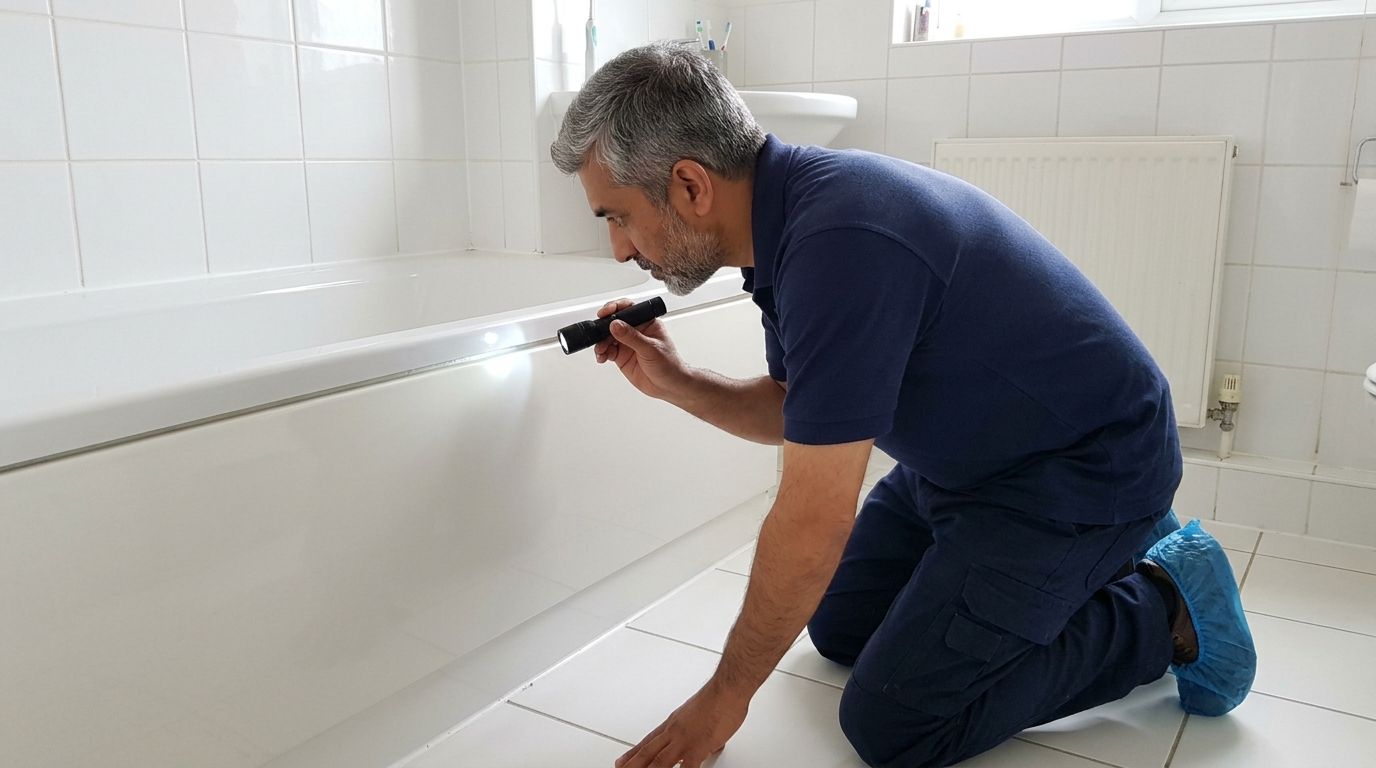
On the visit we look for where they’re hiding and what’s keeping that spot damp: behind bath panels where we can lift them, under the sink and kitchen plinths, along skirting boards and pipe runs, and in airing cupboards and loft boxes. We take moisture readings and point out anything feeding the problem, such as a failed bath seal, a broken extractor fan or a dripping overflow.
Treatment goes where silverfish live, not where you walk: gel bait in cracks and gaps, insecticidal dust in the voids behind bath panels and under units, and, where it suits the job, the gaps along skirting boards. We also leave small insect monitoring cards in out-of-the-way spots so we can see where they’re active and whether numbers drop. They aren’t glue traps for mice and rats, which the Glue Traps (Offences) Act 2022 made it an offence to use in England without a licence, and we place them where a mouse is unlikely to wander onto one.
Before we leave, we show you every treated spot and what to leave alone for a few weeks, such as the gap behind the bath panel.
Is silverfish treatment safe for children and pets?
Yes, when it’s done properly, starting with asking who lives there. Silverfish don’t bite, sting or spread disease, so there’s no reason to spray a whole room. Baits and dusts go into cracks and enclosed voids, out of reach of crawling babies, curious toddlers, cats and dogs. Nothing goes on worktops, toothbrushes, food cupboards, bedding or pet bowls. If we treat skirting gaps, we’ll ask you to keep children and pets out of the room until it’s dry. Fish are very sensitive to insecticides, so mention any tanks when you book and we’ll tell you what to cover and switch off.
How many visits will it take?
For common silverfish in a damp bathroom or kitchen, one treatment visit and a check-back a few weeks later is usually enough, as long as the damp is sorted at the same time. If it isn’t, they tend to come back.
Grey silverfish are slower work. They grow slowly, live for years and survive long spells without food, so one treatment rarely finishes them. They usually need a planned run of baiting visits over several months, with the monitors telling us how it’s going.
How do I stop silverfish coming back?
With common silverfish, drying the house out does more than any treatment. With grey silverfish, getting rid of cardboard matters most.
- Run the extractor fan during and after a shower, or open the window and keep the bathroom door shut.
- Wipe condensation off windows and tiles each morning from autumn onwards, and use a dehumidifier where washing dries indoors.
- Get bath and shower seals, under-sink leaks and dripping overflows fixed.
- Keep gutters, downpipes and airbricks clear on the outside of the house.
- Seal gaps along skirting boards and around pipes with decorator’s caulk.
- Swap cardboard boxes in the loft, cupboards and under the stairs for lidded plastic crates, and get delivery boxes out of the house quickly.
- Keep cereal, flour and pet food in sealed containers, and vacuum along skirting edges regularly.
When does DIY stop being enough?
A few common silverfish in a steamy bathroom can often be sorted by drying the room out and sealing the gaps. Give it a month. Call us if you’re still seeing them most nights after that, if they’re in bedrooms and living rooms in a home that isn’t damp (a strong sign of grey silverfish), if you’re finding damage to books, documents, photos or wallpaper, or if they’re turning up in more than one flat in the same building.
Is it my landlord’s job or mine?
It depends on what’s causing them. Silverfish are a nuisance rather than a hazard, but the damp behind them often isn’t. Under section 11 of the Landlord and Tenant Act 1985, landlords of most tenancies must keep the structure and exterior in repair, gutters and drains included, along with the installations for water and sanitation. So a leaking roof, a failed damp-proof course or a broken bath waste is normally theirs to fix.
The Homes (Fitness for Human Habitation) Act 2018 lets tenants take action if a home isn’t fit to live in, and freedom from damp and proper ventilation are part of that test. Councils can also assess damp and mould under the Housing Health and Safety Rating System. If you rent from a housing association or the council, Awaab’s Law now sets timescales for dealing with reported damp and mould.
Condensation is more of a shared job. You’re expected to use the fans and vents provided, but if a home can’t be kept dry with normal living because of poor ventilation, heating or insulation, the landlord may need to put it right. Who pays for the treatment depends on your tenancy and the cause, so tell your landlord in writing and keep photos. Landlords may find our written report useful to keep on file.
What if silverfish turn up in my café or shop?
Food hygiene law, including the Food Safety Act 1990 and the Food Safety and Hygiene (England) Regulations 2013, expects every food business to have proper procedures for keeping pests away from where food is stored and prepared. So silverfish in a dry store or behind a kitchen plinth need dealing with and writing down. We’ll work around your opening hours and leave a written report for your food safety records. If you’d like regular visits, our commercial pest control page explains how that works.
What happens when you call us
- 1
Tell us what you're seeing
Call or message us with where and when you're seeing them. A photo next to a coin helps us tell common silverfish from grey silverfish, firebrats or booklice. We'll ask about children, pets and fish tanks, then offer the earliest slot we have, often the same day.
- 2
Find the damp and the hiding places
We look behind bath panels, under sinks and kitchen plinths, along skirting boards and pipe runs, and in airing cupboards and loft boxes. We take moisture readings and point out leaks, failed seals or missing ventilation that keep the area damp.
- 3
Treat where they live
Gel bait goes into cracks and gaps, and insecticidal dust goes into the voids behind bath panels and under units, where it stays put. Where it suits the job, we treat gaps along skirting boards. Nothing goes on worktops, toiletries or food cupboards.
- 4
Set monitors
Small insect monitoring cards go in out-of-the-way spots so we can see where silverfish are active and whether numbers are dropping between visits.
- 5
Advice and a check-back
We show you every spot we've treated, explain what to leave alone and which moisture fixes matter most, then check back after a few weeks. Grey silverfish get a planned run of baiting visits instead.
How many visits? Common silverfish in a damp bathroom or kitchen are usually sorted with one treatment visit and a check-back a few weeks later, as long as the damp is dealt with too. Grey silverfish grow slowly and live for years, so they normally need a planned run of baiting visits over several months.
Silverfish Control: questions people ask us
Do silverfish mean my house has damp?
Often, but not always. Common silverfish need humid air, so a steady stream of them in the bathroom or kitchen usually points to a moisture problem: condensation on cold walls, a leaking bath seal, a blocked airbrick or an extractor fan that doesn't work. Grey silverfish are the exception. They cope with drier air and often turn up in newer, well-heated flats, usually brought in with cardboard boxes. If you're seeing large, grey, long-tailed ones in the bedroom or living room, damp may not be the cause, and the treatment needs to be different.
Are silverfish dangerous to my children or pets?
No. Silverfish don't bite or sting, and they aren't known to spread disease. A cat or dog that eats one won't come to any harm. The real cost is damage to paper, books, photos, wallpaper and some fabrics, plus the unpleasant surprise of seeing them scuttle off when you switch the light on. Where care is needed is in the treatment itself, which is why we ask about children, pets and fish tanks first and keep baits and dusts in cracks and voids they can't get to.
Are silverfish coming up through my plughole?
Almost certainly not. Silverfish don't live in drains. They go looking for moisture at night, wander into the bath or sink and then can't climb back up the smooth sides, so you find them stuck there in the morning. Their real hiding place is usually close by: behind the bath panel, under loose flooring, in the gap behind the sink pedestal or inside a boxed-in pipe run. That's where we look first, and where the treatment goes.
What's the difference between common silverfish and grey silverfish?
Common silverfish are about a centimetre long, shiny and silvery, and stay close to damp in bathrooms, kitchens and cellars. Grey silverfish, also called long-tailed silverfish, are bigger and duller, with very long tails and antennae. They handle drier air, so they spread through the whole home, bedrooms and bookshelves included, and they've become far more common in Britain in recent years. They grow slowly, live for several years and can go a long time without food, which is why they need a longer baiting plan rather than a single visit.
Why have I got silverfish in my new-build flat?
There are usually two reasons. New plaster, concrete and screed hold a lot of water and can take many months to dry out, and modern flats are sealed tight, so steam from showers, cooking and drying washing has nowhere to go if the extractor fans and trickle vents aren't used. Then there's cardboard. Grey silverfish travel in delivery boxes, flat-pack packaging and storage boxes from a previous home. If you've just moved into a city-centre apartment and you're seeing them in every room, mention it when you book.
Will a dehumidifier get rid of silverfish on its own?
It helps a lot with common silverfish, because they need humid air to survive and breed. Drying out a bathroom or cellar, fixing leaks and running the extractor fan can be enough to make a small number die off or move on over a few weeks. It does far less against grey silverfish, which cope with drier rooms, and it won't reach the ones already living in wall voids or under the bath. Treat a dehumidifier as part of the fix, not the whole of it.
Can silverfish damage my books, photos and clothes?
Yes, over time. Silverfish feed on starch and the glues in paper, so they graze on book bindings, wallpaper paste, cardboard, old letters and photographs, leaving ragged edges, small holes and yellowish marks. They'll also nibble cotton, linen and rayon, especially items put away dirty or starched. Grey silverfish are a particular worry if you keep books, records or family papers in a loft or spare room. If you're finding holes in wool or carpets instead, moths or carpet beetles are more likely, and we can check for those on the same visit.
I rent my home. Is it my landlord's job to sort out silverfish?
It depends on the cause. If the damp behind them comes from disrepair, such as a leaking roof, a broken gutter, a failed damp-proof course or a faulty bath or shower, that's normally the landlord's to fix under the Landlord and Tenant Act 1985, and serious damp can also make a home unfit under the Homes (Fitness for Human Habitation) Act 2018. Condensation is a shared job: use the fans and vents provided, but if the home stays damp with normal use, your landlord may still need to act. Who pays for treatment depends on your tenancy, so report it in writing and keep photos.
Will the council deal with silverfish for me?
It's worth checking, but don't count on it. Check Manchester City Council's website for current pest control services and charges. Check your council's website for current pest control services and charges. If the real problem is damp in a privately rented home, the council's private housing team may be the better first call.
Silverfish near you
- Levenshulme
- Chorlton
- Fallowfield
- Manchester City Centre
- Didsbury
- Salford
- Stockport
- Bury
- Cheadle & Cheadle Hulme
- Eccles & Swinton
- The Heatons
- Longsight
- Prestwich & Whitefield
- Sale
- Stretford
- Urmston
- Withington
- Wythenshawe & Northenden
- Ashton-under-Lyne
- Bramhall & Hazel Grove
- North Manchester (Blackley, Moston & Harpurhey)
- Rusholme & Moss Side
Last updated: