Manchester Pest Solutions visits homes all over Bury, Greater Manchester, including the mill terraces of Freetown and Pimhole, Radcliffe's semis and the Irwell-side streets of Ramsbottom. We treat rats, mice, wasps and squirrels in houses and flats, work around children and pets on every visit, and close up the way in afterwards. Phone or message us to book.
Which Bury is this?
This is Bury in Greater Manchester: the borough that stretches north from Prestwich and Whitefield, through the town centre and up the Irwell valley into the West Pennine Moors. Its postcodes begin BL0, BL8 and BL9 at the northern end and M25, M26 and M45 further south. Bury St Edmunds, in Suffolk, is somewhere else entirely.
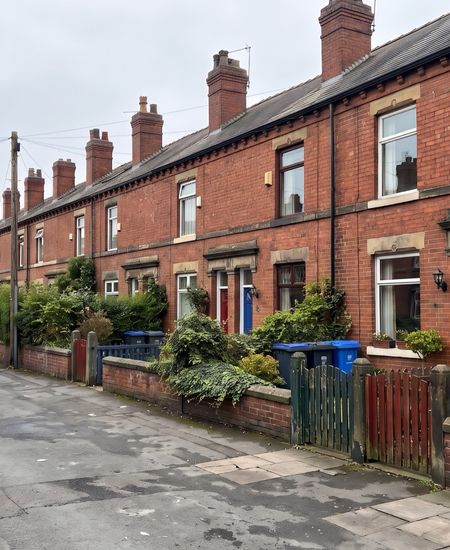
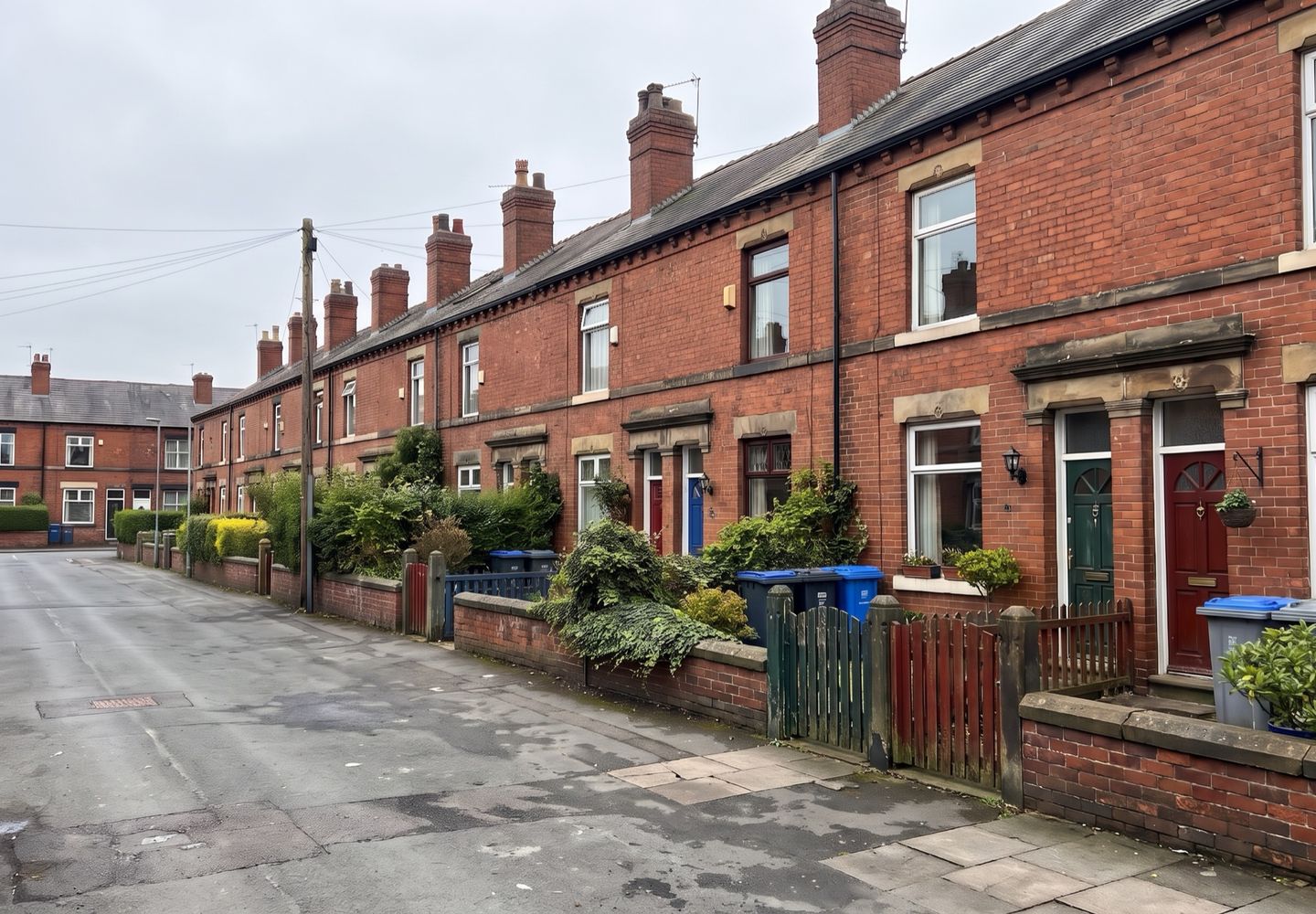
Mill terraces around the town centre
Bury grew up on cotton. By 1818 there were seven cotton mills here, and printing calico, making paper and light engineering kept plenty more people busy. One survivor from that era, Peel Mills on Castlecroft Road, is in use to this day. Mill workers needed homes close by, so by around 1800 the town centre was hemmed in by terraced rows, and farmland at Freetown, Fishpool and Pimhole had been built over with streets of terraces beside the mills.
Houses of that age have their own weak points. Floors are often suspended timber over a void, lofts aren’t always properly walled off from next door, and generations of new boilers, cables and plumbing have left small holes where pipes pass through brick. A mouse needs a gap little wider than a pencil, and once it’s under one floor it can work along the whole row. That’s why terraces and mice go together, and why our mice control visits spend as long sealing gaps as they do on the treatment itself.
Radcliffe: semis, terraces and old paper-mill ground
Radcliffe was a paper town; the East Lancashire Paper Mill opened on the banks of the Irwell in 1860. Its homes today are mostly semi-detached and terraced, and newer estates have been built on old industrial land, including the former Radcliffe Paper Mill Company site. The disused Manchester Bolton & Bury Canal still cuts through the town, and the river splits it in two.
A newer house isn’t automatically a pest-free one. Gaps behind kitchen units where pipes come in, unsealed meter boxes and open cavities at the eaves are everyday snagging faults. More change is planned: proposals for the area west of Elton Reservoir could bring up to 3,500 homes to the land between Radcliffe and Bury, and the Simister/Bowlee allocation would add 1,350 on the Bury side. Groundworks on that scale push rats and mice off land they’ve had to themselves, often into the nearest gardens.
Living beside the Irwell and the Roch
The Irwell cuts Bury in half as it flows south, leaving an east side and a west side, and the Roch feeds into it from the east by Blackford Bridge. Neither river had ever been recorded as high as it was on Boxing Day 2015; at Blackford Bridge the water topped the previous 64 years of readings by 1.1 metres. The Irwell spilled out at Summerseat and Ramsbottom upstream and at Radcliffe further down, and more homes flooded in South Bury and North Radcliffe than anywhere else in the borough.
Defences now line more than 2.5 kilometres of the river at Radcliffe and Redvales, a scheme the Environment Agency ran with the council to keep up to 870 properties dry. Those walls keep water out of homes; they don’t keep rats away. Brown rats dig into riverbanks, swim well and travel through drains and culverts, and when heavy rain floods their burrows they head for the nearest dry shelter: a shed, a compost bin, the space beneath a kitchen floor. On streets close to either river, our rat control visits start outside, at the drain covers, gullies and airbricks.
Ramsbottom and the edge of the moors
Ramsbottom sits in the Irwell valley with Bull Hill, Harcles Hill and Holcombe Moor rising to the west. Gardens that meet fields and open moorland see wood mice, the field mice most people picture, wandering into garages, sheds and back kitchens once the nights turn cold. Summer brings wasps, which like sheltered spots such as sheds, soffits and gaps in walls. Surface water flooded parts of the town in 2015 as well, so gullies and drains matter here too.
If a nest by the back door has made the garden off limits for the children, our wasp nest removal service treats it at the entrance so the wasps carry the insecticide inside.
Grey bins and the three-week gap
No English council had tried emptying grey bins only every third week until Bury voted for it in 2014. Rounds can change, so check the current calendar. Rats can smell food waste through a bag, and a bin so full that the lid won’t close does half their work for them. Above all, don’t leave extra bags on the floor beside the bin.
Squirrels in lofts near the parks
Grey squirrels become a loft problem wherever trees stand close to houses, and Bury has a lot of green space near its homes: Burrs Country Park, the Forest Park on the western side of Prestwich and the woodland of Prestwich Clough among it. Scratching at dawn and dusk, chewed loft insulation and shredded boxes are the usual signs. Our squirrel removal visits trap them and then proof the gap at the eaves so the next one can’t follow. Letting a trapped grey squirrel go is against the law, so release isn’t an option.
Children, pets and treatment at home
Tell us who’s in the house before we start: toddlers, a dog that digs, cats that hunt along the fence, hens or rabbits in the garden. Any bait goes inside a locked box that’s fixed down, never loose on a floor or pushed into a burrow, and where pets roam freely we rely more on traps and on closing gaps. You’ll see where everything is placed, and it all comes away when the job’s done.
Renting in Bury: whose job is it?
When mice or rats are using a gap in the fabric of the house, it’s normally the landlord who puts it right, because section 11 of the Landlord and Tenant Act 1985 makes the structure, exterior and drains their responsibility in most tenancies, and the property must be fit for human habitation. Your side of the bargain is reasonable cleanliness and telling the landlord quickly; do it by email or letter, with dates and photos attached. If a neglected yard next door is the source, the council has powers under the Prevention of Damage by Pests Act 1949 to require whoever owns or occupies it to clear it up.
Can I get Bury Council to deal with it?
Yes, as long as you’re willing to pay for it. The council has its own pest service, booked and paid for online, and nothing on its list comes free; a rat or mouse job is sold as three visits together. Households on Council Tax support get a lower rate for some treatments. The council won’t deal with bees, bats, foxes, moles or mink, so for a bumblebee nest our bees and bumblebees page is a better place to start.
Market stalls and corner shops
Homes come first for us, but food trading runs deep here. Bury’s market has run for nearly 600 years and is known for black pudding, and work on a new flexi hall and stall canopies began there in January 2025. Corner shops, cafés and small traders get the same plain-speaking service as households; our commercial pest control page covers what food businesses need.
How soon can you get to Bury?
We cover the whole borough. Prestwich and Whitefield have their own page, and we work just over the boundary in Salford and north Manchester as well. Describe what you’ve found when you ring or message, and we’ll offer the earliest slot we have, often the same day.
Common pests in Bury homes
Rats
Riverside streets in South Bury and Radcliffe, where the 2015 floods hit hardest, sit close to the banks, culverts and drains along the Irwell and the Roch that brown rats live in.
Mice
The old mill-workers' terraces of Pimhole, Fishpool and Freetown are joined wall to wall and often under the floor too, so mice that find a way into one house can travel the length of the row.
Wasps & Hornets
Radcliffe's semis and the valley-side gardens around Ramsbottom offer sheds, soffits and wall gaps where queens found nests each spring; come August, one by the back door can make the garden hard to use.
Squirrels
Big green spaces sit close to homes here, including Burrs Country Park, Prestwich Forest Park and the woodland of Prestwich Clough, and grey squirrels cross from the trees onto roofs and in under loose eaves.
Bees
Bury Council's pest service doesn't deal with bees, so households who find bumblebees in a compost heap or under the decking often don't know who to ask; our honest advice page explains when a nest can simply be left alone.
We also deal with:
Can I get Bury to deal with it?
A paid pest control service is run by the council for households and businesses, with no free treatments on its price list: residents book and pay online, and a rat or mouse job is priced as a set of three visits. People receiving Council Tax support can get some domestic treatments at a reduced rate, although single person benefit alone doesn't qualify. Jobs involving bees, bats, foxes, moles or mink aren't taken on.
Check the council's pest control page (we last checked it on 2026-10-24).
Why Bury gets the pests it does
- Terraced rows surrounded Bury town centre by about 1800, and Freetown, Fishpool and Pimhole went from fields to streets of terraces built next to the mills. [Wikipedia]
- Radcliffe's homes are mainly semi-detached and terraced, and newer estates have gone up on former industrial land, among them the old Radcliffe Paper Mill Company site. [Wikipedia]
- The railway reached Prestwich in 1881 and drew wealthy Manchester merchants to build villas there; the fields that were left were built on from the 1930s. [Wikipedia]
- Bury is built either side of the Irwell, which flows south through the town and separates its east and west halves, and the Roch feeds into it from the east close to Blackford Bridge. [Wikipedia]
- When Bury flooded on Boxing Day 2015, the Irwell broke out at Summerseat, Ramsbottom and Radcliffe, the worst-hit homes were in South Bury and North Radcliffe, culverts at Tottington and Black Lane couldn't cope, and the council counted 808 affected locations. [Bury Council]
- Through the Radcliffe and Redvales Flood Defence Scheme, the Environment Agency and Bury Council lined more than 2.5 km of the Irwell with defences meant to keep up to 870 properties safe from flooding. [Bury Council]
- Radcliffe is split north from south by the Irwell and crossed by the Manchester Bolton & Bury Canal, which opened fully in 1808 and is now disused. [Wikipedia]
- Councillors voted unanimously in July 2014 for Bury to become England's first council to empty grey bins of household rubbish just once every three weeks, starting that October. [letsrecycle.com]
- Proposals published in 2023 for the area west of Elton Reservoir would put as many as 3,500 homes on the land between Radcliffe and Bury, keeping the Elton and Withins reservoirs and leaving more than two-thirds of the site green. [Place North West]
- Under the Places for Everyone plan, the Simister/Bowlee allocation would bring 1,550 new homes, with 1,350 of them on the Bury side of the boundary. [Bury Council]
Pest control in Bury: your questions
Which parts of Bury do you cover?
The whole Metropolitan Borough of Bury in Greater Manchester, across the BL0, BL8, BL9, M25, M26 and M45 postcodes. That includes the town itself, with areas such as Walmersley, Brandlesholme, Unsworth and Elton, as well as Radcliffe, Tottington, and Ramsbottom with Summerseat and Holcombe. Prestwich and Whitefield have a page of their own. We're not the people to call for Bury St Edmunds in Suffolk, so if that's where you are, look for someone local to you there.
Is Bury Council's pest control free?
No. The council's service charges for every job, and a few are priced only by quotation. You book and pay online. Rodent work is sold as a package of three visits for rats or mice, wasp treatment is charged nest by nest, and the price for fleas or bed bugs depends on how many bedrooms the home has. Some domestic jobs cost less if you receive Council Tax support, though single person benefit doesn't count. Bees, bats, foxes, moles and mink aren't covered. Current charges are on the council's fees page, and a private visit from us is the other option.
Our street flooded in 2015. Does that make rats more likely now?
Not because of the flood itself, but homes near the Irwell and the Roch do live closer to rats than most. Brown rats burrow into riverbanks and use drains and culverts to get about, and heavy rain still pushes them towards dry ground. Flooding and the repairs that followed can also leave quiet weak spots: a cracked drain, an airbrick knocked loose, or a gap round a pipe that was replaced. For homes on the South Bury or Radcliffe streets that flooded, a drain and airbrick check is a sensible first step.
How do I stop our grey bin attracting rats between collections?
Back in 2014 Bury led England in switching grey bins to a three-weekly round, so check the council's current calendar and plan for the gap. Wrap food scraps tightly, rinse tins, tubs and pet food pouches before binning them, and squash packaging so the lid always shuts flat. Keep the bin on paving or concrete, not grass, and away from the back door. Never leave spare bags on the floor beside it, because a split bag overnight is all a rat needs to start visiting.
Next door has mice too. Is it worth treating just our terrace house?
Yes, but tell the neighbours. In Bury's older terraces, mice move between houses under the floors, through gaps round pipes and across lofts that aren't fully walled off, so a house treated alone can be reinvaded from next door. Sealing the gaps on your side is what keeps them out for good, and we're happy to look at the neighbouring house if they'd like. If you rent, let your landlord know in writing, since gaps in the building's fabric usually fall to them to fix.
We've just moved into a new-build in Radcliffe. Why are there mice already?
It's more common than people expect. Newer estates in Radcliffe sit on former industrial land, and clearing a site disturbs mice and rats that lived there for years. New houses also tend to have small snagging faults: gaps behind kitchen units where pipes come through the wall, unsealed meter boxes and open cavities at the eaves. We'll find the gaps and treat, and write down anything that looks like a build defect so you can put it to the developer as a snag.
Our garden backs onto fields near Ramsbottom. Is treatment safe with a dog and hens?
Yes. Tell us about every animal on the property before we start, including hens, rabbits and any cat that roams the fields. If animals roam the garden freely, traps and gap-sealing carry most of the job, and anything we do place sits in a locked box fixed down where paws and beaks can't reach. Hen houses and their feed are often what draws rats in from the fields, so we'll look there too and suggest a sealed bin for the feed.
Neighbourhoods in Bury
Sources (9)
Last updated: