Manchester Pest Solutions treats fleas in houses, flats and rented homes across Manchester and Greater Manchester. We confirm it's fleas, find where they're breeding and treat floors and furnishings so eggs and larvae can't grow into biters, while your vet treats the pets. Call or message us and we'll offer the earliest slot we have, often the same day.
How do I know it’s fleas and not something else?
It’s usually the bites that come first. Small, very itchy red spots, often two or three in a little cluster or a short line, around your ankles and lower legs, because that’s as high as a hungry flea can easily jump from the carpet.
Then there are the other clues:
- your cat or dog scratching, nibbling at the base of its tail or losing fur in patches;
- tiny dark specks in your pet’s coat or bedding: tip some onto damp white kitchen roll, and if they smear reddish-brown, that’s flea dirt, which is digested blood;
- small, dark insects that jump, easiest to spot on white socks pulled up over your trousers as you walk slowly round the room;
- bites that start in one room, often wherever the pet sleeps, or upstairs if birds have been nesting under the eaves.
If you’re bitten in bed at night with no pets in the house, rule out bed bugs first, and an itchy rash with no obvious bites can be carpet beetle larvae. We check for all three, because each needs a different treatment.
Why do so many Manchester homes end up with fleas?
Mostly, it’s pets. The flea found in most homes in England is the cat flea, which is just as happy living on a dog. Adult fleas stay on the animal, but their eggs drop off wherever it goes, into carpets, sofas, pet beds and floorboard gaps. They hatch into larvae that hide deep in the pile and the cracks, then spin cocoons. The fleas you can see are only a small part of what’s in the house.
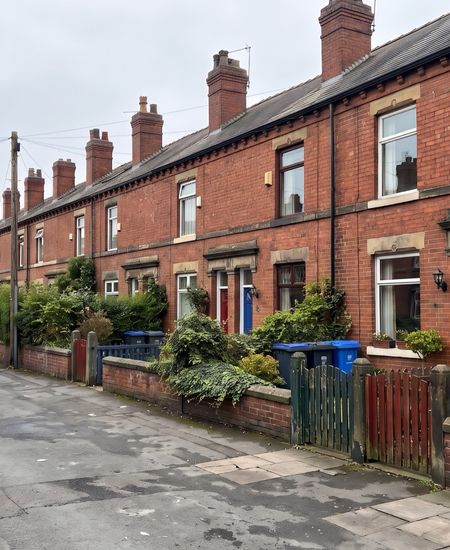
Manchester homes give that cycle plenty to work with. Late-Victorian terraces, like the two-up two-downs in Levenshulme, often have old boards with dusty gaps where larvae do very well. Many of the big Victorian houses in Chorlton were split into flats and bedsits long ago, so one shared hallway carpet can connect several front doors. And with the heating on through the colder months, indoor fleas don’t slow down for winter. Flea numbers usually peak in late summer and autumn, but we treat them all year round.
Flea cocoons can also lie still for months in an empty home, waiting for warmth and footsteps to signal a meal. Around a third of Manchester households were renting privately at the last census, so homes change hands often. That’s why it’s such a familiar story: you move into a flat, feel fine for a day or two, then wake up with bitten ankles. The last tenant’s cat had moved out, but its fleas hadn’t.
Not every flea comes from a pet. Birds nesting under the eaves or in the loft leave fleas behind when the young fly the nest, usually in late spring and summer, and those fleas wander down through gaps around the loft hatch looking for something to bite. Squirrels in the roof bring fleas of their own. Hedgehog fleas get blamed a lot, but they rarely stay long on cats or dogs and don’t set up home in houses.
What happens when you call us about fleas?
We’ll ask what you’ve noticed, who lives with you and what pets you have, offer the earliest slot we have, often the same day, and talk you through getting the house ready.
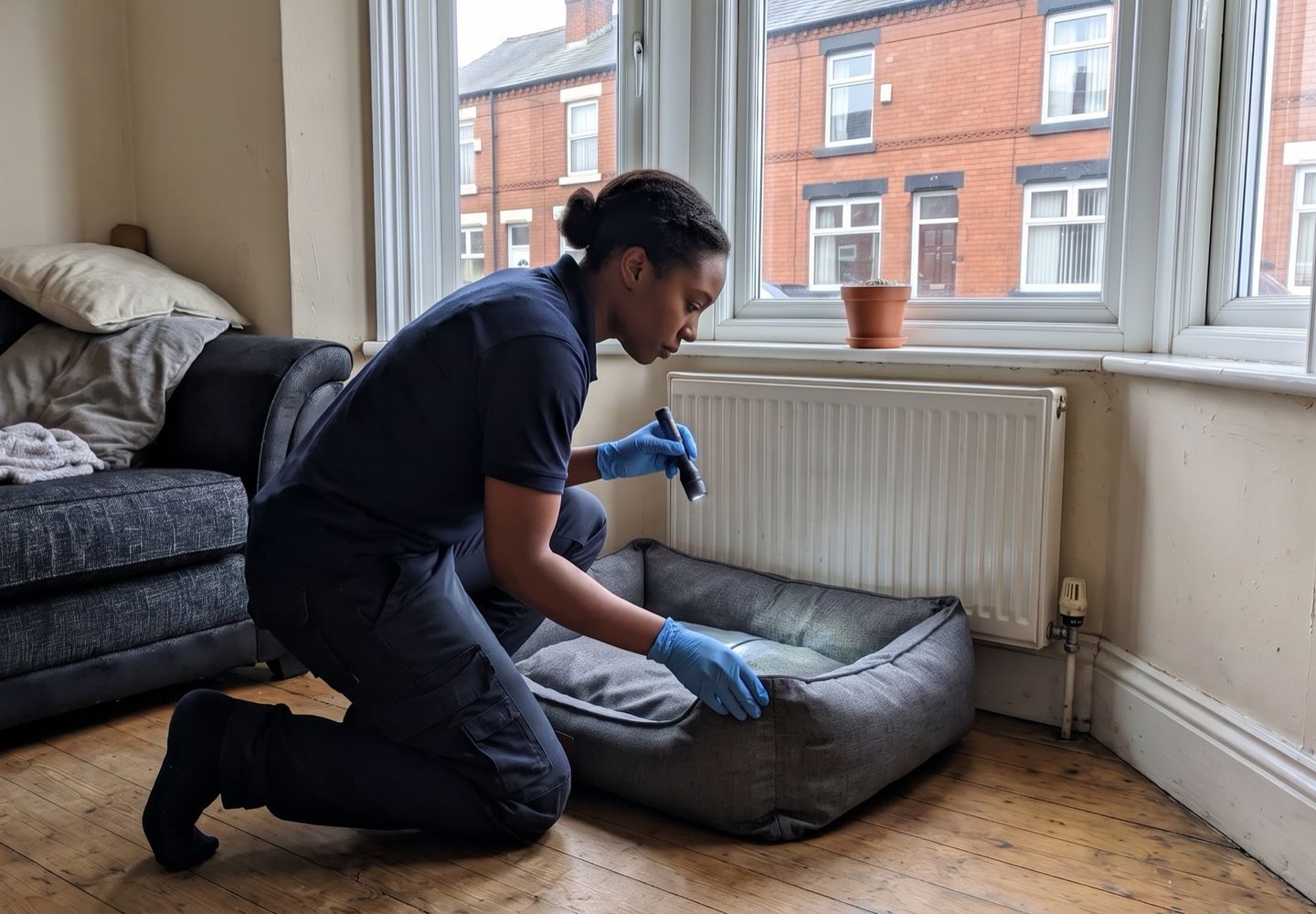
When we arrive, we confirm it’s fleas and work out where they’re breeding. That means your pet’s favourite spots, under beds and sofas, skirting edges and the stairs. If there are no pets, we look up as well as down, checking the loft and eaves for an old nest.
The treatment is a professional insecticide sprayed finely over carpets, rugs, gappy floorboards and under furniture. It contains an insect growth regulator, which stops eggs and larvae developing into biting adults, plus an ingredient that kills the adults already hopping about. We treat the whole of each affected floor, not just the spot where you were bitten, because larvae move around.
What do I need to do before and after the treatment?
Before we arrive:
- vacuum every floor thoroughly, including under beds, the stairs and skirting edges, and empty the vacuum into an outside bin;
- clear the floors, including anything stored under beds;
- hot-wash pet bedding and throws, around 60°C if the fabric allows;
- get your pets treated with a product your vet recommends, on the same day if you can;
- cover fish tanks, switch off the pump and move caged birds or reptiles out of treated rooms.
Afterwards, leave the treated floors alone for the time we give you, typically a week or two, so the treatment stays in the carpet. After that, vacuum little and often. The vibration coaxes the last cocoons to hatch, and the new fleas walk straight onto treated fibres.
Is flea treatment safe for children and pets?
Yes, when it’s done properly. The one firm rule is that nobody, pets included, goes back into a treated room while it’s still wet. Once dry, the treatment sits in the carpet fibres where it keeps working, and the risk to your family is low. A crawling baby, a pregnant family member or anyone with asthma should stay out for the full time we give you.
We don’t treat animals ourselves; that’s a job for your vet. And please never use a dog flea product on a cat. Some dog spot-ons contain permethrin, which can make cats seriously ill or kill them, and a cat can even be poisoned by close contact with a dog that’s just been treated.
How many visits will it take?
Most homes need one treatment, with a follow-up visit around two weeks later if fleas are still turning up. Expect to see a few for two or three weeks after the first visit, sometimes a little longer. They’re adults hatching from cocoons no spray can reach, and they should get fewer each week. Heavy infestations, homes where the pets weren’t treated at the same time, and fleas coming from a bird nest can all take longer.
How do I stop fleas coming back?
Treat every cat and dog in the house all year round, not just when you spot a flea, using a product your vet recommends; rabbits and ferrets can carry fleas too. Wash pet bedding regularly on a hot wash and vacuum wherever your pets sleep. If birds have been nesting in the loft or under the eaves, wait until the nest is empty, because the Wildlife and Countryside Act 1981 protects wild birds’ nests while they’re in use, then have it cleared and the gap closed. Our pigeon proofing and squirrel removal pages explain how we keep them out of Manchester roofs.
When does DIY flea treatment stop being enough?
If you’ve got one pet with a few fleas and you’ve caught it early, treating the pet, vacuuming hard and using a household flea spray that contains a growth regulator can be enough. Flea bombs and foggers are less useful than they look: the mist settles on top of things rather than reaching deep into carpet pile, under furniture or into floorboard gaps. Most are flammable too, so they need real care around gas fires and pilot lights.
It’s time to call someone if you’re still being bitten three or four weeks after treating the pets and the house, if you’re being bitten and there are no pets at all, if you’ve moved into a home that had fleas waiting, or if there’s a baby, an older relative or someone with a skin condition at home.
Is it my landlord’s job to deal with fleas?
It depends on where they came from. If you’ve brought a pet into the home and it has fleas, treatment is usually down to you. If the fleas were there when you moved in, or they’re coming from birds or squirrels getting in through the roof, that points towards the landlord. Under section 11 of the Landlord and Tenant Act 1985, landlords of most rented homes must keep the structure and exterior, roof included, in repair. The Homes (Fitness for Human Habitation) Act 2018 requires a rented home to be fit to live in throughout the tenancy, and pests are one of the hazards councils assess under the Housing Health and Safety Rating System.
Under the Renters’ Rights Act 2025, most private tenants in England can now ask in writing to keep a pet, and landlords can’t unreasonably refuse. A landlord generally can’t make you pay for a set de-fleaing service as a condition of the tenancy, but if your pet did leave fleas behind, the cost of putting it right can usually be claimed from the deposit with evidence. Whichever side you’re on, put it in writing early, take dated photos and keep our report.
What happens when you call us
- 1
Tell us what you're seeing
Call or message us about the bites, the fleas or the scratching pet. We'll ask who lives with you, including any fish, birds or reptiles, and offer the earliest slot we have, often the same day.
- 2
Get the house ready
We'll send you simple preparation steps: vacuum everywhere, clear the floors, hot-wash bedding and pet beds, get your pets treated through your vet and cover any fish tank.
- 3
Confirm it's fleas and find the source
We check pet beds, sofas, carpets, stairs and skirting edges. If there are no pets, we look in the loft and eaves for an old nest, and we rule out bed bugs and carpet beetle larvae.
- 4
Treat floors and furnishings
A professional spray that pairs an insecticide with an insect growth regulator goes over carpets, rugs, gappy floorboards and under furniture, so adult fleas die and eggs and larvae can't grow into biters.
- 5
Stay out, then follow the aftercare
Everyone, pets included, stays out until treated areas are dry. Before we leave, we'll give you a time to come back and tell you how long to wait before vacuuming.
- 6
Check back
If fleas are still hatching about two weeks later, we come back to check the house, look again for a source we might not have seen, and re-treat where it's needed.
How many visits? Most homes need one treatment visit, with a follow-up around two weeks later if fleas are still hatching. Heavy infestations, pets that weren't treated at the same time, or fleas coming from a bird nest in the loft can mean another visit.
Flea Removal: questions people ask us
Why am I getting flea bites when we don't have a pet?
Usually because an animal used to live there, or something is getting in. Flea cocoons left behind by a previous owner's cat or dog can sit quietly in the carpet for months, then hatch all at once when new people move in and start walking about. Birds nesting under the eaves or in the loft, and squirrels in the roof, are the other common sources, especially in late spring and summer. A neighbour's cat that wanders in, or a second-hand rug, can do it too. If you're only bitten in bed at night, we'll check for bed bugs as well.
We've just moved into a rented flat and it has fleas. Who pays?
If the fleas were there before you moved in, it's reasonable to expect your landlord to sort it, because a rented home in England should be fit to live in from the first day of the tenancy. Report it in writing straight away, with dated photos of the bites or the fleas, so there's no question later of them being blamed on a pet of yours. If you've brought a pet with you and it has fleas, treatment is normally down to you. Either way, we're happy to send our findings to your landlord or letting agent.
Is flea treatment safe with a baby, cats, dogs or fish at home?
Yes, as long as the drying time is respected. We ask who lives with you before we start, and everyone, pets included, stays out of treated rooms until they're completely dry. A baby who's crawling should only go back on the floor once it's dry and the room has aired. Fish need extra care, because these insecticides are very harmful to them, so tanks must be covered and the pump switched off. Caged birds and reptiles should be moved out of the rooms we're treating.
How long do we have to stay out after a flea treatment?
Until everything we've sprayed is fully dry, which is usually a few hours, depending on the carpets, the weather and how well the rooms can be aired. We'll give you a clear time before we leave. Take the pets with you, close the doors to any rooms we haven't treated and open a window if it's safe to. When you're back, don't mop or shampoo the treated floors for the period we give you, because the treatment is meant to stay in the carpet and keep working on fleas as they hatch.
Why am I still seeing fleas after the treatment?
That's normal for the first two or three weeks, sometimes a little longer. Flea cocoons are tough and no spray gets through them, so adults keep hatching from cocoons that were already in the carpet. When they hop out, they land on treated fibres and die, usually before they can lay eggs. What you should notice is fewer fleas each week. If the numbers aren't falling after a fortnight, or you're still being bitten after a month, tell us, and double-check that every pet in the house has been treated.
Do I need to treat my pets as well as the house?
Yes, and ideally on the same day. If the cat or dog still has fleas, it will keep dropping eggs into the carpet we've just treated, and you'll be back where you started. We don't treat animals ourselves, so ask your vet which product suits your pet's age, weight and health, and treat every cat and dog in the household, not just the one that's scratching. Please never put a dog flea product on a cat. Some contain permethrin, which is highly toxic to cats.
When can I vacuum after flea treatment?
Vacuum thoroughly just before we arrive, then leave the treated floors alone for the time we give you, usually somewhere between a week and a fortnight. That lets the treatment settle into the carpet and keep working. After that, vacuum little and often, including under the furniture, on the stairs and along the skirting boards. The vibration encourages the last fleas to hatch out of their cocoons, so they meet the treatment sooner. Empty the vacuum into an outside bin each time.
Will Manchester City Council deal with fleas for me?
Manchester City Council runs its own pest control service, and fleas are on the list of pests it treats. Check your council's website for current pest control services and charges. The other Greater Manchester councils each set their own terms, so check your council's website for what it offers and how long you might wait. If you rent privately or own your home and would rather not wait, you can book us directly.
Can fleas make my family ill?
For most people, flea bites are an itchy nuisance rather than a health risk, although some people react strongly and scratching can let the skin become infected. Pets tend to suffer more: fleas can cause allergic skin problems, pass on tapeworm and leave young kittens or puppies weak from blood loss. Small children can occasionally pick up the same tapeworm by swallowing a flea by accident. If bites are spreading, blistering or look infected, speak to a pharmacist or your GP, and take your pet to the vet.
Fleas near you
- Chorlton
- Levenshulme
- Withington
- Fallowfield
- Didsbury
- Manchester City Centre
- Salford
- Stockport
- Bury
- Cheadle & Cheadle Hulme
- Eccles & Swinton
- The Heatons
- Longsight
- Prestwich & Whitefield
- Sale
- Stretford
- Urmston
- Wythenshawe & Northenden
- Ashton-under-Lyne
- Bramhall & Hazel Grove
- North Manchester (Blackley, Moston & Harpurhey)
- Rusholme & Moss Side
Last updated: