Manchester Pest Solutions gets rid of fleas in Levenshulme's terraces, flats and rented houses throughout M19. We check it's fleas, track down where they're breeding, then treat carpets, floorboard gaps, stairs and furniture, keeping children and pets out until it's dry. Call or message us and we'll offer the earliest slot we have, often the same day.
Why do fleas settle so easily into Levenshulme homes?
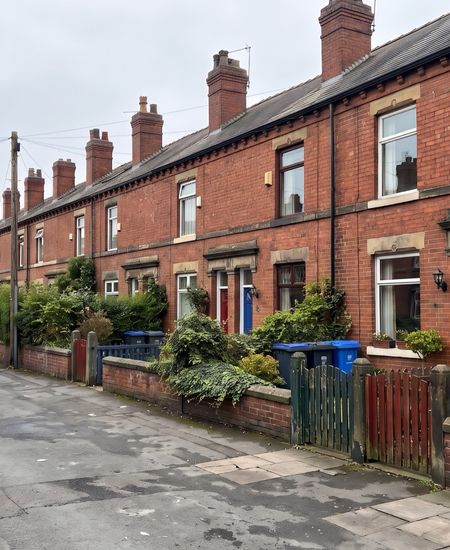
Most homes in Levenshulme are terraces from its late-Victorian boom, largely two-up two-downs dating from the 1880s. In a house that size, a cat or dog covers every floor in a day, so the eggs dropping from its coat end up in the front room, on the stairs and in both bedrooms. Where the original boards are still down, or have been sanded and left bare, the gaps between them collect the hair, skin flakes and flea dirt that larvae feed on, deeper than any vacuum reaches.
Numbers usually climb in late summer and autumn, and once the heating is on, a terrace stays warm enough for fleas to keep breeding through the winter.
Where are Levenshulme’s fleas coming from?
A pet, in most cases, and nearly always the cat flea, which lives just as happily on dogs.
Moving in is the next most common trigger. The ward’s population went from about 13,000 in 2001 to nearly 20,000 by 2021, and plenty of newcomers have arrived over the past decade. Whenever someone moves into a house where another household’s pet lived, cocoons may be waiting in the carpet. They can sit for months, then hatch together once warmth and footsteps return.
Then there are visitors: cats treat the back entries and yard walls as a network, and one that slips in through the back door can leave eggs on your rug. Where there’s no pet at all, we also check the eaves. Once nestlings have flown, their fleas stay in the empty nest and can find their way down through the loft hatch looking for a meal.
If you live by the Fallowfield Loop, Highfield Country Park or Cringle Park, wildlife is less of a worry than you might think. Hedgehog fleas get the blame, but they don’t stay on pets for long and don’t breed indoors.
What does a flea treatment involve in a two-up two-down?
When you book, we’ll send you the preparation steps, including getting every cat and dog treated through your vet, ideally on the day of our visit.
In a terrace this size we treat the whole house rather than one room: both rooms downstairs, the stairs and both bedrooms, because larvae move about and pets rarely stick to one spot. We work the spray into board gaps and along the skirting as well as over carpets and rugs. It pairs an insecticide for the adults with an insect growth regulator, so eggs and larvae never make it to adulthood.
Nobody goes back in, pets included, until the floors have dried, which usually takes a few hours. With no spare room to retreat to in a small house, plan a long walk round Cringle Park or along the Loop. If fleas are still hatching after about a fortnight, we come back to check and re-treat where needed.
Small food businesses along Stockport Road can book us too, at a time that works around their opening hours.
Is it safe with young children in the house?
Under-18s accounted for over a quarter of the ward’s mid-2024 estimate, so the first thing we ask is who’s living in the house. Babies and toddlers stay off treated floors until they’re completely dry and the rooms have aired. After that, the treatment stays in the fibres and boards, which is where it has to be to catch fleas as they hatch. We never treat the pets themselves; that’s for your vet.
Is it my landlord’s problem or mine?
If the fleas were waiting when you moved in, report it to whoever manages your tenancy as soon as you can, in writing and with photos that show the date. If they arrived with your own pet, sorting them out is normally down to you. Around Matthews Lane, anyone letting a private home needs a council licence until the selective licensing scheme ends in August 2028, but who deals with fleas usually still comes down to where they came from. Either way, our written findings give both sides the same facts.
Can the council treat fleas in Levenshulme?
Many councils run a pest control service for residents, but what is covered, who can book and the charges all vary and can change, so check the council’s own pest control pages before you book. If you rent from a council or housing association, report the problem to your landlord first. If you would rather book a private firm, call or message us and we’ll offer the earliest slot we have.
How do I keep fleas out for good?
Keep every cat and dog on the year-round prevention your vet recommends, not just when you notice scratching. Vacuum the stairs and your pet’s favourite spots often, and if you have bare boards, filling the wider gaps takes away the larvae’s hiding places. If birds are nesting in the eaves, leave them until the young have flown, since an active nest is protected by the Wildlife and Countryside Act 1981, then get the gap sealed. Our pigeon proofing service can help with that. And if you’re only being bitten in bed at night, ask us to check for bed bugs instead.
What we tend to find in Levenshulme
- Levenshulme is largely made up of 1880s two-up two-down terraces, so a flea job here usually means treating both rooms downstairs, the stairs and both bedrooms, plus the board gaps wherever the original floors are still down.
- Over a quarter of the ward's estimated 20,420 residents in mid-2024 were under 18, so before treating any M19 home we ask about babies and toddlers who crawl or play on the floor.
- Back entries run behind Levenshulme's terraced streets, and gating one doesn't stop cats going over the walls, so a neighbour's cat crossing the yards can bring fleas into a house with no pets of its own.
- Letting a private home in the Matthews Lane area requires a council licence while its selective licensing scheme runs, until August 2028. Wherever you rent in M19, our written findings help tenant and landlord agree who deals with the fleas.
What happens when you call us
- 1
Tell us what you're seeing
Call or message us about the bites, the fleas or the scratching pet. We'll ask who lives with you, including any fish, birds or reptiles, and offer the earliest slot we have, often the same day.
- 2
Get the house ready
We'll send you simple preparation steps: vacuum everywhere, clear the floors, hot-wash bedding and pet beds, get your pets treated through your vet and cover any fish tank.
- 3
Confirm it's fleas and find the source
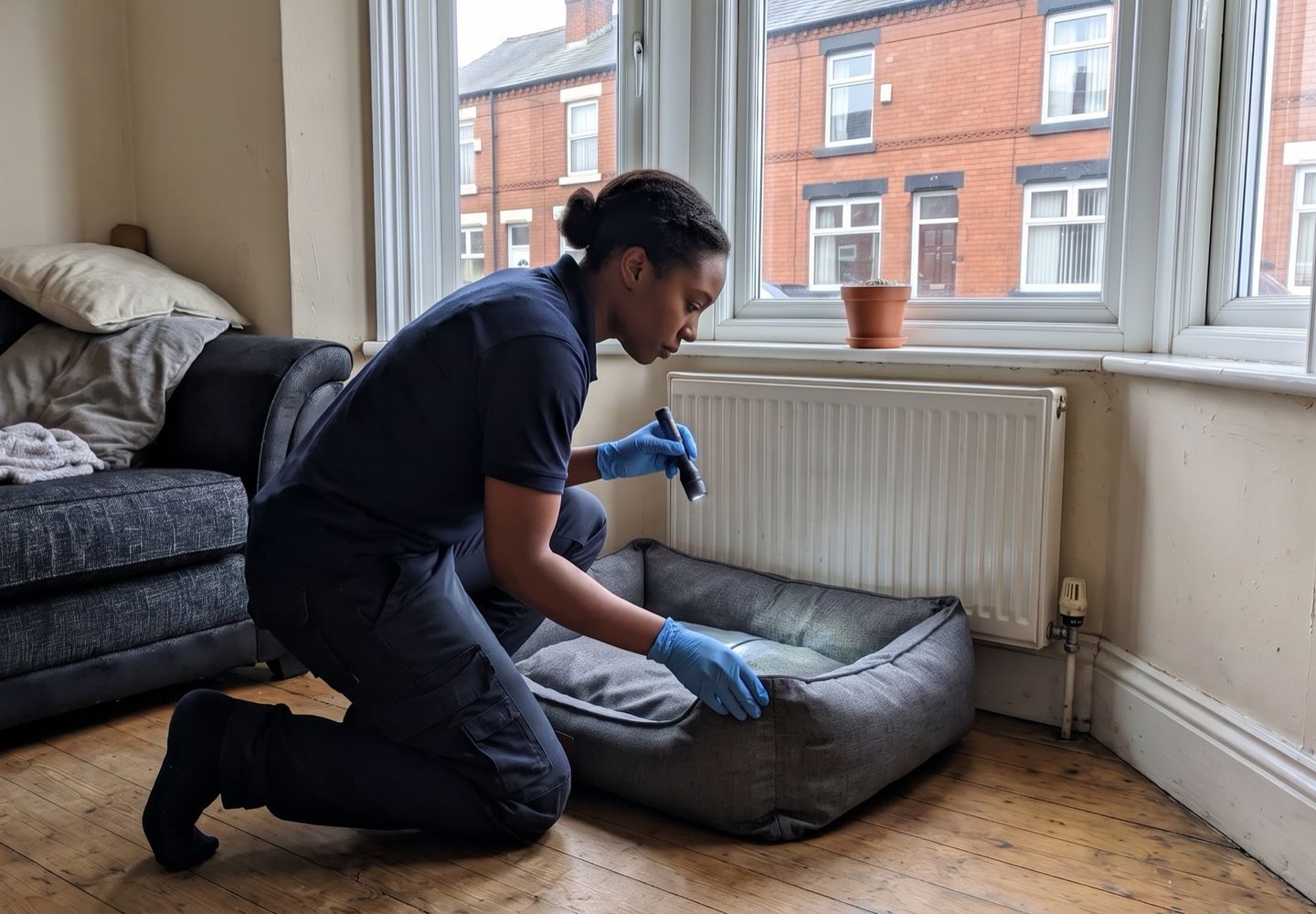
We check pet beds, sofas, carpets, stairs and skirting edges. If there are no pets, we look in the loft and eaves for an old nest, and we rule out bed bugs and carpet beetle larvae.
- 4
Treat floors and furnishings
A professional spray that pairs an insecticide with an insect growth regulator goes over carpets, rugs, gappy floorboards and under furniture, so adult fleas die and eggs and larvae can't grow into biters.
- 5
Stay out, then follow the aftercare
Everyone, pets included, stays out until treated areas are dry. Before we leave, we'll give you a time to come back and tell you how long to wait before vacuuming.
- 6
Check back
If fleas are still hatching about two weeks later, we come back to check the house, look again for a source we might not have seen, and re-treat where it's needed.
Flea Removal in Levenshulme: your questions
Our Levenshulme terrace has bare original floorboards. Can fleas live in a house with no carpets?
Yes. Flea larvae don't need carpet, just somewhere dark with a little debris to feed on, and the gaps between old boards suit them well. We work the treatment into those gaps as well as over rugs and under furniture. Once the fleas have gone, filling the wider gaps with a flexible filler or thin timber strips takes away their hiding places and makes the house far easier to keep clear.
We walk our dog on the Fallowfield Loop every day. Is that where the fleas came from?
It might be, but there's no way to be sure, and it matters less than you'd think. Dogs can pick up fleas almost anywhere other animals have rested, from paths and parks to a friend's garden. What counts is breaking the cycle at home: your vet treats the dog, we treat the floors where eggs have fallen, and year-round prevention stops a stray flea from a walk starting the whole thing again.
The fleas seem to come from next door's cat. Will they get through the wall into our terrace?
Fleas rarely travel from house to house on their own; they hitch a ride on animals. On Levenshulme's terraced streets the link is usually a visiting cat that comes over the yard wall or through an open back door, and a gated back entry won't stop it, because cats simply go over the top. Keep doors and cat flaps closed to visitors where you can, have a friendly word with your neighbour about flea prevention, and get your own home treated so the eggs already dropped don't hatch into a bigger problem.
We're buying a house in Levenshulme where the sellers had pets. Should we treat it before we move in?
It's a sensible time to do it, because an empty house with clear floors is the easiest kind to treat, and we can come between completion and moving day. Ask the sellers whether their pets were on flea treatment, as that tells us what to expect. Cocoons tend to lie still while a house is empty and quiet, so a few fleas may hatch once you start walking about. They land on the treated floors and die, so expect fewer each week. Vacuum often once we say you can, and let us know if you're not seeing fewer after two weeks.
Do you cover the whole of Levenshulme, including the streets towards Burnage and Reddish?
Yes. We treat fleas right across Levenshulme and the rest of the M19 postcode it shares with Burnage, as well as neighbouring Reddish, Longsight and Heaton Chapel. When you get in touch, tell us your postcode, whether you have pets and whether the bites started soon after a move, because that helps us plan the visit. We'll offer the earliest slot we have, often the same day, and send the preparation steps before we arrive.
Why am I getting flea bites when we don't have a pet?
Usually because an animal used to live there, or something is getting in. Flea cocoons left behind by a previous owner's cat or dog can sit quietly in the carpet for months, then hatch all at once when new people move in and start walking about. Birds nesting under the eaves or in the loft, and squirrels in the roof, are the other common sources, especially in late spring and summer. A neighbour's cat that wanders in, or a second-hand rug, can do it too. If you're only bitten in bed at night, we'll check for bed bugs as well.
We've just moved into a rented flat and it has fleas. Who pays?
If the fleas were there before you moved in, it's reasonable to expect your landlord to sort it, because a rented home in England should be fit to live in from the first day of the tenancy. Report it in writing straight away, with dated photos of the bites or the fleas, so there's no question later of them being blamed on a pet of yours. If you've brought a pet with you and it has fleas, treatment is normally down to you. Either way, we're happy to send our findings to your landlord or letting agent.
Is flea treatment safe with a baby, cats, dogs or fish at home?
Yes, as long as the drying time is respected. We ask who lives with you before we start, and everyone, pets included, stays out of treated rooms until they're completely dry. A baby who's crawling should only go back on the floor once it's dry and the room has aired. Fish need extra care, because these insecticides are very harmful to them, so tanks must be covered and the pump switched off. Caged birds and reptiles should be moved out of the rooms we're treating.
More help in Levenshulme
Last updated: