Manchester Pest Solutions deals with mice in Levenshulme terraces, new flats and rented homes across M19. We survey the house, place covered traps or locked bait boxes where little hands and paws can't get at them, proof the holes and return to check. Call or message us and we'll offer the earliest slot we have, often the same day.
Why are mice so at home in Levenshulme’s terraces?
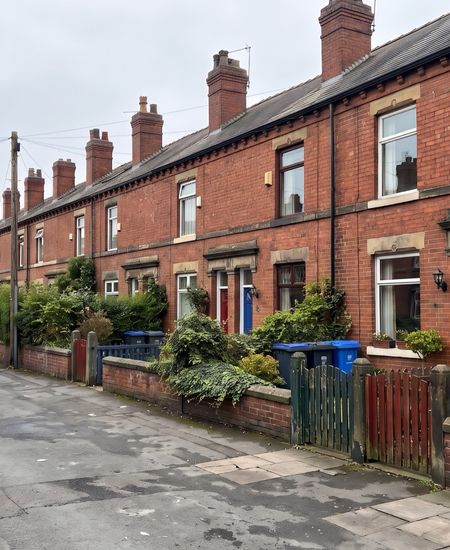
The streets here went up fast. The bulk of the homes here are terraced two-up two-downs from roughly 1880 to 1890, built while the population climbed from a few hundred to more than 11,000. Rows from the same decade tend to share more than a party wall: floor voids, chimney breasts and loft spaces can all connect one house to the next, and a mouse can squeeze through a hole you’d struggle to push a biro into.
Layer on well over a century of alterations. Gas pipes have been rerouted, kitchens extended into the yard and cables drilled through for every new service, and each change leaves a small hole behind. That’s why we rarely treat a mouse problem on these streets as belonging to one house alone.
Late October is the start of the busy stretch. Once the evenings turn cold, mice head for heated buildings, and the first clue is usually a faint scrabbling above the ceiling or behind the kitchen cabinets once everyone has gone to bed.
Where do we usually find them in a two-up two-down?
The layout is fairly predictable, which helps. Activity tends to centre on the back kitchen, especially behind the cooker, fridge and washing machine where pipes come through the wall. The cupboard under the stairs is another favourite, along with the void beneath the front room floor, where mice can cross the width of the house unseen. Then there’s the loft, particularly where a boiler flue or a conversion has opened up the roof space.
Houses near Highfield Country Park, Green Bank Fields or the Fallowfield Loop sometimes get wood mice as well as house mice. Wood mice are bigger-eyed and sandier in colour, and they tend to come in for the winter rather than settle for good. If the droppings you’re finding are much larger than a grain of rice, our rat control in Levenshulme page is the better place to start.
How does a mouse job run in a Levenshulme home?
It follows the same pattern as our wider mice control service, adjusted to the house. We start by asking who lives with you, children and pets included, then look round properly: under the kitchen plinths, inside the stair cupboard, into the floor voids where we can see, up in the loft and round the outside of the house, facing the yard and the back entry.
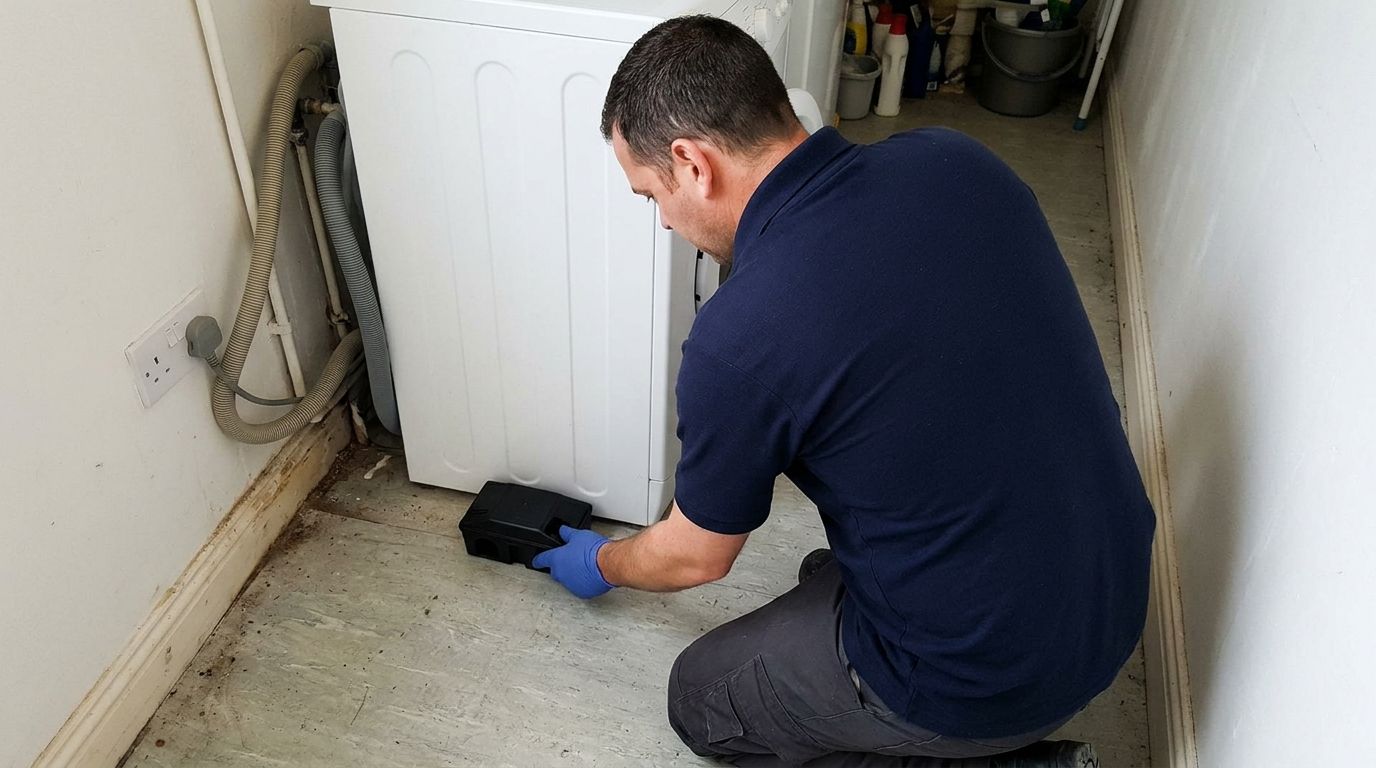
Treatment is usually covered snap traps along the runs, with bait only where it’s needed and always inside locked, tamper-resistant boxes put where nobody small can reach them. In a compact terrace with toddlers about, we tend to favour traps and keep any bait boxes in the loft or behind fixed kickboards. We’ll show you exactly where everything is.
Proofing begins on the first or second visit: wire wool and sealant packed around pipe holes, mesh fitted behind airbricks, brush strips along the bottom of back doors. Expect two or three visits, with roughly a week between each. If the mice are clearly coming from next door, we’ll say so and suggest the neighbours have a look too.
What about the new flats on Stockport Road?
New-build doesn’t mean mouse-proof. The scheme approved at 788 Stockport Road puts 39 apartments over ground-floor commercial space, with a further 30 proposed on the plot next door. Buildings like that rely on service risers, ceiling voids and shared bin stores, all of which mice can use if gaps are left during construction or fit-out. In a block, the managing agent usually needs to be involved, because treating one flat seldom fixes a problem that runs through the building.
How do I stop mice coming back?
Prevention in a Levenshulme terrace is mostly about the fact that you share it:
- check where pipes and cables enter from the yard side, and seal anything you could fit a pencil into;
- keep the yard clear of bagged rubbish and loose recycling, especially where bins sit behind a gated back entry for days;
- move pet food and bird seed out of the outhouse and into sealed tubs;
- talk to the neighbours either side, because a row sealed on one side only leaves the mice a way round.
If you rent, tell your landlord in writing as soon as you spot droppings. Most of the proofing work involves the fabric of the house, and getting it booked early saves everyone a longer job in January.
What we tend to find in Levenshulme
- Most Levenshulme homes are terraces built between about 1880 and 1890, so mice in one house are often using routes they share with the houses on either side.
- Wood mice from the long grass and scrub around Highfield Country Park, Green Bank Fields and the Fallowfield Loop sometimes move into nearby houses when the weather turns cold.
- In a two-up two-down, mouse activity tends to gather in the back kitchen, under the stairs and in the void beneath the front room floor, which makes the survey quicker than in a larger house.
- Flats planned over ground-floor commercial space, such as the approved scheme at 788 Stockport Road, need every pipe and cable entry sealed or mice can move between the units and the homes above.
What happens when you call us
- 1
Tell us what you've noticed
Call or message us with what you've seen or heard and where. We'll ask about children, pets and anyone vulnerable at home, and we'll offer the earliest slot we have, often the same day.
- 2
A proper look round
We check under kitchen plinths, behind the cooker and washing machine, around pipes and meters, under the stairs, in the loft and along the outside walls to find where mice are living and getting in.
- 3
Treatment chosen for your home
Snap traps inside covered boxes, locked tamper-resistant bait boxes, or both, placed along the runs and out of reach. We show you where every box is before we leave.
- 4
Sealing the way in
We block the gaps we found with materials mice can't easily chew through, such as wire wool packed in with sealant, metal mesh, airbrick covers and door brush strips, and flag anything that needs a builder or your landlord.
- 5
Follow-up and clear-up
We come back to check traps and boxes, remove any mice, look for fresh droppings and finish the proofing, then take all our equipment away once things have gone quiet.
Mice Control in Levenshulme: your questions
Can mice really travel along a whole Levenshulme terrace?
They can, and in streets built as continuous rows it's one of the main reasons a problem keeps returning. Mice slip through gaps in party walls, run along the void under suspended timber floors and cross lofts where the dividing wall doesn't quite reach the roof. If next door has mice too, treating both homes at roughly the same time, and sealing gaps on both sides of the shared wall, works far better than one household going it alone.
We live near Highfield Country Park. Are the mice coming from the park?
Possibly, if they're wood mice. These are sandy brown with a pale belly, big ears and eyes, and a tail about as long as the body, and they live in grassland, scrub and hedges like those around the park's ponds. They often come indoors in autumn and winter. House mice are greyer, with smaller eyes, and usually arrive from neighbouring buildings rather than open ground. The treatment is much the same, but knowing which you have tells us where to look.
Do the new flats on Stockport Road get mice?
New buildings can, especially where flats sit above shops or restaurants, as planned at 788 Stockport Road. Mice use the gaps left around pipes, cables and service risers, and communal bin stores give them food. If you're in a new flat and hear scratching in a ceiling void or find droppings in a kitchen cupboard, tell your managing agent as well as us, because a lasting fix usually involves the whole building rather than one flat.
Is late October too late to deal with mice before winter?
Not at all. It's when lots of people first notice them, because mice that were happy in sheds, garages and gardens over the summer start looking for heated rooms. Dealing with them now, while numbers are small, is quicker than waiting until midwinter when they've had time to breed indoors. Sealing the gaps before the coldest weeks also stops the next lot following the same route in.
Why have I suddenly got mice when I've never had them before?
It's usually a mix of season and opportunity. Mice move indoors as the weather turns in autumn, and a new gap is often all it takes: a pipe replaced under the sink, a broken airbrick, or a neighbour having building work done or clearing out a shed. In terraces and converted flats, mice can also travel through shared floor voids, so the problem may have started next door. It doesn't mean your home is dirty. Mice find warmth and crumbs in the tidiest of kitchens.
If I've seen one mouse, are there more?
Probably. Mice are shy and mostly active at night, so the one you spot is rarely the only one. A female can start breeding at around six weeks old and have a new litter every few weeks when food and warmth are easy to find, which is how a couple of mice in October can become a busy kitchen by Christmas. Fresh droppings in more than one room, or scratching in the ceiling as well as the kitchen, suggest they're already well settled.
Is mouse treatment safe with a baby, a cat or a dog at home?
Yes, with the right set-up. We ask who lives with you before we choose anything. Traps go inside covered boxes, and any bait is locked inside tamper-resistant boxes placed out of reach, so there's nothing loose for a crawling baby or a nosy dog to find. In homes with cats we lean on trapping, because a cat that eats a poisoned mouse can be harmed. We show you where everything is and take it all away when we're done.
More help in Levenshulme
Last updated: