Manchester Pest Solutions sorts out ants in homes, flats and small shops across Manchester and Greater Manchester. We identify the species, follow the trail to where they're getting in, and bait the nest with treatments placed out of reach of children and pets. Call or message us and we'll offer the earliest slot we have, often the same day.
How do I know which ants I’ve got?
Most ant problems in Manchester homes start the same way: a neat line of small dark ants running in from the back door, along the skirting and up to the sugar bowl, the cat’s dish or a sticky ring left by a jam jar. Those are almost always black garden ants. The workers are 3 to 5 mm long, dark brown to black, and they’ll be back at the same spot every day, because each one that finds food leaves a scent trail for the others to follow.
Other signs worth looking for:
- little piles of fine soil or sand pushed up between patio flags, at the foot of an outside wall or along a skirting board, which is the nest being dug out;
- ants coming up through a crack in the kitchen floor tiles, around a pipe under the sink or from the gap behind the kickboards;
- a sudden swarm of winged ants on a warm, muggy afternoon, usually in July or August;
- tiny pale amber ants, about 2 mm long, in a flat’s bathroom or kitchen, around radiator pipes or in a bedside drawer.
That last one is a different story. Those are probably Pharaoh ants, a tropical species that only survives here in warm, centrally heated buildings. They’re far less common than garden ants but much harder to shift, so get them identified before you reach for a spray. The red ants that sting you while you’re weeding rarely come indoors.
Why do Manchester homes get ants every summer?
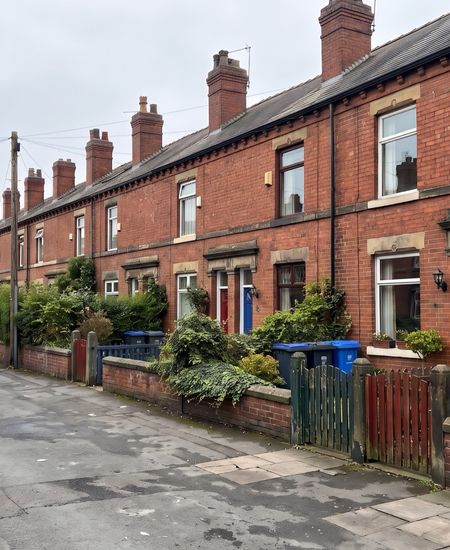
Black garden ants live outside, and our older housing gives them plenty of easy ways in. In Levenshulme’s two-up two-down terraces, most built around 1880 to 1890, the kitchen sits at the back beside the yard, so a colony under the yard only has to follow a cracked mortar joint or the gap under the back step to reach it. The Victorian terraces off Burton Road and the late-Victorian streets of Chorlton have the same weak spots, plus, in many houses, a later kitchen extension where the newer floor meets the old wall, which is a favourite way in. In the 1930s semis of Burnage and the semi-detached streets of Didsbury East, it’s usually the patio by the back door, the gap around a waste pipe or a low airbrick.
The colony doesn’t die off in winter. It sits tight underground and starts foraging again as spring warms up, which is why the same kitchen tends to get the same trail at around the same time each year. By high summer the colony is at its biggest and hungriest, and anything sweet, from a pet’s bowl to a recycling box of fizzy-drink cans, becomes a target.
Flats are a different case. A block or converted warehouse in the city centre with communal heating stays warm all year, which suits Pharaoh ants. They travel along heating pipes and service ducts, so a problem in one flat is often a problem in several.
What happens when you call us about ants?
Tell us where you’re seeing them and whether any have wings; a photo next to a coin helps. We’ll ask about children and pets, then offer the earliest slot we have, often the same day.
On the visit, we start by watching the ants, because the trail tells us more than anything else. We follow it back from the food to where they’re getting in, then go outside and look for the nest under paving, at the base of walls and in the borders.
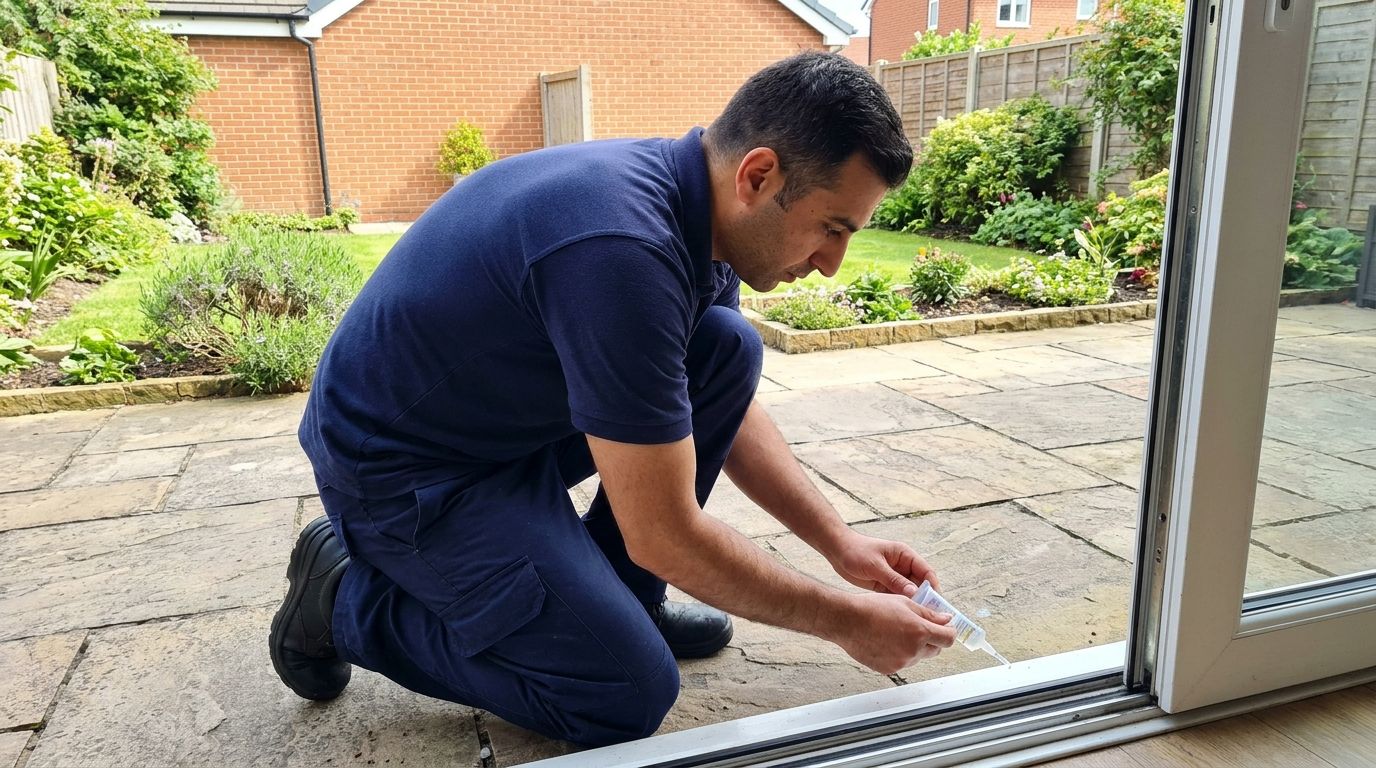
For garden ants, the main treatment is bait. We place small dots of insecticidal gel along the trail, tucked into cracks and behind kickboards where little hands and paws can’t reach. The workers carry it home and share it with the nest, including the queen, which is how a colony is actually finished off. Spraying the ants you can see only kills the foragers, and the nest simply sends out more. Where it helps, we also treat the outside entry points and the nest area, well away from the baits indoors.
Before we leave, we show you where everything is and point out the gaps worth sealing. For Pharaoh ants, we’ll plan a baiting programme instead and talk through whether your landlord or managing agent needs to be involved.
Is ant treatment safe for children and pets?
Yes, when it’s done properly, and that starts with us asking who lives with you. The gel baits go down in tiny amounts, in places a crawling baby or a nosy dog can’t get to: inside cracks, under the edge of units and behind kickboards. We never spray worktops, food cupboards, toys or pet bowls.
If we treat outside, around the back door or on the patio, we’ll ask you to keep children and pets off it until it’s dry and tell you how long that takes. If you keep fish, a rabbit or anything else we should know about, just mention it when you book.
How many visits will it take?
For black garden ants, one visit is usually enough. You may see more ants for a day or two as workers find the bait and bring others, which is a good sign. Activity normally drops off within a few days and stops within a couple of weeks. If a steady trail is still there after that, we’ll come back and look for a second nest, which isn’t unusual where terraced back yards join.
Pharaoh ants need a run of visits over several weeks, sometimes longer, because the colony has many queens spread through a building, so we plan the whole programme before we start.
How do I stop ants coming back next year?
A colony under your patio may well survive the winter, and even if it doesn’t, a newly mated queen can start a fresh nest after the next swarm. What you can change is what they find when they arrive:
- seal gaps around the back door frame, under the threshold and around waste pipes with a decent exterior sealant;
- re-point or brush jointing compound into open joints between patio flags close to the house;
- keep sugar, honey, cereal and pet food in sealed tubs, and lift pet bowls once your cat or dog has eaten;
- rinse cans, bottles and jars before they go in the recycling, and keep bins away from the back door;
- wipe up spills and crumbs before bed, especially in summer.
If you spot the first scouts in spring, a quick call then saves a lot of bother in August.
When does DIY stop being enough?
A handful of ants on the doorstep in May can often be sorted with a shop-bought gel bait and a tube of sealant. Sprays and powders look satisfying for a day, but they rarely touch the nest.
Get help if the trail keeps coming back however much you clean, if ants are coming up through the floor or out of a wall, if flying ants are emerging indoors, or if you think you’ve got Pharaoh ants. With Pharaoh ants, please don’t spray at all. Disturbing them with insecticide can make the colony split into several smaller ones, each with its own queens, and the problem spreads.
Is it my landlord’s job to sort out ants?
It depends on where they’re coming from. A seasonal trail of garden ants drawn in by food is often treated as the tenant’s to deal with. If they’re getting in through disrepair, such as rotten window frames, a broken airbrick or gaps in the walls, that usually falls under the landlord’s duty to repair the structure and exterior under section 11 of the Landlord and Tenant Act 1985, which covers most tenancies of under seven years. A serious infestation can also count as a hazard under the Housing Health and Safety Rating System, and the Homes (Fitness for Human Habitation) Act 2018 gives tenants a route to act if a home isn’t fit to live in. Who pays depends on your tenancy and the cause.
Pharaoh ants in a block of flats are nearly always a building-wide job, because treating one flat alone just pushes them next door. Tell your landlord or managing agent in writing; we’re happy to speak to them directly.
What if ants turn up in my café or shop?
Ants near open food are a hygiene problem, not just a nuisance, and food law expects businesses to keep pests under control. Keep a note of what was found and treated, keep dry goods sealed and off the floor, and see our commercial pest control page if you’d like regular visits. Finding cockroaches behind the fridge instead? Our cockroach removal page explains how that treatment differs.
What happens when you call us
- 1
Tell us where you're seeing them
Call or message us with where the ants are, roughly how many and whether any have wings. A photo next to a coin helps us tell garden ants from Pharaoh ants. We'll ask about children and pets, then offer the earliest slot we have, often the same day.
- 2
Follow the trail
We watch where the workers are running and trace them back from the food to the way in: the back door threshold, kitchen plinths, the joint where an extension meets the house, pipes, airbricks and the paving outside.
- 3
Bait the colony, not just the ants you see
Small dots of gel bait go into cracks and behind kickboards along the trail, out of reach. Workers carry it back and share it with the nest, which is how the queen and the young are reached.
- 4
Treat the way in
Where it suits the job, we treat outside thresholds, gaps in paving and the nest area, kept well away from the indoor baits, worktops and anywhere food is prepared.
- 5
Seal, advise and check back
We show you every spot we've treated, point out the gaps worth sealing and explain what to leave alone for the next week or two. If a steady trail is still there after a couple of weeks, we come back.
How many visits? Black garden ants are usually sorted in one visit, with a check-back if a steady trail is still there after about two weeks. Pharaoh ants are different: they need a planned run of baiting visits over several weeks, often across more than one flat in the same building.
Ant Removal: questions people ask us
Why do I get ants in the kitchen every summer?
Because the same colony is usually still there. Black garden ants nest under patios, paths and the base of outside walls, and a queen can live for many years, so the nest simply wakes up each spring and sends workers back out. The scouts find the same easy route in, often under the back door or through a cracked joint where an extension meets the house, and lay a scent trail the rest follow to anything sweet. Until the nest is baited and the gap is sealed, you'll tend to see them in the same spot, at the same time, year after year.
Should I worry about flying ants?
Not really. Flying ants are young queens and males leaving the nest to mate, and it tends to happen on warm, humid afternoons in July or August, often with lots of nests in the same area swarming on the same few days. Black garden ants don't sting. The males die soon afterwards, and the mated queens drop their wings and look for somewhere to start a new nest. You can vacuum them up and close the windows. What matters is where they came from: if they're pouring out from under the floor or a skirting board indoors, the nest is inside the structure and it's worth getting it looked at.
How do I know if they're Pharaoh ants?
Look at the size and colour. Pharaoh ants are tiny, about 2 mm long, and pale yellow to amber, so they're easy to miss until there are lots of them. They like warm spots such as bathrooms, kitchens, heating pipes and the space behind radiators, and in this country they live almost entirely in centrally heated buildings such as blocks of flats. Black garden ants are bigger, darker and usually trail in from outside. If you're not sure, send us a clear photo with a coin for scale, and please don't spray them in the meantime, because it can make the colony split and spread.
Is ant treatment safe if I've got a baby, a dog or a cat?
Yes, with the right approach, and we ask who lives with you before we start. Gel bait is used in tiny amounts and placed where a crawling baby or a pet can't reach it: inside cracks, behind kickboards and around pipes, never on worktops or near food and water bowls. Anything applied outside around the back door is left to dry before children or pets go back out, and we'll tell you how long that is for the product we've used. We'll also show you every spot we've treated, so you know where not to clean for a few days.
Why am I seeing more ants after the treatment?
That's normal for the first day or two, and it usually means the bait is working. Workers that find the gel head back to the nest and lay a fresh trail, so more of them come out to feed. Try not to spray, wipe or mop over the trail or the bait spots during that time, because you'll wash away the scent they're following and they'll stop taking the bait. Numbers normally fall away within a few days and stop within a couple of weeks. If they don't, let us know and we'll come back.
Will Manchester City Council deal with ants?
Check Manchester City Council's website for current pest control services and charges. Check your council's website for current pest control services and charges. If you live in Stockport, Salford, Trafford or another borough, your own council sets its own rules. Either way, check what it currently offers, and what it won't treat, before you book anyone.
My landlord says ants are my problem. Are they right?
Sometimes, but not always. A summer trail of garden ants drawn in by food is often treated as the tenant's job, and keeping food sealed and surfaces wiped helps either way. If the ants are getting in through disrepair, such as rotten window frames, a broken airbrick or gaps in the outside walls, fixing that is usually the landlord's responsibility as part of the structure and exterior. Pharaoh ants in a block of flats need treating across the building, which usually means the landlord or managing agent has to arrange it. Report it in writing and check your tenancy agreement.
Do home remedies like vinegar, cinnamon or boiling water work?
They can move ants along for a day or two, but they won't get rid of a colony. Wiping a trail with vinegar or soapy water does break up the scent the ants follow, which is worth doing if you're not using bait. Cinnamon, peppermint oil and chalk lines may make them take a detour. Boiling water poured between paving slabs kills the ants it reaches, but the queen is usually deeper down, and it can loosen the jointing. If ants keep coming back, the nest needs dealing with and the gap they're using needs sealing.
I run a small café. Can ants affect my food hygiene rating?
They can. Food hygiene law, enforced in England under the Food Safety Act 1990 and the Food Safety and Hygiene (England) Regulations 2013, says food businesses must have adequate procedures to control pests, and an inspector who finds ants on a prep surface or in the dry store will want to know what you've done about it. Deal with them promptly, keep food in sealed containers off the floor, and keep a simple note of what was found, what was treated and when. Small shops and cafés get the same friendly service as our homes, and our commercial pest control page explains regular visits.
Ants near you
- Levenshulme
- Chorlton
- Didsbury
- Manchester City Centre
- Fallowfield
- Salford
- Stockport
- Bury
- Cheadle & Cheadle Hulme
- Eccles & Swinton
- The Heatons
- Longsight
- Prestwich & Whitefield
- Sale
- Stretford
- Urmston
- Withington
- Wythenshawe & Northenden
- Ashton-under-Lyne
- Bramhall & Hazel Grove
- North Manchester (Blackley, Moston & Harpurhey)
- Rusholme & Moss Side
Last updated: