Manchester Pest Solutions works in homes across Rusholme and Moss Side, including Victoria Park, the Alexandra Park Estate and Maine Place. We deal with mice, rats, bed bugs and cockroaches in terraces, flats and shared lets, working around children and pets. Call or message us and we'll offer the earliest slot we have, often the same day.
Old terraces, back alleys and two very different households
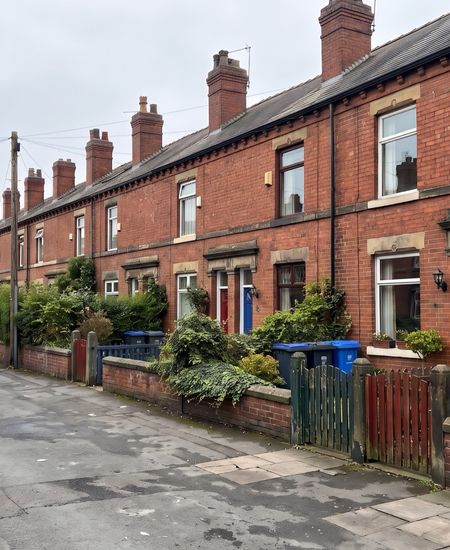
Plenty still have a back alley running behind them. What differs is who lives in them. Rusholme’s ward leans heavily towards young adults: around a third of its residents are in their twenties, many of them students sharing a rented terrace. Moss Side’s ward, by contrast, has more than a quarter of its residents under 18, so a lot of the homes we visit there have young children in them.
That mix shapes the pests we’re called about. Shared houses swap beds, sofas and suitcases every year, which is how bed bugs and German cockroaches get passed along. Terraces of this age usually have voids beneath the floors and gaps where pipes pass through the walls, and once mice are inside one house they can work their way along a row.
West of Princess Road: estate homes and new streets
Flats and terraces suffer pests in different ways. In a block, heating pipes, waste stacks and service ducts join one home to the next, so cockroaches and mice can travel through the building without touching a front door, and one flat’s problem is often a whole landing’s. Newer homes are generally tighter, but mice still find the gaps where cables and pipes come in, and an untidy communal bin store will draw rats to any estate, old or new.
Victoria Park: villas, halls and rented flats
On Rusholme’s eastern side, Victoria Park began in 1836 as a private, gated estate of villas and has been a council conservation area since 1972. Today it mixes university residences, Hulme Hall and Dalton-Ellis Hall among them, with rented flats and private homes. Where a big old house has been split into flats, the flats share roof spaces and floor voids that mice use freely, and halls that fill with new arrivals each September are a classic route for bed bugs. If you live in a hall, report pests to your accommodation office first, as the university looks after those buildings; for the flats and houses around them, we can help directly.
Why do rats and mice like the alleys here?
The alleys behind the terraces have a long history as dumping grounds for bin bags and unwanted furniture. Residents in both neighbourhoods have turned some of them into community gardens to keep fly-tippers out, and a Moss Side resident quoted in a 2025 news report on fly-tipping pointed to back streets with poor lighting and no CCTV. Split bags feed rats, and a dumped sofa gives them somewhere dry to sit a few feet from your back door.
Food plays its part as well. The Curry Mile stretch of Wilmslow Road has at least 70 restaurants, takeaways and kebab houses, and where homes back onto commercial bins or share drain runs with busy kitchens, rodents don’t care whose waste it is. Shop and café owners will find how we look after food premises on our commercial pest control page.
Bed bugs, cockroaches and the tenancy changeover
In Rusholme, insect problems often follow the end of one tenancy and the start of the next, when mattresses, bed frames and sofas change hands and second-hand fridges and cardboard boxes come through the door. Bed bugs ride in on luggage and furniture, and a German cockroach can arrive carrying an egg case inside an appliance or a box. In a shared house our bed bug removal visits look at every bedroom rather than just the one with bites, because not everyone reacts to them. Cockroach removal starts with a torch and a few monitors rather than a spray, and we come back over the following weeks for the young that hatch from egg cases. In the older terraces we also meet the large, dark oriental cockroach, which climbs up from drains and floor voids instead of travelling in someone’s bag.
Keeping children and pets safe
With so many children in Moss Side homes, we plan most visits there around them. For mice we usually begin with traps in sealed boxes tucked behind kickboards and under units, and any rodent bait we do use goes into locked stations, each one pointed out to you. Cockroach gel goes in tiny spots inside hinges and behind appliances, nowhere a crawling baby can reach. After an insect treatment, the room stays empty of people and animals until surfaces are dry. Tell us about pregnancy, asthma, a fish tank or a house rabbit when you book, and we’ll shape the visit around them.
Renting? Who deals with it
Lots of homes here are rented, whether that’s a room in a student terrace, a rented flat in Victoria Park or a council-built home in Moss Side. Put the problem to your landlord or agent by email or letter, and attach photos with dates. Gaps in the structure, broken drains and pests coming through from next door usually fall to the landlord to fix, while a problem caused by how a home is used may land on the tenant. Landlords and letting agents can book us directly; we’ll sort out access with the tenants and send a written summary after each visit.
What will the council do for you here?
Many councils run a pest control service for residents, but what is covered, who can book and the charges all vary and can change, so check the council’s own pest control pages before you book. If you rent from a council or housing association, report the problem to your landlord first. If you would rather book a private firm, call or message us and we’ll offer the earliest slot we have.
Getting to you from Fallowfield, Longsight and the city centre
Rusholme and Moss Side lie roughly two miles south of the city centre. Fallowfield borders Rusholme to the south and Longsight lies to its east, and because we work across all of those areas, we’re usually close by. We won’t promise an arrival time before we know what the job involves, but we’ll give you a realistic window when you book and keep you posted if anything changes.
Common pests in Rusholme & Moss Side homes
Bed Bugs
About a third of people in Rusholme ward are aged 20 to 29, and with students renting whole terraces as well as rooms in halls, beds, sofas and suitcases change hands constantly; that steady traffic is how bed bugs spread between houses.
Cockroaches
Pests use the weak points common to the local housing and premises, so we survey first, seal entry routes and treat only where there is evidence.
Mice
Terraces put up between 1880 and 1930 make up most of Rusholme and much of Moss Side, and the voids under their floors and gaps around old pipework let mice travel along a whole row once they're in.
Rats
Back alleys behind the terraces have long been used for dumping bags and furniture, and Gore Brook, disappearing into culverts and out again on its way to Platt Fields Park, gives rats water and cover close to homes.
We also deal with:
Can I get Manchester City to deal with it?
Many councils offer a pest control service for residents, but which pests are covered, who can book and what it costs all vary and can change. Check the council's own pest control pages for current details before you book, and if you rent, ask your landlord who is responsible for treatment.
Check the council's pest control page (we last checked it on 2026-10-24).
Why Rusholme & Moss Side gets the pests it does
- Rusholme sits roughly two miles south of Manchester city centre, and its streets are mostly inexpensive terraced houses built between 1880 and 1930, together with a large council estate from between the wars. [Wikipedia]
- Students make up a big part of Rusholme's population, living in several halls and in terraced houses they rent, while the housing becomes more suburban towards Victoria Park. [Wikipedia]
- Moss Side was mostly built up in the late 19th and early 20th centuries, when large numbers of red-brick terraced houses went up. [Wikipedia]
- Many of western Moss Side's Victorian terraces were cleared in the 1960s and early 1970s for council houses and flats, including the 1970s Alexandra Park Estate west of Princess Road, and the old Maine Road football ground was rebuilt as the Maine Place housing between 2011 and 2018. [Wikipedia]
- Victoria Park was planned from 1836 as a gated estate of villas, became a conservation area in March 1972 and now combines university residences such as Hulme Hall and St Anselm Hall with rented and private homes. [Wikipedia]
- Of the Rusholme ward's estimated 18,566 residents in mid-2024, 6,321 were in their twenties and just 1,098 were aged 65 or over. [City Population (ONS estimate)]
- The Moss Side ward had an estimated 22,379 residents in mid-2024, and 5,972 of them, close to 27 per cent, were under 18. [City Population (ONS estimate)]
- People living on the terraced streets of Moss Side and Rusholme have been turning back alleys that were once used as dumping grounds into community gardens, to deter fly-tipping and encourage recycling. [University of Manchester]
- A 2017 review of food hygiene ratings found that a quarter of businesses on Rusholme's Curry Mile needed major improvement, and a café just off the strip had been closed after mice and cockroaches were found. [Mancunian Matters]
Pest control in Rusholme & Moss Side: your questions
Do you cover Victoria Park, the Alexandra Park Estate and Maine Place?
Yes, all three, and everything around them in M14 and M16. That takes in the villas, halls and rented flats of Victoria Park, the estate homes west of Princess Road and the newer houses on the old Maine Road site. We also cover the terraces off Wilmslow Road, Platt Lane and Dickenson Road, plus the streets around Moss Lane East and Great Western Street. Not sure if your road is included? Send us the postcode and we'll check.
Is the council's pest service available in Rusholme and Moss Side?
Many councils run a pest control service for residents, but what is covered, who can book and the charges all vary and can change, so check the council's own pest control pages before you book. If you rent from a council or housing association, report the problem to your landlord first. If you would rather book a private firm, call or message us and we'll offer the earliest slot we have.
Our student house backs onto an alley full of dumped rubbish. Is that why we've got mice?
Council services and charges change, so check the council's own website for the current position, and if you rent, ask your landlord first.
We've got a baby and a cat in our Moss Side terrace. What will you put down?
Usually less than people expect. For mice we often start with traps inside closed boxes, set behind kickboards or under units where little hands and paws can't get in. If bait is needed, it goes in locked stations and we'll point out every one. For insect treatments, treated rooms stay empty until they've dried. Mention the baby and the cat when you book, plus anything else such as a fish tank or a pregnancy, so the plan fits your household.
I live in a flat in Moss Side. Can pests come through from next door?
They can. Flats are linked by pipe runs, soil stacks and service ducts, and cockroaches and mice use those routes to move between homes without ever crossing a doorstep. If you mostly see them around pipework or the boiler cupboard, the source may be next door or in a shared bin store. Treating your own home still helps, but let your landlord or managing agent know quickly so the flats around you and the shared spaces can be checked too, otherwise the problem tends to keep coming back.
Our landlord says the mice are down to us. Do they have a point?
The council's own pages are the place to confirm what it currently covers and charges; if you would rather use a private firm, get in touch and we will arrange a visit.
How soon can you get to Rusholme or Moss Side?
Both neighbourhoods sit between areas we cover all the time, so we're rarely far away. When you get in touch we'll give you an honest idea of when we can be with you, and we won't name a time we're not sure of. In the meantime, avoid shop sprays and foggers if it's insects, as they scatter them and make the first inspection harder to read, and keep food sealed away if you've seen signs of mice.
Nearby areas
Sources (8)
Last updated: