Manchester Pest Solutions clears grey squirrels from lofts and roof spaces for homeowners, renters and landlords across Manchester and Greater Manchester. We find how they're getting in, deal with them humanely and within the law, then seal the roof behind them. Call or message us and we'll offer the earliest slot we have, often the same day.
Is it squirrels in the loft, or something else?
Start with the time of day. Grey squirrels keep daylight hours, so the scurrying, thudding and odd rolling sounds above the bedroom ceiling usually kick off around first light and come back in the afternoon. Mice and rats work the night shift. If the noise only starts after you’ve switched the telly off, our mice control page is the better place to start.
Squirrels are also easier to spot from the outside than most pests. Stand in the garden and look at the corners of the roof, where the fascia board meets the gutter. A ragged, chewed hole, or bits of pale wood in the gutter below it, is the usual giveaway.
Up in the loft, look for:
- insulation dragged into a heap or a rough nest, often near the eaves;
- gnawed cable sheathing, plastic pipes, roof timbers or stored boxes;
- rounded droppings, a little smaller than a rat’s, scattered near where they come in;
- a yellowish stain spreading across a ceiling below, which can be urine soaking through.
Here in Greater Manchester, the squirrel in your roof will almost certainly be a grey.
Why do squirrels get into Manchester lofts?
Part of it is how green this city is. Heaton Park covers more than 600 acres on the north side, Fletcher Moss in Didsbury sits between the Mersey and Stenner Woods and mixes formal garden with wildlife habitat, and Wythenshawe Park, a local nature reserve, stretches to more than 270 acres. Add the mature street trees and long back gardens of the older suburbs, and greys have an easy run from branch to gutter.
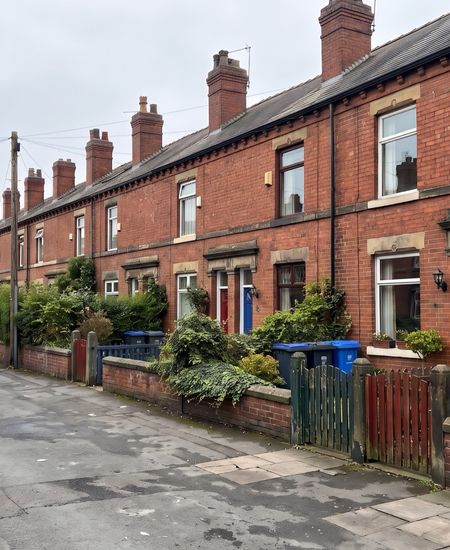
The housing does the rest. Over half the homes in Didsbury East are semis, according to the 2021 Census, and across south Manchester the 1930s semis, like those in Burnage, have timber fascias and soffits that soften and split after decades of Manchester rain. The Victorian terraces off Burton Road and the big Edwardian villas have decorative eaves, old slates and roof timbers that have been patched many times over. A squirrel doesn’t need much of a gap to get in, and it’ll happily chew a soft edge to make a small one bigger. In some older terraces the party walls don’t fully close off the roof space, so squirrels in one loft can wander along the row.
Then there’s the calendar. In autumn, greys are hunting for a dry winter den, and from late winter females look for somewhere safe to raise young. Greys can breed twice a year, with litters born in late winter or spring and again in summer, and a warm, insulated loft beats a drey of twigs every time.
What happens when you call us about squirrels?
You tell us what you’re hearing, when it happens and which rooms it’s above. We’ll ask who lives with you, including children and pets, and then we’ll offer the earliest slot we have, often the same day.
The first visit is a proper survey. We walk round the outside to find the way in, then go into the loft to find the nest, see what’s been chewed and check the water tank. We also look for bats and nesting birds before anything gets sealed, because bats and their roosts are protected by law, and the Wildlife and Countryside Act 1981 protects wild birds’ nests while they’re in use. If there could be young squirrels up there, that shapes the plan too.
We’ll be straight with you about the law, because it surprises people. Grey squirrels are a listed invasive species, and under the Invasive Alien Species (Enforcement and Permitting) Order 2019 it’s an offence to release one you’ve deliberately trapped. Government guidance is that a trapped grey should, where possible, be humanely killed by someone trained and equipped to do it. So we set traps inside the loft, on the runs the squirrels use, check them at least once a day, and deal with anything caught quickly and humanely. We don’t use poison: rodenticides are authorised for rats and mice, not squirrels, and a poisoned squirrel dying inside a wall is the last thing you want.
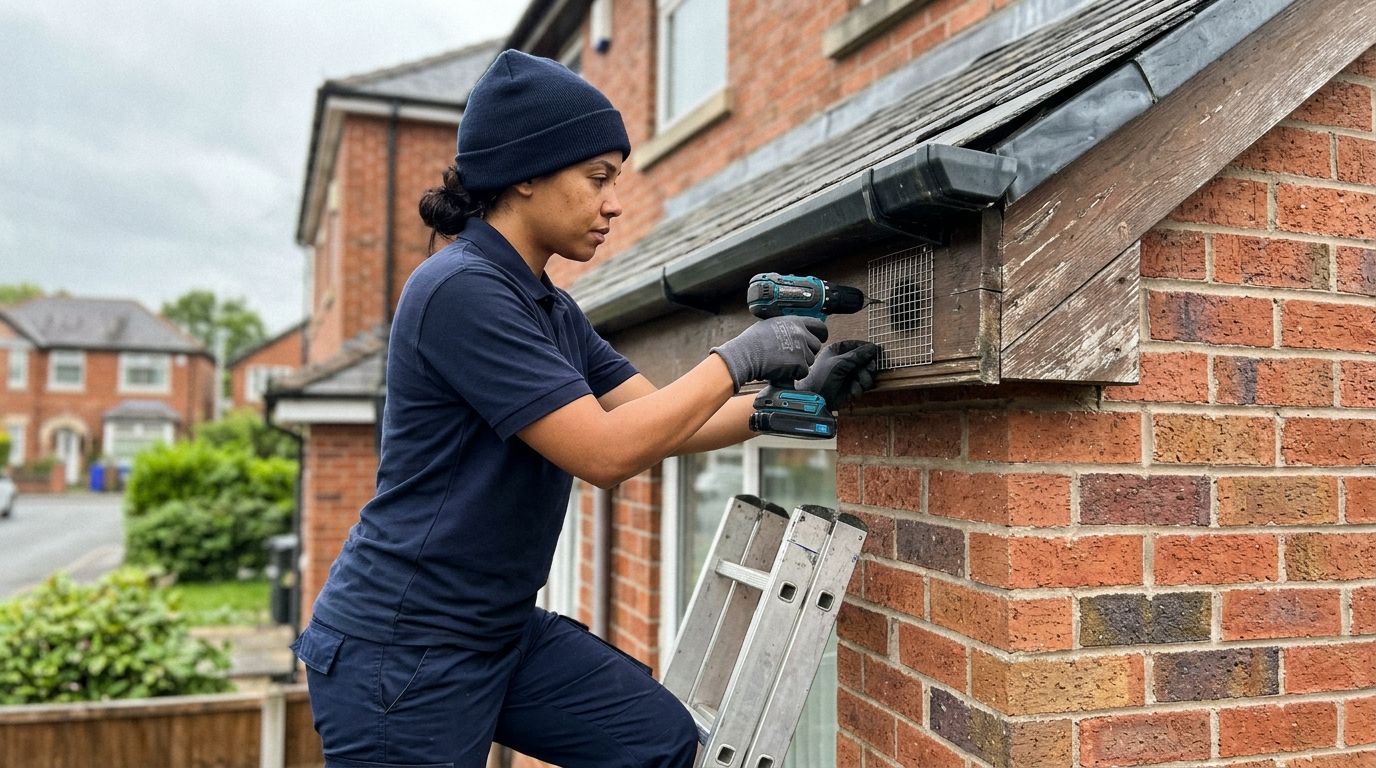
Once the loft has gone quiet, we seal every way in with galvanised mesh or metal that squirrels can’t chew through. If the fascia is rotten or tiles are missing, we’ll tell you plainly that it needs a roofer or joiner, and show you where.
Is squirrel removal safe with children and pets?
Yes. There’s no poison and no bait anywhere in the house. The traps sit inside the loft, set back from the hatch, and the hatch stays shut while they’re down, so there’s nothing within reach of a toddler, a curious cat or the dog.
If your loft is a playroom, a home office or a storage space you’re in and out of every day, tell us at the start and we’ll plan where the traps go around you. Everything is collected at the end. When you clear up after squirrels, wear gloves and a dust mask, dampen droppings with disinfectant before picking them up, and bag soiled insulation rather than shaking it out.
How many visits will it take?
Most jobs follow the same shape: a survey and set-up visit, regular trap checks for a week or two until the noises stop, then a proofing visit and a final check. A big Victorian roof with several weak spots, squirrels coming and going along a terrace, or a job that needs scaffolding or a roofer can stretch that out. We’ll tell you after the survey what we expect, and keep you posted if it changes.
How do you stop squirrels getting back in?
Sealing the roof properly is what stops this being an every-autumn problem. We fix galvanised mesh or metal over gaps at the eaves, where fascias and soffits meet, around gable ends and where pipes and cables pass through. A few things on your side help too:
- keep branches trimmed well back from the roof and gutters, checking first whether the tree is protected or you’re in a conservation area;
- get rotten fascias, soffits and missing tiles repaired before the winter;
- put a fitted lid on the cold water tank in the loft;
- use squirrel-proof bird feeders, and keep them away from the house walls;
- have a look round the roofline each autumn once the leaves are down, when gaps are easier to see.
After any roofing or loft work, check the eaves: a disturbed soffit or a gap round a new vent is a common way back in.
When does DIY stop being enough?
Pretty quickly, to be honest. A grey squirrel you’ve trapped can’t legally be let go, and humane dispatch isn’t something to attempt without training. Since April 2024, setting a glue trap for any rodent in England, squirrels included, has been an offence under the Glue Traps (Offences) Act 2022, apart from tightly licensed professional use. Ultrasonic boxes and smelly deterrents rarely shift a squirrel that has a warm nest.
Please don’t block the hole yourself until you’re sure the loft is empty. A squirrel shut inside will chew its way out, sometimes through the ceiling, and young left behind will die there.
It’s time to call us if you’ve heard them for more than a day or two, if cables or the water tank have been chewed, if the noise is inside the walls, if you can’t safely reach the eaves, or if it’s late winter to summer and there may be young in the loft.
Is it my landlord’s job or mine?
If you rent, report squirrels to your landlord or letting agent in writing as soon as you hear them. In most lets in England, section 11 of the Landlord and Tenant Act 1985 puts the structure and exterior, including the roof, on the landlord, so closing the way in usually falls to them. A home must also be fit to live in under the Homes (Fitness for Human Habitation) Act 2018, and councils can assess pests under the Housing Health and Safety Rating System. The exact split depends on your tenancy.
In a flat, the roof is often the freeholder’s or management company’s responsibility under the lease, so speak to your managing agent. Council pest services vary across Greater Manchester. Some, such as Stockport and Trafford, list squirrels among the pests they’ll treat, so it’s worth checking your own council’s pest page. The Prevention of Damage by Pests Act 1949 deals with rats and mice, so it doesn’t give councils the same powers over squirrels.
Whoever is paying, we’ll write up what we found, what we did and what still needs a builder, so everyone is working from the same facts.
What happens when you call us
- 1
Tell us what you're hearing
Call or message us with when the noises start, which rooms they're above and anything you've spotted outside. We'll ask about children and pets at home, then offer the earliest slot we have, often the same day.
- 2
Roof and loft survey
We look at the eaves, fascias, soffits, ridge and gable ends from the garden, then go into the loft to find the way in, the nest and any damage to cables, pipes or the water tank. We also check for bats, nesting birds and young squirrels.
- 3
Trapping in the loft
Traps go inside the roof space, on the squirrels' runs and well away from the hatch. They're checked at least once a day, and any grey squirrel caught is humanely dispatched, because the law doesn't allow them to be released. We don't use poison.
- 4
Sealing the way in
Once the loft has gone quiet, we close every entry point with galvanised mesh or metal that squirrels can't chew, and tell you plainly about anything that needs a roofer, a joiner or your landlord.
- 5
Final check and clear-up
We take away all our traps, remove the nest and soiled insulation where we can reach it, and point out any chewed cables so you can get an electrician to look at them.
How many visits? Usually a survey and set-up visit, regular trap checks for a week or two until the loft goes quiet, then a proofing visit and a final look. Big or awkward roofs, several entry points or squirrels moving along a terrace can take longer.
Squirrel Removal: questions people ask us
How do I know if it's squirrels or rats in my loft?
Listen to when it happens. Grey squirrels are about in daylight, so the running, thumping and rolling sounds usually start around dawn and come back in the afternoon. Rats and mice are busiest at night, once the house is quiet. Squirrels also leave clues outside: a chewed hole at the corner of the fascia, wood shavings in the gutter, or a squirrel disappearing under the edge of the roof. If the noise only starts after dark and you're finding droppings in the kitchen, have a look at our mice and rat pages.
Can I catch the squirrel in a cage and let it go in the park?
No. Grey squirrels are a listed invasive species, and under the Invasive Alien Species (Enforcement and Permitting) Order 2019 it's an offence to release one, whether that's at the end of your garden or in a park miles away. You can't keep one or move it around either, other than taking it to a facility with the right licence or permit. Official guidance says that, where possible, a trapped grey should be humanely killed by someone trained and equipped for the job. We'll always explain this before we start, so nobody gets a surprise.
Can't you just block the hole while they're out during the day?
It's tempting, but it often goes wrong. If one squirrel is still inside, it'll chew a new way out through the fascia, the roof timbers or even the ceiling. Worse, in late winter, spring and summer a female may have young in the loft, and sealing the hole leaves them to starve, with the smell to follow. That's why we survey first, deal with the squirrels that are using the loft, and only then close every gap with mesh or metal they can't chew.
Is it dangerous to have squirrels living in the loft?
The bigger worry is damage rather than disease. A squirrel's front teeth never stop growing, so it gnaws cables, pipes, timbers and anything stored up there, and stripped wiring can be a fire risk. Squirrels can also fall into an uncovered cold water tank and drown, which spoils the water. The risk of catching anything from them is low, but treat droppings and urine-soaked insulation with care: wear gloves and a dust mask, and don't sweep or vacuum droppings dry.
Is squirrel removal safe with children, cats and dogs at home?
Yes. We don't use poison on squirrels, so there's no bait anywhere in the house. Traps are set inside the loft, away from the hatch, and the hatch stays shut while they're down, so there's nothing for a child or a pet to find. If you have a loft ladder that anyone in the family uses, tell us and we'll plan around it. Everything comes out with us at the end of the job, and we'll tell you exactly what was used and where.
Will rat poison get rid of squirrels?
No, and it shouldn't be tried. Rodenticides are authorised for rats and mice, not squirrels, and using a pesticide on an animal its label doesn't cover is against the law. It's also a bad idea in practice: a poisoned squirrel can crawl into a wall cavity or under the boards to die, leaving a smell for weeks, and loose bait in a loft can end up being eaten by birds, pets or other wildlife. Trapping followed by proper proofing is the lawful way to solve it.
Should I cut back the trees near my roof?
It helps a lot. Branches that overhang the roof, or come close to the gutter, give squirrels an easy way on. Before you get the saw out, check whether the tree is protected. Parts of Manchester sit in conservation areas, including the Albert Park area of West Didsbury, and there you normally have to give the council notice before cutting back most trees. Trees with a preservation order need consent. Your council's website will tell you if either applies.
I rent my home. Is the landlord responsible for squirrels in the loft?
Usually, yes, at least for the way in. Squirrels get into lofts through the roof, eaves and fascias, and in most lets in England the landlord must keep the structure and exterior in repair under section 11 of the Landlord and Tenant Act 1985. Report it in writing as soon as you hear them, with dates and what you've noticed. In a flat, the roof is often the freeholder's or management company's responsibility under the lease. We're happy to talk to your landlord or agent directly.
Squirrels near you
- Didsbury
- The Heatons
- Chorlton
- Prestwich & Whitefield
- Fallowfield
- Levenshulme
- Manchester City Centre
- Salford
- Stockport
- Bury
- Cheadle & Cheadle Hulme
- Eccles & Swinton
- Longsight
- Sale
- Stretford
- Urmston
- Withington
- Wythenshawe & Northenden
- Ashton-under-Lyne
- Bramhall & Hazel Grove
- North Manchester (Blackley, Moston & Harpurhey)
- Rusholme & Moss Side
Last updated: