Manchester Pest Solutions clears grey squirrels out of lofts in Heaton Moor, Heaton Chapel and Heaton Mersey. After surveying the roof and loft, we trap inside the roof space with no poison, deal with the squirrels humanely and lawfully, and fix galvanised mesh over each way in. Owners, tenants and landlords can phone or message us to arrange it.
What makes the Heatons such good squirrel country?
Greys need trees, and they need safe ways to move between them. The Heatons have both in abundance. The council’s appraisal credits trees, hedges, boundary walls and private gardens with much of Heaton Moor’s green character, and Heaton Moor Park and Thornfield Park add more. Further south, Heaton Mersey Common has woodland and fields, and Mersey Vale Nature Park follows the river. A squirrel can cover a long way here along garden boundaries and branches without ever touching a pavement, and a tall villa with a tree leaning over it is an obvious place to stop.
Calls follow the squirrel’s year. Autumn, right now, is when greys are caching food and hunting for a dry den to see out the winter, so this is when a lot of people first hear them overhead. Females look for a nest site again in late winter and in summer, when there may be young in the loft.
What do we find in villas, semis and conversions?
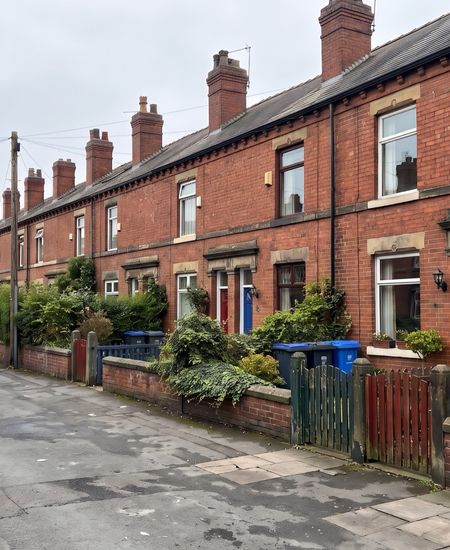
The late Victorian and early 20th-century villas of Heaton Moor are the most involved roofs we survey here. Built in red brick under slate and tile, in Gothic Revival and Arts and Crafts styles, many have several gables, deep eaves, dormers and decorative bargeboards. Every one of those joints is a possible way in, and a soft corner where a bargeboard meets the fascia is a favourite spot to chew. Blocked gutters make things worse: the conservation appraisal noted many homes needing gutters and drains seen to and self-seeded plants taken off the walls, and a gutter brimming with leaves keeps the wood behind it wet.
The semis that filled the gaps between the villas by the early 1920s are simpler, but two homes sit under one roof, so the entry point can be on either side. In the small terraces around Derby Range, roof spaces aren’t always fully divided, and a squirrel may move along the row. Up in Heaton Chapel, the substantial early 20th-century houses close to Heaton Moor pose the same big-roof puzzles as the villas. Where a house has become flats, the loft is shared, and the freeholder or managing agent holds the key to the hatch.
How does the job run in a Heatons home?
Tell us when you hear the noise, which rooms it’s above and what kind of house you live in, and let us know about children and pets. We’ll offer the earliest slot we have, often the same day.
The survey starts outside. On a tall villa we use the garden and the street to read every face of the roof, then climb up through the hatch to track down the nest, look for gnawed wiring and see whether the water tank is covered. Nothing gets sealed until we’ve ruled out roosting bats and active birds’ nests under the slates, because the law protects both. With woodland and a large pond close by at Heaton Mersey Common, that check matters here. Traps sit on the squirrels’ runs inside the loft, behind a shut hatch, and someone looks at them every day. The law forbids releasing a grey once it’s trapped, so each one caught is humanely dispatched, and poison plays no part in any of it.
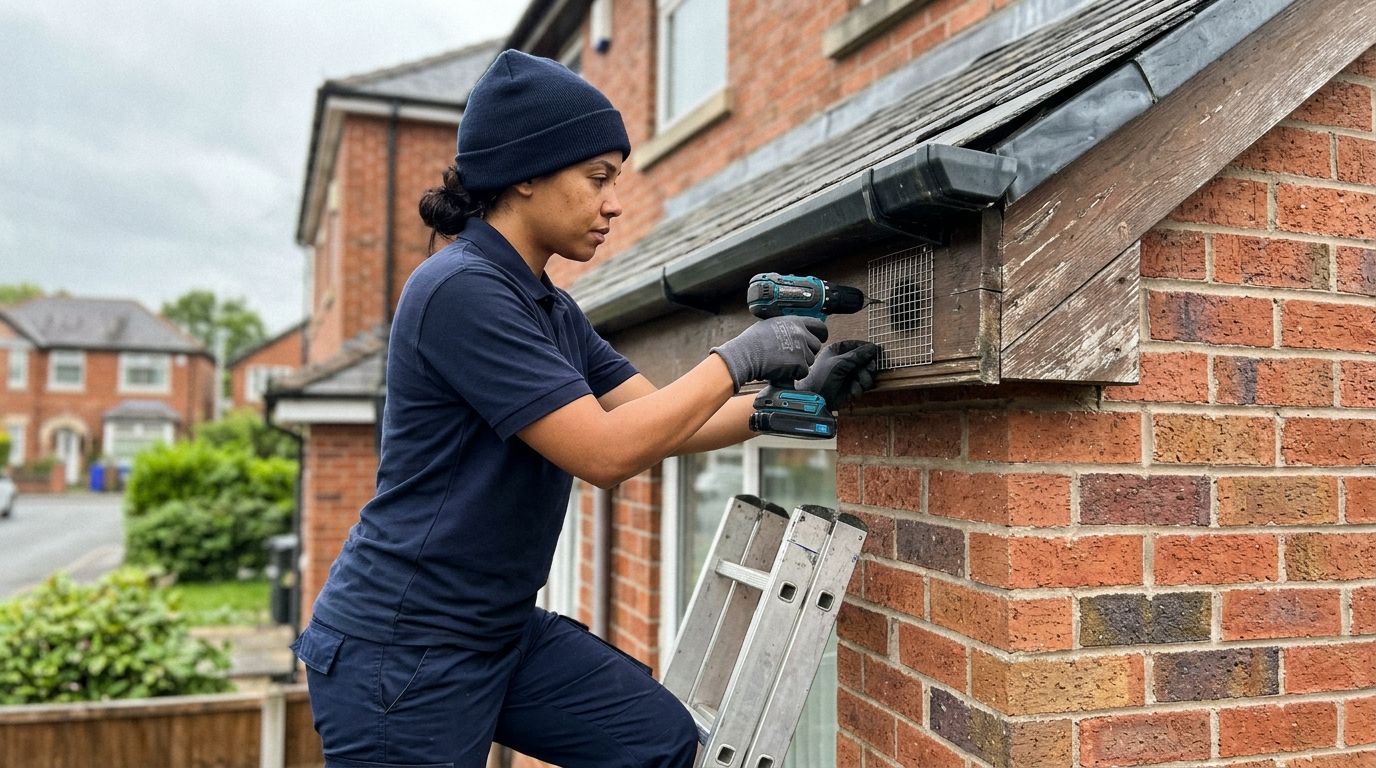
Once the loft has been quiet for a few days, we close each gap with galvanised mesh or sheet metal. On conservation-area houses we keep it tucked behind gutters and along the back of bargeboards, so the roofline still looks right. Typically that’s one visit to survey and set traps, daily checks over a week or two, a proofing visit, then a last inspection, with a sprawling villa roof sometimes needing more time.
Who pays: you, the landlord or the council?
Many councils run a pest control service for residents, but what is covered, who can book and the charges all vary and can change, so check the council’s own pest control pages before you book. If you rent, report the problem to your landlord first. If you would rather book a private firm, call or message us and we’ll offer the earliest slot we have.
How can you keep squirrels out in SK4?
Clear the gutters every autumn once the leaves have dropped, and pull out any self-seeded plants growing from the brickwork or roof valleys. Get soft fascias and slipped slates repaired before winter sets in. Cut back branches that reach the roof, but inside the Heaton Moor and Heaton Mersey conservation areas most pruning needs six weeks’ written warning to the council’s planners first. Fit a lid to the cold water tank and hang bird feeders well away from the house. Scratching that only begins after dark points to mice instead, which our mice control page covers.
What we tend to find in The Heatons
- Heaton Moor's villas are red brick with stone and yellow-brick detailing under slate and tile roofs, and their Gothic Revival and Arts and Crafts gables leave plenty of joints where a bargeboard meets the fascia for a squirrel to chew.
- Stockport Council's conservation appraisal found many Heaton Moor homes needing gutters, rainwater goods and drains sorted out, and a gutter that overflows every winter keeps the timber behind it soft enough to gnaw.
- Trees, hedges and private gardens give Heaton Moor much of its character, so greys can travel from Heaton Moor Park or Thornfield Park to a roof almost entirely along branches and garden boundaries.
- Where a big house has been split into flats, or an apartment block stands in the grounds of an old villa, the loft is shared, so the freeholder or managing agent has to agree access and the proofing.
What happens when you call us
- 1
Tell us what you're hearing
Call or message us with when the noises start, which rooms they're above and anything you've spotted outside. We'll ask about children and pets at home, then offer the earliest slot we have, often the same day.
- 2
Roof and loft survey
We look at the eaves, fascias, soffits, ridge and gable ends from the garden, then go into the loft to find the way in, the nest and any damage to cables, pipes or the water tank. We also check for bats, nesting birds and young squirrels.
- 3
Trapping in the loft
Traps go inside the roof space, on the squirrels' runs and well away from the hatch. They're checked at least once a day, and any grey squirrel caught is humanely dispatched, because the law doesn't allow them to be released. We don't use poison.
- 4
Sealing the way in
Once the loft has gone quiet, we close every entry point with galvanised mesh or metal that squirrels can't chew, and tell you plainly about anything that needs a roofer, a joiner or your landlord.
- 5
Final check and clear-up
We take away all our traps, remove the nest and soiled insulation where we can reach it, and point out any chewed cables so you can get an electrician to look at them.
Squirrel Removal in The Heatons: your questions
Our Heaton Moor villa has ornate bargeboards and old slates. Will squirrel-proofing spoil the look?
It shouldn't. We fit galvanised mesh behind the gutter line, along the back edge of the bargeboards and into the joints where timber meets brick, which keeps it out of sight from the street on most villas. If the timber itself has rotted, a patch won't hold and you'll need a joiner first. Because much of Heaton Moor is a conservation area, a like-for-like repair is the safest choice, and it's worth asking Stockport Council's planners before changing anything visible. We photograph each gap so your joiner knows exactly where to look.
Can Stockport Council remove squirrels from my loft in the Heatons?
Many councils run a pest control service for residents, but what is covered, who can book and the charges all vary and can change, so check the council's own pest control pages before you book. If you rent, report the problem to your landlord first. If you would rather book a private firm, call or message us and we'll offer the earliest slot we have.
We back onto Heaton Mersey Common. Won't more squirrels just move in once you've cleared the loft?
Greys will keep living in the woodland around the Common, and nobody would want that to change. What we stop is them getting into your house. Trapping deals with the squirrels already using the loft, and the proofing afterwards closes the gaps they came through, so the next one hunting for a winter den finds nothing to chew into. The homes that need us again are usually the ones where a soft fascia or a branch resting on the roof was left as it was. A look along the roofline each autumn keeps it that way.
Our gutters are blocked with leaves and weeds. Could that be how the squirrel got in?
It often plays a part. A blocked gutter spills onto the fascia behind it every time it rains, and after a few winters the wood goes soft enough for a squirrel to gnaw a hole. Stockport Council's appraisal flagged gutters, drainage and self-seeded plants as common upkeep problems on Heaton Moor homes. Once we've found the entry point, we'll tell you whether the timber is sound enough to mesh over or needs replacing first. Clearing the gutters every autumn is one of the simplest ways to keep squirrels out.
How do I know if it's squirrels or rats in my loft?
Listen to when it happens. Grey squirrels are about in daylight, so the running, thumping and rolling sounds usually start around dawn and come back in the afternoon. Rats and mice are busiest at night, once the house is quiet. Squirrels also leave clues outside: a chewed hole at the corner of the fascia, wood shavings in the gutter, or a squirrel disappearing under the edge of the roof. If the noise only starts after dark and you're finding droppings in the kitchen, have a look at our mice and rat pages.
Can I catch the squirrel in a cage and let it go in the park?
No. Grey squirrels are a listed invasive species, and under the Invasive Alien Species (Enforcement and Permitting) Order 2019 it's an offence to release one, whether that's at the end of your garden or in a park miles away. You can't keep one or move it around either, other than taking it to a facility with the right licence or permit. Official guidance says that, where possible, a trapped grey should be humanely killed by someone trained and equipped for the job. We'll always explain this before we start, so nobody gets a surprise.
Can't you just block the hole while they're out during the day?
It's tempting, but it often goes wrong. If one squirrel is still inside, it'll chew a new way out through the fascia, the roof timbers or even the ceiling. Worse, in late winter, spring and summer a female may have young in the loft, and sealing the hole leaves them to starve, with the smell to follow. That's why we survey first, deal with the squirrels that are using the loft, and only then close every gap with mesh or metal they can't chew.
More help in The Heatons
Last updated: