Manchester Pest Solutions fits humane pigeon proofing to houses, flats and small shops across Manchester and Greater Manchester. We check for active nests, clear the droppings safely, then fit solar panel mesh, balcony netting or spikes so pigeons can't settle. We'll offer the earliest survey slot we have. Call us or send a message with a photo to book.
How do I know pigeons have moved in, not just passing through?
A pigeon on the ridge tiles is part of life in Manchester. The time to act is when the same birds start treating your home as theirs, and you’ll usually notice the mess first: droppings piling up in the same place every morning, on the balcony floor, a bedroom sill or the path under the gutter.
Other giveaways are twigs and feathers poking out from under the edge of your solar panels, scratching and cooing on the roof at first light, and a row of birds settling on the chimney stack or aerial every evening, which means they’re sleeping there. Blocked gutters, damp patches where rainwater has backed up, and tiny mites around a window frame or loft hatch after young birds leave a nest all point the same way.
Birds that drop in to feed drift off again. Birds that roost or nest on your house have picked it, and they’ll keep coming back until that spot is closed off.
Why are pigeons choosing my house or flat?
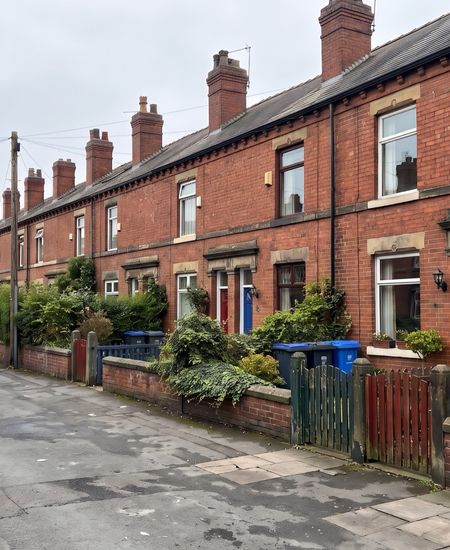
Town pigeons are descended from rock doves, which nest on cliff ledges, and a lot of Manchester housing does a convincing impression of a cliff. The Victorian terraces off Burton Road have chimney stacks, deep sills and bay roofs to perch on. Put solar panels on a 1930s semi in Burnage and the gap between panel and tiles becomes a dry, sheltered shelf that cats can’t reach.
Flats are just as attractive. At the 2021 Census, around 28% of Manchester households lived in purpose-built blocks of flats, and many more live in converted warehouses and mills in Castlefield and the Northern Quarter. A balcony offers shelter, a railing to sit on and, often, plant pots and the odd dropped crust.
Food is never far away. Takeaway leftovers, overflowing bins and people who feed birds on purpose keep a flock going all year, and pigeons can breed in any month, raising several broods of two, so a spot that suits one pair soon suits a few more.
That’s why removing birds without changing the building doesn’t last. When pigeons were shot at Manchester Victoria station in autumn 2025, the contractor’s own reports accepted that culling gave only short-term results, and Northern later stopped culling at its stations after a public backlash.
What happens when you call us?
We’ll ask where the birds are, how high up, whether you’ve seen eggs or chicks, and whether you own, rent or lease, because that can decide who has to agree before anything is fixed to the building.
Then we come and look. At each spot we work out whether pigeons are perching, sleeping or nesting, what any fixings would go into and how we’ll reach it safely. If your home is listed, fixings on the outside may need listed building consent, and we’ll flag that at the survey.
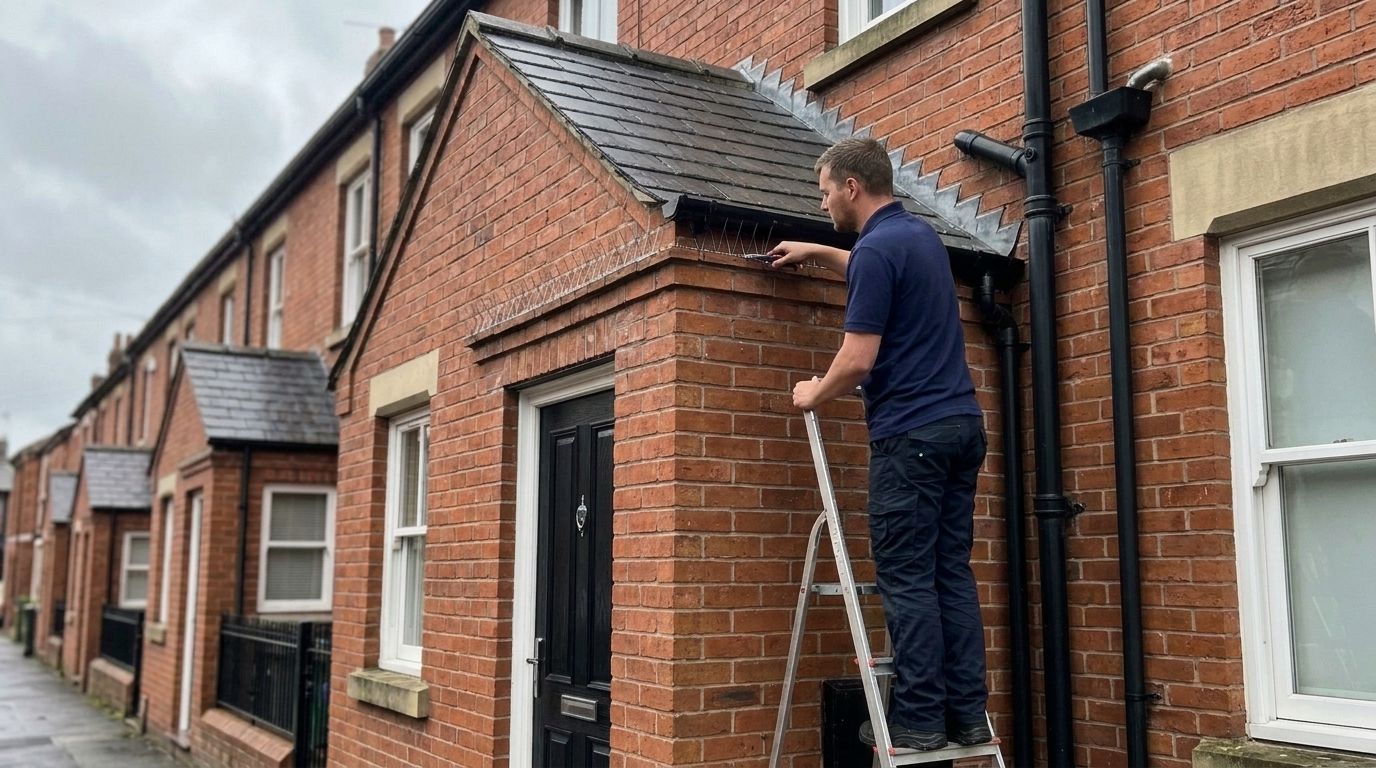
You’ll get a written plan with photos. On the day, we clear old nests and droppings first, then fit whatever suits each spot. Under solar panels, that’s a wire mesh skirt clipped to the panel frames around the edge of the array, with no drilling into the panels or roof. On a balcony, it’s fine netting on a tensioned wire frame, usually around 50 mm mesh for pigeons. Sills and ledges get low-profile spikes or post-and-wire, which stop birds landing without hurting them, and gaps into the loft or eaves are closed once we’re sure nothing is inside.
What does the law let you do about pigeons?
Feral pigeons are wild birds in law. The Wildlife and Countryside Act 1981 protects them, their eggs and any nest being built or in use. Proofing is lawful, as long as no bird is hurt or trapped and no active nest is destroyed.
Natural England’s general licence GL41 allows limited action against feral pigeons, including removing nests and eggs, to protect public health or safety. Only the owner or occupier, or someone they authorise, can rely on it, and only for real problems such as a slip hazard or a risk of spreading disease. Natural England’s advice is to look at non-lethal options like proofing first, and the conditions can change when the licence is reissued each year. Mess on the car won’t meet that bar, so most homes should wait for a nest to empty, then close the spot off.
Gulls are a different matter. Herring gulls and lesser black-backed gulls aren’t covered by that general licence, so dealing with an active gull nest normally needs an individual licence from Natural England. Talk to us before anyone touches one.
Is pigeon proofing safe for children and pets?
Yes. Proofing is a physical barrier, with no poisons, baits or sprays, so once we’ve finished there’s nothing a toddler or a nosy spaniel can get into.
The mess is the part to be careful with. Dried droppings can carry organisms linked to illnesses such as psittacosis and cryptococcosis. The risk to a healthy family is low, but it rises when the dust is disturbed and breathed in, so we damp everything down, wear masks, bag the waste and disinfect the surface rather than dry-sweeping it into the air. We’ll ask you to keep children and pets indoors or well away while we’re clearing and working at height.
If you find a dead bird, don’t pick it up with bare hands.
How many visits will it take?
Usually two: one to survey and one to clear and fit. A single balcony or a simple set of panels is normally done in that fitting visit; bigger roofs, awkward access or heavy fouling can take longer. If a nest still has eggs or chicks in it, we do everything else and come back for that spot once it’s empty, usually a matter of weeks.
How do I stop pigeons coming back?
Proofing does most of the work, but remove the other reasons to visit too. Don’t feed pigeons, and swap open bird tables for caged feeders that let small birds in and keep pigeons out. Sweep up spilled seed, keep bin lids shut and don’t leave takeaway boxes on the balcony. Keep gutters clear, and tell us quickly if a net tears or a clip works loose.
On a row of terraces or semis, have a word with the neighbours. If next door’s panels aren’t proofed, the birds may just shuffle along the roof, and doing both houses together often works better. Food left out for pigeons draws rats too, so if you’re seeing both, our rat control page explains what to look for.
When does DIY stop being enough?
A strip of spikes on a ground-floor sill is a fair weekend job. Beyond that, things tend to go wrong. Gadgets stop working once the birds are used to them, and cheap netting sags; a slack net can trap a bird, which is cruel and could put you on the wrong side of the law. Anything above first-floor height means ladders and real risk, and nobody should be climbing about on solar panels.
Call in help if there’s a nest under the panels or in the loft, if droppings have built up over a doorway or balcony, or if your block has rules about the outside of the building. Don’t be tempted by anything sticky meant to catch birds: using bird-lime or a similar substance to take a wild bird is an offence under the 1981 Act. And if it’s scratching in the loft rather than cooing on the roof, it may be squirrels; our squirrel removal page covers that.
Is it my landlord’s job, or mine?
If you rent, section 11 of the Landlord and Tenant Act 1985 means landlords of most rented homes must keep the structure and exterior in repair, including the roof and gutters, so pigeons getting into the loft through a gap or nests blocking the gutters often point to the landlord. Pests can also be assessed under the Housing Health and Safety Rating System, and the Homes (Fitness for Human Habitation) Act 2018 gives tenants a route to act if a home isn’t fit to live in. Who pays still depends on the tenancy and the cause, so report it in writing with photos.
If you own a leasehold flat, check your lease and talk to the managing agent before anything is fixed to a balcony or the outside of the block.
For small cafés, takeaways and corner shops, pigeons around the back door or bin store are a food hygiene issue, because the law expects food businesses to have adequate pest control. Keep the proofing record with your food safety paperwork, and see our commercial pest control page for regular checks.
What happens when you call us
- 1
Tell us what you're seeing
Where are the pigeons: under the panels, on the balcony, along the sills or in the loft? Tell us roughly how high up it is, whether you've seen eggs or chicks, and whether you own, rent or lease. A photo from the garden or the balcony helps.
- 2
We come and have a proper look
At each spot we work out whether the birds are perching, sleeping or nesting, what any fixings would go into and how we'll reach it safely. We also check for nests in use, because that decides what can be done and when.
- 3
A clear written plan
You get photos and a plain-English plan showing what we'd fit where, how it will look and when we can do it. If a landlord, freeholder or managing agent has to agree first, we'll send them the same details.
- 4
Clearing the mess
Old nests and droppings are damped down, bagged and taken away, and the surface is disinfected. Any nest with eggs or chicks in it is left alone until the young have gone.
- 5
Fitting the proofing
Solar panel mesh, balcony netting, spikes or post-and-wire go in to suit each spot. Before anything is closed off, we check that no bird is shut in behind it.
- 6
Showing you round
We walk you through what's been fitted, what to keep an eye on, such as a torn net or a loose clip, and the small changes that make your home less tempting to pigeons.
How many visits? Usually two: a survey, then one visit to clear and fit. If a nest still has eggs or chicks in it, we finish everything else and come back for that spot once the nest is empty, which is usually a few weeks.
Pigeon & Bird Proofing: questions people ask us
Pigeons are nesting under my solar panels. What can you do?
The gap under the panels is dry, warm and out of reach of cats and magpies, so once one pair finds it, others tend to follow. We clear out the nests and droppings, then clip a wire mesh skirt around the whole edge of the array. The clips grip the panel frame, so nothing is drilled into the panels or the roof, though it's still worth checking your installer's warranty terms first. If there are eggs or chicks underneath, we leave that section open until the young have gone, so no bird is shut in.
Is there a pigeon deterrent that actually works?
Yes, but it isn't the plastic owl. Pigeons soon work out that a fake owl, a rubber snake or a spinning windmill never does anything, and shiny tape loses its effect not long after. WD-40 or oil on a sill washes off in the next downpour, can mark brick and paintwork, and isn't kind to feathers. What changes a pigeon's mind is taking away the place it wants to land or nest: mesh under the panels, netting across a balcony, or spikes or wire along a ledge. Physical proofing is the approach we use.
Can I take down a pigeon nest with eggs in it?
Only in limited cases. Feral pigeons are wild birds in law, so under the Wildlife and Countryside Act 1981 their eggs, and any nest being built or in use, are protected. Natural England's general licence GL41 lets the owner or occupier, or someone they authorise, remove pigeon nests and eggs only to protect public health or safety, such as a genuine slip or disease risk. Mess, noise and annoyance don't count, and the terms can change when the licence is reissued each year. For most homes the answer is to wait: chicks normally leave about four weeks after hatching, so get the spot proofed as soon as it's empty.
Am I allowed to shoot pigeons in my garden?
Very unlikely, for the reasons most people have in mind. The general licence only covers set purposes, such as a genuine risk to public health or safety, and Natural England's advice is to look at proofing and other non-lethal options first. Droppings on the car, pigeons eating the bird seed or cooing at five in the morning don't qualify. Firearms and air weapon law apply on top of that, and on a built-up Greater Manchester street it's rarely safe anyway. Proofing the ledge or panels they're using is legal, kinder and lasts.
Can you net the balcony of my flat?
Usually, yes. Fine black netting on a tensioned wire frame stops pigeons landing while letting through most of your light and view, and a zip can be built in so you can still reach a window box or clean the glass. Before we fit anything, check your lease and speak to the managing agent or freeholder, because many blocks, converted mills and warehouses included, have rules about fixing things to the outside of the building. We're happy to send them photos and a description of exactly what we'd install.
Are pigeon droppings dangerous for my children or pets?
The everyday risk is low, but a build-up isn't something to leave. Dried droppings can carry organisms linked to illnesses such as psittacosis and cryptococcosis, and the risk rises when the dust is disturbed and breathed in, for example when a balcony is swept dry. Wet droppings also make steps and paths slippery. Keep little ones and pets away from heavy fouling, and stop the dog eating it. When we clear it, we damp it down first, bag it and disinfect the surface so the dust doesn't end up in the air or back indoors.
I rent. Is it my landlord's job to sort out the pigeons?
Often, at least in part. Section 11 of the Landlord and Tenant Act 1985 requires landlords of most rented homes to keep the structure and exterior in repair, including the roof and gutters. Pigeons getting into the loft through a gap, nests blocking the gutters or birds under solar panels the landlord installed can all point their way. Keeping a balcony clean may fall to you, depending on your tenancy agreement. Report the problem in writing with photos and keep a copy. Council and housing association tenants should contact their landlord first.
Will the council deal with pigeons at my house?
Probably not. The law that gives councils duties over pests, the Prevention of Damage by Pests Act 1949, is about rats and mice rather than birds, and Manchester City Council's home pest service is set up mainly for rodents and insects such as cockroaches, fleas and bed bugs. Check Salford City Council's website for current pest control services and charges. Councils set and change their own services, so check the website for yours. For pigeons on a house or balcony, it usually comes down to you, your landlord or your managing agent.
My neighbour feeds the pigeons. What can I do?
Start with a friendly chat, as plenty of people don't realise that a daily scatter of bread brings a whole flock to the street and its roofs. A caged feeder lets small garden birds in and keeps pigeons out, which is a fair compromise. Feeding birds isn't against the law in itself, but where it seriously affects neighbours some councils have used anti-social behaviour powers, so contact yours if talking gets nowhere. In the meantime, proofing your own panels, ledges or balcony gives the birds nowhere to settle on your side.
Bird Control near you
- Manchester City Centre
- Didsbury
- Salford
- Stockport
- Chorlton
- Fallowfield
- Levenshulme
- Bury
- Cheadle & Cheadle Hulme
- Eccles & Swinton
- The Heatons
- Longsight
- Prestwich & Whitefield
- Sale
- Stretford
- Urmston
- Withington
- Wythenshawe & Northenden
- Ashton-under-Lyne
- Bramhall & Hazel Grove
- North Manchester (Blackley, Moston & Harpurhey)
- Rusholme & Moss Side
Last updated: