Manchester Pest Solutions treats mice, rats, wasps, fleas and other pests in Prestwich and Whitefield homes, including Sedgley Park, Simister and Besses o' th' Barn. We work out how they got in, choose methods that suit a house with children or pets, and close the gaps afterwards. Ring or message us to book the earliest slot we have.
Railway villas, mill terraces and three Whitefield estates
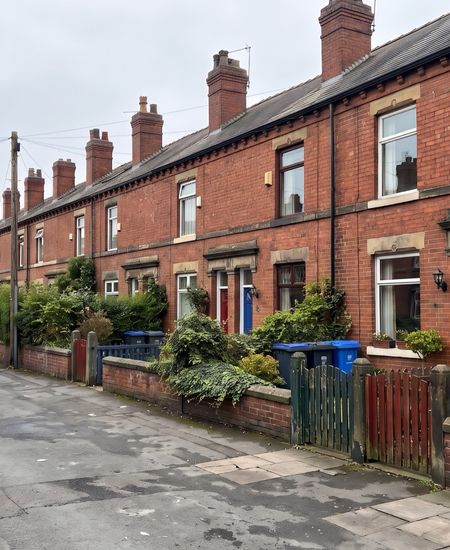
Prestwich turned from a village into a suburb once the railway reached it late in the Victorian era, when well-off Manchester merchants began building villas here. Houses on that scale shape the pests they get: long roof lines with lots of eaves, the timber floors typical of the period, outbuildings and, often, big gardens.
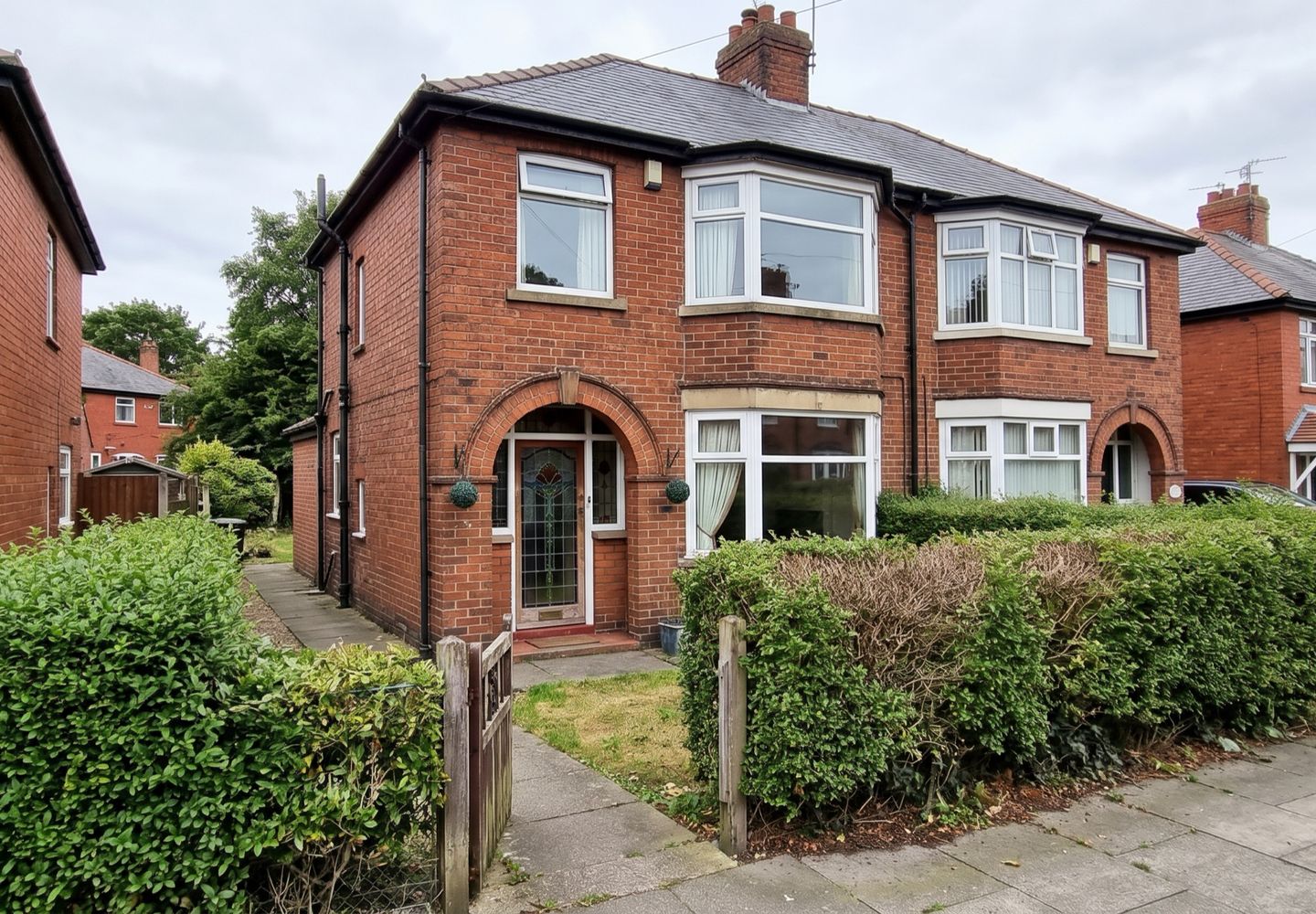
Whitefield has a different story. By the middle of the 19th century it had grown into a mill town, busy with bleaching, dyeing and cotton work, and its older terraced streets cluster around Lily Hill Street and Nipper Lane, with roomier houses towards Ringley Road and Park Lane. Then come the Hillock, Elms and Victoria council estates. Hillock was conceived in the 1950s as overspill housing for people moving out of Manchester, and right-to-buy has turned all three into a mix of rented and owner-occupied homes, which can mean both kinds side by side.
More homes are on the way. Plans for the Longfield site in Prestwich Village allow for up to 200 new homes in three blocks of up to seven storeys, so the village centre will gain new flats, along with the shared bin stores that blocks of flats usually have.
Why do mice find these houses so easily?
Late autumn is when the scratching usually starts. In the mill-era terraces, the space beneath the ground floor tends to run under several houses, so a mouse that gets in at one end of a row can raid three kitchens. Prestwich’s villas have the opposite problem: so much house that nobody notices droppings at the back of a loft or a store room until the mice have spread. More than a century of pipes, cables and alterations punched through their walls leaves plenty of holes no wider than a pencil.
On the estates, the snag is ownership. Where a row mixes council tenancies and right-to-buy homes, the gap under one back door may be the landlord’s to fix and the one next door the owner’s. Our mice control work always ends with sealing the entry points, and we’ll write down which gaps belong to whom.
Living between the Irwell, Heaton Park and the tram line
Both towns have busy green and wet edges. The River Irwell runs along the western side, with Prestwich to the east of it and Whitefield along its south bank, and Prestwich Forest Park lies out that way too. To the east, Heaton Park covers more than 600 acres, with a 12-acre boating lake, an animal centre and a United Utilities reservoir inside its grounds. Through the middle runs the Metrolink Bury line, laid on the old Lancashire and Yorkshire Railway route, with a strip of trackside banking behind rows of houses.
That mix suits several pests. Brown rats treat riverbanks and railway embankments as cover and as routes between gardens, which is why our rat control visits here often begin at the back fence. Wasp queens find old fence posts to chew into nest paper and plenty of insects to feed their grubs, so by midsummer a nest tucked under a villa’s eaves can hold thousands of wasps, and that’s when wasp nest removal is worth booking. Wood mice that spend the summer in the long grass of places like Philips Park or Drinkwater Park are happy to move into a shed when the nights turn cold.
What do three-weekly bins mean for rats and flies?
Bury was the first council in England to collect grey general-waste bins every three weeks, starting in October 2014, while brown bins for food and garden waste stayed on a fortnightly round. Three weeks is a long time for a grey bin in a warm spell. Meat wrappers and leftovers in the wrong bin attract rats at night and blowflies by day, and by collection day there can be maggots under the lid.
The fix is mostly about what goes where. Scraps go in the brown bin, the grey bin lid stays fully closed, and the bin stands on hard ground rather than against the house wall. Your collection calendar on the council’s website shows the current pattern for your street.
The Longfield rebuild and the Bury New Road strip
Prestwich Village is in the middle of a big rebuild. Prestwich Regeneration LLP, a joint venture between Bury Council and Muse, plans to replace the Longfield Centre with a new library, a market, shops, community space and homes. The council’s four-storey travel hub, with parking, charging points and cycle storage, was scheduled to finish by the end of July 2026, ahead of the shopping centre’s demolition.
Demolition and groundworks disturb drains and old foundations, and rats living underneath tend to look for new cover nearby. Households a few streets from the site should watch for fresh burrows, droppings in sheds and chewed bin lids over the coming months.
The cafés, restaurants and bars along Bury New Road, which help make Prestwich such a lively place to eat out, produce plenty of food waste of their own. If you run one, our commercial pest control service works the same friendly way, with written notes you can show an inspector.
Is it safe with little ones and pets around?
Tell us when you book if there’s a baby, a toddler, a dog or a cat at home, and we’ll choose the method around them. For mice and rats, traps sit in covered boxes and any bait is locked away in tamper-resistant stations that small hands and paws can’t open. Where there’s a cat, we mostly use traps rather than bait. For wasps, the dust goes only into the nest entrance, and we’ll point out where children and pets should stay clear until the next day. Nothing is left loose, and every box comes away with us at the end.
Renting, right-to-buy and who pays
If you rent, privately or from the council, report pests to your landlord in writing with photos and dates. Structural faults such as broken airbricks, gaps around pipes and missing roof tiles are usually the landlord’s to repair under section 11 of the Landlord and Tenant Act 1985, while tenants are expected to keep the home reasonably clean and say something early. If you bought your estate house, repairs are yours, but the house next door may still be rented, so a quick chat over the fence helps when mice are moving along the row.
Can Bury Council help instead?
Bury Council has its own paid pest service, which covers most common household pests but not bees, birds, moths, spiders or foxes. Nothing on its domestic list is free, though there’s a reduced rate on most treatments for households receiving Council Tax Support. If you’d rather have a private visit with time set aside for proofing, we’re glad to come out. If the insects turn out to be bees, a treatment usually isn’t the answer, so send us a photo and we’ll advise.
Getting to you from next door
We also look after homes in Salford, just across the southern boundary. Bury town centre is a few miles north-west of Whitefield, and North Manchester sits on the far side of Heaton Park, so neither is much of a trip for us. With the M60 running between the two towns and the Whitefield Interchange at junction 17, getting to your street is straightforward, and we’ll give you an arrival window when you book.
Common pests in Prestwich & Whitefield homes
Mice
Under-floor voids in Whitefield's mill-era terraces off Lily Hill Street and Nipper Lane can link several houses, and Prestwich's big Victorian villas offer lofts, outbuildings and old pipe holes where mice settle unnoticed each autumn.
Wasps & Hornets
Tall gables and long eaves on Prestwich's merchant villas and the larger houses near Ringley Road and Park Lane give queens plenty of high, sheltered gaps, with Heaton Park and the Irwell valley close by for nest wood and insects.
Rats
The River Irwell along the western side of both towns and the Metrolink line through the middle give rats long stretches of cover, and a grey bin on a three-weekly round can feed them if food waste goes in the wrong bin.
Bees
Bees are on Bury Council's list of pests it won't treat, so if the insects using your eaves or bird box turn out to be bumblebees, our advice page explains what to do instead of booking a treatment.
We also deal with:
Can I get Bury to deal with it?
Bury Council runs its own paid pest control service for homes and businesses, booked and paid for online, covering pests such as rats, mice, wasps, fleas, bed bugs, cockroaches and squirrels but not bees, birds, moths, spiders or foxes. No domestic treatment is free, although residents receiving Council Tax Support can get a reduced rate on most treatments by phoning to book, and a charge applies if the technician can't get in. Businesses can enquire online about contracts, one-off visits or a quote.
Check the council's pest control page (we last checked it on 2026-10-24).
Why Prestwich & Whitefield gets the pests it does
- The arrival of the railway late in the Victorian era turned Prestwich into a suburb, as prosperous Manchester merchants put up villas there. [Wikipedia]
- Whitefield has three council estates, Hillock, Elms and Victoria, parts of which tenants have bought under right-to-buy; Hillock was planned in the 1950s as overspill housing for people moving out of Manchester. [Wikipedia]
- Whitefield's older terraced streets sit around Lily Hill Street and Nipper Lane, with larger homes near Ringley Road and Park Lane, a legacy of its 19th-century growth as a mill town built on bleaching, dyeing and cotton. [Wikipedia]
- From October 2014 Bury became the first council in England to empty grey general-waste bins every three weeks, while brown food and garden bins kept a fortnightly round. [letsrecycle.com]
- Prestwich Regeneration LLP, a joint venture between Bury Council and Muse, is replacing the Longfield Centre with a library, market, shops, community space and homes, with a four-storey travel hub built first and due for completion by the end of July 2026. [Bury Council]
- The Longfield shopping centre is to be knocked down once vacant possession is secured, and the plot is planned for up to 200 homes in three blocks rising to seven storeys. [Place North West]
- Prestwich lies to the east of the River Irwell, while Whitefield sits along the river's south bank. [Wikipedia]
- Heaton Park, which borders Prestwich to the east, covers more than 600 acres and includes a 12-acre boating lake and an animal centre. [Wikipedia]
- The Metrolink Bury line follows the old Lancashire and Yorkshire Railway route through the area, with stops including Heaton Park, Prestwich and Besses o' th' Barn. [Wikipedia]
- A 2026 local food guide calls Prestwich a leafy and diverse place for bars and restaurants, with many of them on Bury New Road and in the Longfield Centre. [Manchester Wire]
Pest control in Prestwich & Whitefield: your questions
Do you cover all of Prestwich and Whitefield, including Simister and Stand?
Yes. We work across both the M25 and M45 postcode districts. On the Prestwich side that means the village centre, Sedgley Park and Simister; on the Whitefield side it takes in Besses o' th' Barn, Stand and the Hillock, Elms and Victoria estates. Homes along Bury New Road and Bury Old Road are covered too. If you're not sure whether your street counts, give us your postcode when you get in touch and we'll confirm it.
Can Bury Council deal with pests at my house?
Bury Council has its own pest control team for homes and businesses, and you book and pay online. Its list includes rats, mice, wasps, fleas, bed bugs, ants, cockroaches, flies and squirrels. Every domestic treatment carries a charge, though households on Council Tax Support can get a reduced rate on most of them by booking over the phone, and there's a charge if the technician can't get in. Bees, birds, moths, spiders and foxes aren't on its list. Check the council's website for current terms before you book.
I rent on one of the Whitefield estates and my neighbour owns their house. Who sorts out mice?
Report it to your landlord in writing straight away, with dates and photos. Repairs to the structure, such as broken airbricks, gaps round pipes or a damaged door frame, normally sit with the landlord. Right-to-buy means your neighbour looks after their own house, and mice ignore property lines, so it helps if everyone along the row knows what's going on. We can treat your home if your landlord agrees, and we'll note where the gaps are so each owner knows which ones are theirs to fix.
Our grey bin only goes out every three weeks. How do we stop it drawing rats and flies?
Bury was the first council in England to put grey bins on a three-weekly round, so the trick is keeping anything smelly out of them. Food scraps belong in the brown bin, which is emptied more often. Rinse tins and trays, wrap anything meaty, and keep the lid fully shut, because a rat or a fly needs only a small gap. Stand the bin on hard ground away from the back door, and check the council's collection calendar for your current days.
We live near the Metrolink line. Does that make rats more likely?
It can make a difference. The tram line through both towns follows the old railway, and a long strip of trackside banking gives rats cover and a quiet route between gardens. The same goes for the River Irwell on the western side. Living nearby doesn't mean you'll have rats, but it's worth keeping compost bins closed, not scattering bird food on the ground, and checking under decking and sheds. If you spot burrows or droppings by the fence, our rat control visits start there.
Will knocking down the Longfield Centre bring rats into nearby homes?
It might, for a while. When an old building comes down, the drains, voids and foundations underneath get disturbed, and rats that lived there quietly go looking for new cover in the nearest gardens, sheds and yards. The shopping centre in Prestwich Village is due to be demolished once the council has vacant possession, so homes and shops within a few streets are worth keeping an eye on. Look for fresh holes by walls, droppings in sheds or gnawed bin lids, and mention the works when you ring us.
How soon can you get to a house in Prestwich or Whitefield?
Call or message us with what you've seen and we'll offer the earliest slot we have, often the same day. The M60 runs between the two towns, with the Whitefield Interchange at junction 17, and Bury New Road links them, so visits here are easy to fit in. When you book, tell us about children, pets or anyone vulnerable at home so we can plan the right treatment before we arrive.
Nearby areas
Sources (8)
Last updated: