Manchester Pest Solutions clears mice from homes across Prestwich and Whitefield, including Victorian villas, the terraces off Nipper Lane and houses on the Hillock and Elms estates. We trace the runs, set covered traps or locked bait boxes out of reach of children and pets, come back to check, then seal the gaps. Call or message us to book.
Why do Whitefield’s terraces get mice each autumn?
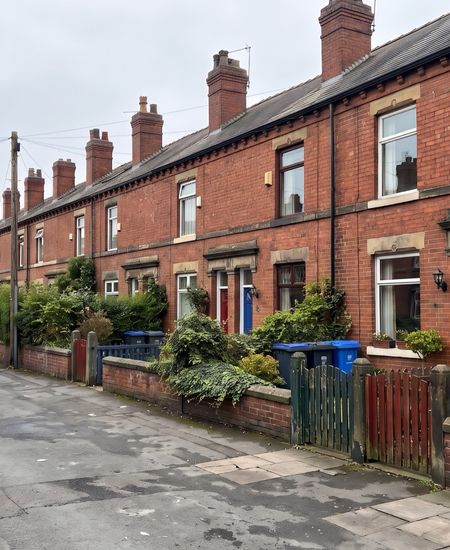
The terraced streets around Lily Hill Street and Nipper Lane belong to Whitefield’s mill-town years, when bleaching, dyeing and cotton work drew families in. Houses of that age usually sit on suspended timber floors, and the void beneath isn’t always divided at every party wall. As the weather turns, a mouse that slips in through a cracked airbrick at one end of the row can wander under several homes and pop up wherever there’s a gap round a pipe or behind a kitchen plinth.
So a terrace job here starts under your feet, with the floor void and the airbricks front and back. If the droppings stop dead at the party wall, the source is often next door, and we’ll tell you so plainly.
Mice in Prestwich’s Victorian villas
The merchant villas that went up after the railway reached Prestwich are big, solid houses, but size works against you where mice are concerned. There are rooms nobody uses every day, roomy lofts with old insulation to shred, outbuildings, and well over a hundred years of plumbing, wiring and extensions pushed through the brickwork. Mice can settle into a back bedroom or a store room for weeks before anyone notices.
On a villa visit we spend most of the first hour looking rather than treating. The loft, under-stairs cupboards, boiler space, outbuildings and the foot of every outside wall all get checked, because blocking one hole achieves little if there are three others.
Estates where tenants and owners share a row
The Hillock, Elms and Victoria estates have been partly sold under right-to-buy, so a single row can hold council tenants and owner-occupiers side by side. Mice pay no attention to who owns what. If you rent, tell your landlord in writing, with dates and photos, because holes in the structure are normally theirs to repair. If you own, the proofing falls to you, but it works far better when the neighbours deal with their side at the same time. We put our findings in writing so everyone can see which gaps are where.
Parks, the river and wood mice
Homes close to Heaton Park, Prestwich Forest Park and the Irwell valley sometimes get wood mice rather than house mice. They’re sandier in colour, with big eyes and ears, and they spend the summer outdoors before moving into sheds, garages and kitchens as it gets colder. The treatment is the same, but a shed full of bird seed or stored garden cushions is worth checking as carefully as the kitchen.
How a mice job runs here
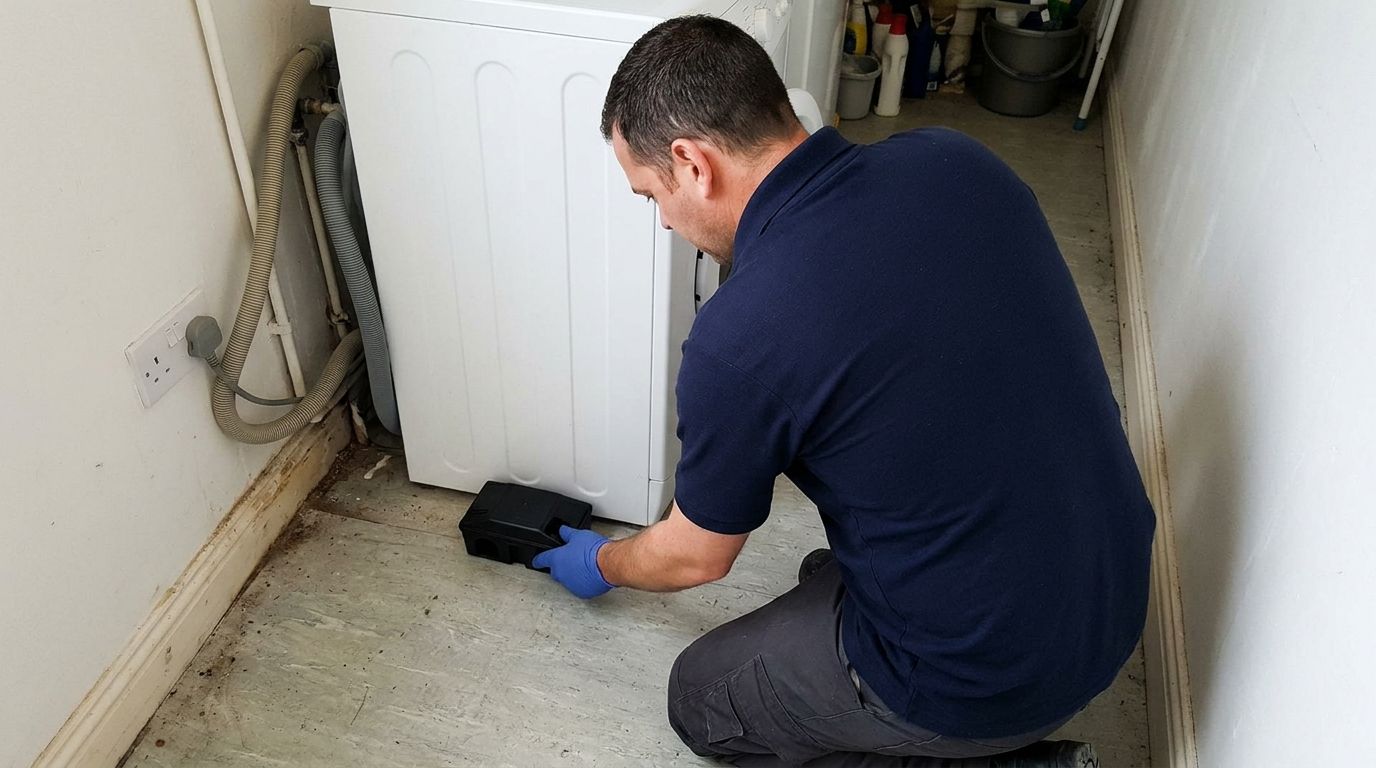
You tell us what you’ve noticed and who lives with you, including children, pets and anyone vulnerable. We’ll offer the earliest slot we have, often the same day. The first visit is a survey: we find the runs and the way in, then set traps inside covered boxes along those runs, adding locked bait boxes only where activity is heavier and only where they’re well out of reach. Homes with cats get traps rather than bait.
About a week later we come back to check, remove any mice and carry on proofing. Most homes need two or three visits in all. Sealing uses materials mice struggle to gnaw: steel wool bedded in sealant around pipes, mesh behind airbrick grilles, brush strips on draughty doors. Anything that needs a builder or a landlord, we’ll point out on the day.
Keeping them out afterwards
With grey bins on a three-weekly round since 2014, food scraps belong in the brown bin and every lid should stay shut. Keep bird seed and pet food in sealed tubs, especially in sheds near the park edges. Check airbricks and pipe entries after any building work, and bear in mind that the Longfield Centre demolition in Prestwich Village may unsettle rodents near the site for a while. If you spot fresh droppings, ring us early; a quick check now beats starting from scratch in January. For rats rather than mice, see our rat control page.
What we tend to find in Prestwich & Whitefield
- Whitefield's older terraces around Lily Hill Street and Nipper Lane date from its mill-town years, and the void under their ground floors can run beneath several houses, so mice often travel along the row without going outdoors.
- Prestwich's Victorian merchant villas have big lofts, outbuildings and well over a century of pipework through their walls, giving mice quiet places to nest and plenty of ways in.
- Right-to-buy has left owner-occupied and council-rented homes side by side on the Hillock, Elms and Victoria estates, so sealing one house properly may need the landlord or owner next door involved too.
- Gardens near Heaton Park, Prestwich Forest Park and the Irwell valley can bring wood mice into sheds and kitchens once autumn sets in.
- Grey bins in Bury went onto a three-weekly round in 2014, so food scraps left in the grey bin rather than the brown one can feed mice and rats for weeks.
What happens when you call us
- 1
Tell us what you've noticed
Call or message us with what you've seen or heard and where. We'll ask about children, pets and anyone vulnerable at home, and we'll offer the earliest slot we have, often the same day.
- 2
A proper look round
We check under kitchen plinths, behind the cooker and washing machine, around pipes and meters, under the stairs, in the loft and along the outside walls to find where mice are living and getting in.
- 3
Treatment chosen for your home
Snap traps inside covered boxes, locked tamper-resistant bait boxes, or both, placed along the runs and out of reach. We show you where every box is before we leave.
- 4
Sealing the way in
We block the gaps we found with materials mice can't easily chew through, such as wire wool packed in with sealant, metal mesh, airbrick covers and door brush strips, and flag anything that needs a builder or your landlord.
- 5
Follow-up and clear-up
We come back to check traps and boxes, remove any mice, look for fresh droppings and finish the proofing, then take all our equipment away once things have gone quiet.
Mice Control in Prestwich & Whitefield: your questions
Will Bury Council treat mice at my house in Prestwich or Whitefield?
Yes, mice are on the council's list, but it's a paid service with no free domestic treatments. You book and pay online, and households receiving Council Tax Support can phone to book a reduced rate. There's also a charge if the technician turns up and can't get in, so make sure someone will be home. Check the council's website for current terms. If you'd prefer a private visit with time set aside to find and seal the entry points, we can help.
Mice seem to be coming through from next door in our Whitefield terrace. Do both houses need treating?
Ideally, yes. In older terraces the space under the floorboards and gaps around shared chimney breasts can link neighbouring homes, so treating one house can simply push mice into the next. We'll treat and proof your side, show you where the droppings stop and start, and leave a short note you can share with your neighbour. If they book a visit too, we can line the two up so both homes are done in the same week, which tends to settle things much faster.
We bought our Elms estate house under right-to-buy. Who pays for sealing the gaps?
Once you own the house, the repairs and proofing are yours, just like any other homeowner's. The house next door may still be rented, though, and mice don't stop at the boundary. If the way in looks to be on a rented neighbour's side, such as a broken airbrick in their wall or a gap where pipes run through, let them know so they can report it to their landlord. We'll write down what we found on your property so you know exactly what's yours to fix.
Our Prestwich villa has a huge loft and old outbuildings. Where do you start looking?
With the places you rarely go. We check the loft first, looking for shredded insulation, droppings along the joists and gaps at the eaves, then work down through spare rooms, under-stairs cupboards and the boiler space to the base of the outside walls. Outbuildings, garages and potting sheds get a look too, because mice often live there and commute indoors at night. In a house this size there's rarely only one way in, so we map them all before sealing anything.
Why have I suddenly got mice when I've never had them before?
It's usually a mix of season and opportunity. Mice move indoors as the weather turns in autumn, and a new gap is often all it takes: a pipe replaced under the sink, a broken airbrick, or a neighbour having building work done or clearing out a shed. In terraces and converted flats, mice can also travel through shared floor voids, so the problem may have started next door. It doesn't mean your home is dirty. Mice find warmth and crumbs in the tidiest of kitchens.
If I've seen one mouse, are there more?
Probably. Mice are shy and mostly active at night, so the one you spot is rarely the only one. A female can start breeding at around six weeks old and have a new litter every few weeks when food and warmth are easy to find, which is how a couple of mice in October can become a busy kitchen by Christmas. Fresh droppings in more than one room, or scratching in the ceiling as well as the kitchen, suggest they're already well settled.
Is mouse treatment safe with a baby, a cat or a dog at home?
Yes, with the right set-up. We ask who lives with you before we choose anything. Traps go inside covered boxes, and any bait is locked inside tamper-resistant boxes placed out of reach, so there's nothing loose for a crawling baby or a nosy dog to find. In homes with cats we lean on trapping, because a cat that eats a poisoned mouse can be harmed. We show you where everything is and take it all away when we're done.
More help in Prestwich & Whitefield
Last updated: