Manchester Pest Solutions is a local pest control service for homes across Manchester and nearby Greater Manchester towns. We deal with mice, rats, wasps, bed bugs, fleas, cockroaches and more, always with children and pets in mind. Call or message us and we'll offer the earliest slot we have, often the same day, then explain everything in plain English.
Which signs mean it’s time to call someone?
Most people call after a moment they can’t unsee: a mouse darting along the skirting at teatime, wasps flying in and out under the eaves, or little rust-coloured spots on the bedsheet. The signs usually come first, though.
- Mice: small dark droppings like grains of rice in cupboards and behind the cooker, nibbled packets, and scratching in the walls once the house goes quiet.
- Rats: bigger, blunt-ended droppings, gnawed holes in a shed door, burrows by a wall or under the compost bin, and heavier thumping under the floor.
- Wasps: a steady stream going in and out of the same spot in the roofline, an airbrick or a hedge.
- Bed bugs: itchy bites in lines or clusters, and small dark spots along mattress seams and the headboard.
- Fleas: bites round the ankles and a pet scratching more than usual.
- Cockroaches: droppings like ground pepper, and night-time sightings behind fridges, boilers and kitchen units.
We see squirrels, ants, moths and silverfish too. Not sure what you’ve got? Send us a photo.
Why do Manchester homes get pests?
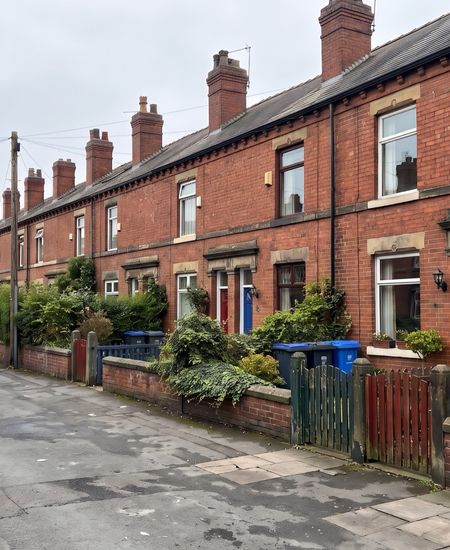
A lot of it comes down to the houses. More than a quarter of homes in the city are terraces, and in Levenshulme most of them went up around the 1880s as two-up two-downs backing onto shared entries. Terraces share roof spaces, under-floor voids and old cavity walls, so a mouse that gets into one house can work its way along the row. Old clay drains under the back yards can crack at the joints with age, which is how rats end up under kitchen floors.
The 1930s semis in Burnage have their own weak spots: broken airbrick grilles, gaps where newer pipes were pushed through old brickwork, and the joint where an extension meets the original house. Purpose-built flats, another quarter of the city’s homes, bring communal bin stores and service risers that mice and cockroaches use as corridors between floors.
Outside, the Mersey runs past Didsbury and Chorlton, the Rochdale and Ashton canals run through the city and the Bridgewater ends at Castlefield; waterside banks suit rats nicely. When an old site is cleared or a drain is dug up, the rats living there often move to the nearest houses. Bags left beside a full bin before bin day are an easy meal.
Then there’s the season. As the nights draw in, mice move indoors for warmth, and one national pest firm’s own figures showed Manchester with the biggest rise in rodent enquiries of the UK cities it covered between 2024 and 2025. Wasps peak in late summer. Bed bugs don’t care what month it is, but student lets in Fallowfield and Withington change hands every summer, and second-hand mattresses and sofas move with them.
What happens when you call us?
Tell us what you’ve seen and where, and we’ll offer the earliest slot we have, often the same day.
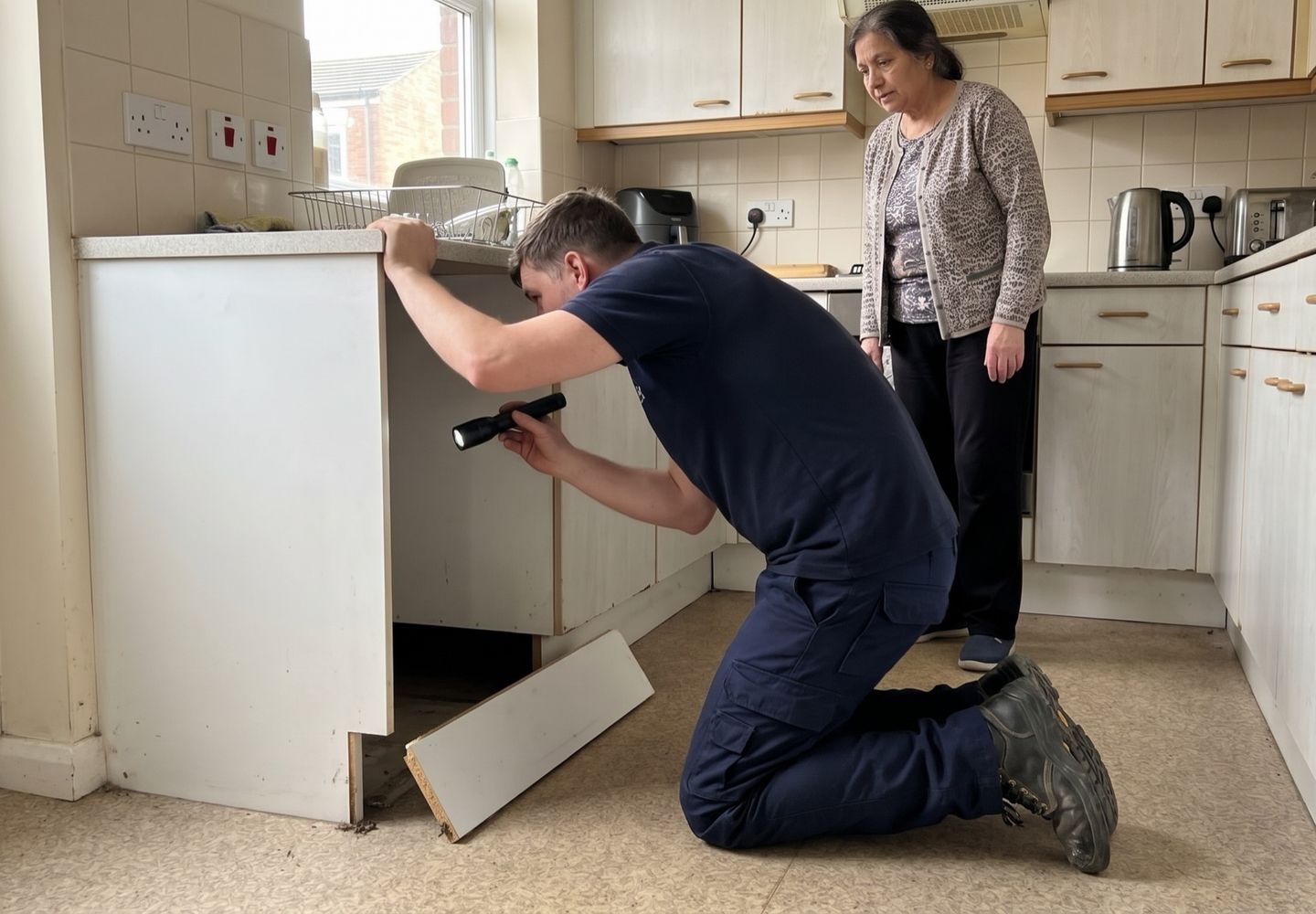
We start by looking, not spraying. We confirm the pest, then work out where it’s living and how it’s getting in: under the kitchen kickboards, behind the boiler, in the loft, round the outside walls and the drains. We’ll ask who lives in the house, including children, pets and anyone pregnant or asthmatic, because that shapes everything that follows.
Before anything goes down, we explain the plan in plain English, including how many visits it’s likely to take and the full cost. For mice and rats that usually means traps in covered boxes or bait in locked stations. For wasps it’s an insecticide dust puffed into the nest entrance. For bed bugs, fleas and cockroaches it’s sprays, gels or dusts, plus a few jobs for you, such as hot-washing bedding. Where we can, we seal gaps around pipes and airbricks on the same visit. If it needs a bigger repair, like a broken drain, we’ll tell you exactly what’s needed and who should do it.
Is it safe with children and pets in the house?
Yes, when it’s done properly. Rodent bait is never left loose. It goes in locked, tamper-resistant boxes or into voids that little hands and paws can’t reach, and professional rodent baits can only be bought with proof of training under the UK’s rodenticide stewardship scheme. With a crawling baby, a dog that noses into everything or a cat that hunts, we’ll often use traps in covered boxes instead, so there’s nothing toxic in the home.
After insect treatments, keep children and pets out of the treated rooms until surfaces are dry, which is usually a few hours; we’ll give you the exact time. Cover fish tanks, switch off their pumps, and move caged birds and reptiles to another room. If a pet ever eats bait, ring your vet straight away.
We won’t use glue traps. Since April 2024 it’s been an offence in England to use one on rodents without a licence from Natural England, and those licences are kept for exceptional cases.
How many visits will it take?
A wasp nest is usually one visit: the wasps carry the dust inside, and the nest normally dies off within a day or two. Mice and rats usually need two or three visits about a week apart, so we can see what’s been taken and finish the proofing. Bed bugs need at least two treatments, the second timed to catch any that hatch after the first. Fleas often clear with one, though a second is sometimes needed. Cockroaches can take several visits over a few weeks, because their eggs sit in a protective case that most treatments don’t reach.
How do you stop pests coming back?
Most repeat problems come down to a way in that never got closed, or food that’s still on offer. A mouse can squeeze through a gap the width of a pencil, so the small things matter:
- fill gaps round pipes under the sink and behind the washing machine, and fit fine mesh behind broken airbricks;
- keep food in sealed tubs, and don’t leave pet food down overnight;
- keep bin lids shut, and never leave bags in the back entry;
- use a bird feeder rather than scattering seed on the ground, because rats like it as much as robins do;
- check second-hand beds, sofas and suitcases before they come in.
Having a kitchen fitted or an extension built? That’s the moment to get gaps and old drain runs sealed while everything’s open.
When does DIY stop being enough?
A single mouse in a snap trap or a few ants by the back door don’t always need us. Call when the signs keep coming back after a couple of weeks, when you can hear movement in the walls or under the floor, or when it’s rats indoors. Wasp nests in the roof or near a door you use every day are best left to someone with the right kit, especially if anyone at home has reacted badly to a sting. Bed bugs and cockroaches rarely give in to shop-bought sprays, which can push them further round the house.
If it turns out to be bees, we’ll talk you through the options first; we’d rather not destroy them. Squirrels in the loft come with a legal catch: a trapped grey squirrel can’t lawfully be released into the wild, so catch-and-let-go isn’t an option.
Running a small shop or café? We help there too; see our commercial pest control page.
Is it my landlord’s job, or mine?
About a third of Manchester households rent privately, and nearly as many rent from the council or a housing association. It depends on the cause and your tenancy, but some rules apply generally.
Under section 11 of the Landlord and Tenant Act 1985, landlords of most homes let for under seven years must keep the structure and exterior, including drains, in repair, and the Homes (Fitness for Human Habitation) Act 2018 means a rented home has to be fit to live in throughout the tenancy. Councils can also assess pests as a hazard under the Housing Health and Safety Rating System. So mice coming through a broken airbrick, rats from a damaged drain, or a problem that was there when you moved in will usually fall to the landlord. If it came in with something of yours, like fleas from a pet or bed bugs in a second-hand sofa, the tenancy may put it on you.
If you rent from a housing association, as many Wythenshawe households do, or from the council, report it to them first. Communal areas in flats and shared houses are normally the landlord’s or managing agent’s job. Report problems in writing and keep photos. If you’re a landlord, keep our visit reports with your property records; we’re happy to speak to your letting agent directly.
What happens when you call us
- 1
Tell us what you've seen
Call or message with what you've noticed and where. A photo of droppings, a nest or a bite helps us bring the right kit, and we'll offer the earliest slot we have.
- 2
A proper look round
We confirm the pest, find where it's living and how it's getting in, and ask who lives in the home, including children, pets and anyone pregnant or asthmatic.
- 3
A plan in plain English
Before anything goes down, we explain what we'll use, where it goes, what you'll need to do, how many visits it's likely to take and the full cost.
- 4
Treatment that suits your home
Traps in covered boxes, bait in locked stations, gels, dusts or sprays, chosen for the pest and placed where little hands and paws can't reach.
- 5
Closing the way in
Where it's practical we seal gaps around pipes, airbricks and kickboards on the day. If it's a bigger repair, we tell you exactly what needs doing and who should do it.
- 6
Follow-up and clear-up
We come back to check it's worked, take away boxes, traps and any dead pests, and leave you simple advice to stop it happening again.
How many visits? It depends on the pest. A wasp nest is usually one visit. Mice and rats usually need two or three visits about a week apart, bed bugs two or more, fleas one or two, and cockroaches several over a few weeks.
Domestic Pest Control: questions people ask us
How much does pest control cost for a home in Manchester?
It depends on the pest, the size of the home, how many visits it needs, how easy the problem is to reach and whether proofing is part of the job. A wasp nest in a low airbrick is a very different job from rats under the kitchen floor of a terrace. We don't publish prices because homes vary so much, but we'll tell you the full cost before any work starts. Check Manchester City Council's website for current pest control services and charges.
How quickly can you come out?
We'll offer the earliest slot we have, often the same day, and we'll be honest with you if we can't. Some jobs shouldn't wait, such as wasps nesting by a door you use every day, a rat inside the house, or pests when someone at home is unwell, so mention anything like that when you call. Others, like a few ants by the back door or the odd moth in a wardrobe, are fine to book for later in the week.
Is pest control safe with a baby, children or pets at home?
Yes, when it's planned around them, which is how we work. Rodent bait goes in locked, tamper-resistant boxes or voids nobody can reach, and in homes with a crawling baby, a nosy dog or a cat that hunts we'll often use traps in covered boxes so there's nothing toxic in the house at all. After insect treatments, children and pets stay out of the room until it's dry. If a pet ever does eat bait or a poisoned mouse, ring your vet straight away and tell them what was used.
Do I need to leave the house while you treat it?
Usually not. For mice, rats and wasps you can carry on as normal; we'll just ask you to keep children and pets away from where we're working. For fleas, bed bugs and cockroaches treated with a spray, everyone, pets included, stays out of the treated rooms until they're dry, which is usually a few hours. You won't normally need to move out. We'll give you clear instructions before and after, including when it's fine to vacuum, wash bedding or mop the floors again.
Is it my landlord's job to get rid of pests?
Often, but not always. Landlords are responsible for keeping the structure and outside of a rented home in repair and for making sure it's fit to live in, so mice getting in through a broken airbrick, rats coming up from a damaged drain or an infestation that was there when you moved in usually fall to them. If the problem came in with something of yours, like fleas from a pet or bed bugs in a second-hand sofa, your tenancy agreement may put it on you. Report it in writing and keep photos.
Can Manchester City Council deal with it instead?
Salford, Stockport, Trafford and the other Greater Manchester boroughs each have their own arrangements, and not every council treats every pest. We can help if you'd like someone to find and seal the way in as well, or if it's a pest the council doesn't cover. It's worth checking your council's current offer either way.
Will mice or rats go away on their own?
Rarely. Once they've found food, warmth and a way in, they have no reason to leave, and they breed quickly: a female house mouse can have several litters a year, and her young can breed themselves within a couple of months. Rats in a loft or under a floor can gnaw cables and pipes, and both can spread germs onto kitchen worktops. Mice that seem to have gone quiet have often just moved to another part of the house, so it's worth acting on droppings early.
Which household pests are hardest to get rid of?
Bed bugs and cockroaches, mainly. Both hide in tiny cracks, both shrug off a lot of shop-bought sprays, and cockroach eggs sit inside a tough case that most treatments can't get through, which is why follow-up visits matter. Mice in older terraces can be stubborn too, because they move between houses through shared roof spaces and wall cavities, so treating one house without proofing it often only buys a few weeks. With the right plan and a bit of patience, all of them can usually be cleared.
What should I do before you arrive?
Don't clean away the evidence. Droppings, nibbled packets, bites and dead insects help us work out what's going on, so leave them where they are or take photos. Don't spray shop-bought insecticide on bed bugs or cockroaches, because it can scatter them into other rooms. If we're treating fleas, vacuum floors, sofas and pet beds thoroughly and treat your pets with a product your vet recommends. For bed bugs, we'll tell you what to bag and wash. And let us know if anyone at home is pregnant or asthmatic.
Domestic near you
- Levenshulme
- Didsbury
- Fallowfield
- Stockport
- Chorlton
- Manchester City Centre
- Salford
- Bury
- Cheadle & Cheadle Hulme
- Eccles & Swinton
- The Heatons
- Longsight
- Prestwich & Whitefield
- Sale
- Stretford
- Urmston
- Withington
- Wythenshawe & Northenden
- Ashton-under-Lyne
- Bramhall & Hazel Grove
- North Manchester (Blackley, Moston & Harpurhey)
- Rusholme & Moss Side
Last updated: