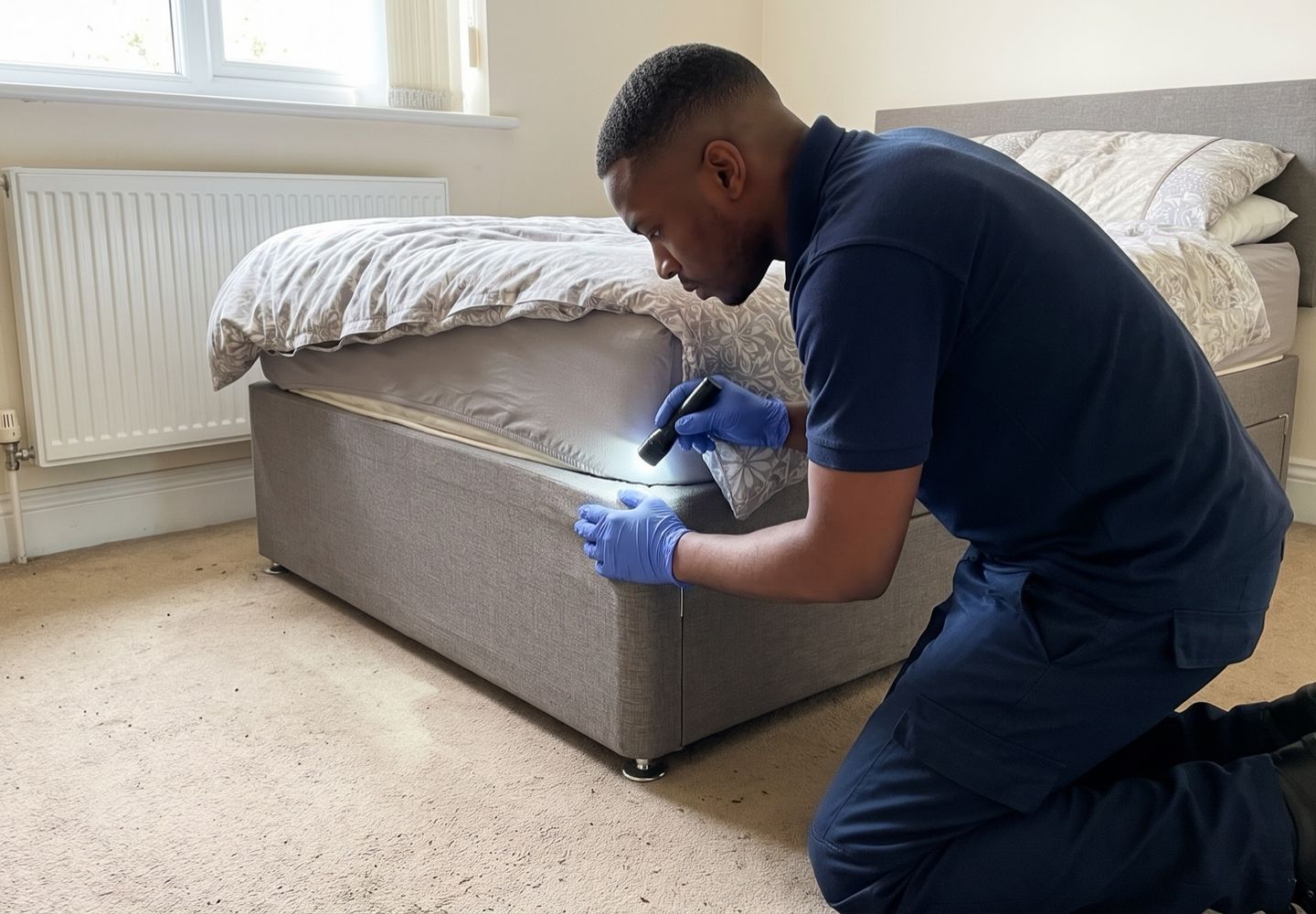
Manchester Pest Solutions treats bed bugs in houses, flats and student lets across Manchester and Greater Manchester. We inspect, then treat, usually over two visits a couple of weeks apart to catch newly hatched bugs, planning around children and pets. Call or message us and we'll offer the earliest slot we have, often the same day.
How do I know it’s bed bugs and not something else?
Most people find out the same way: they wake up with itchy red bumps, often in a short line or a little cluster on the arms, neck or face, wherever skin was out from under the duvet. Bites alone aren’t proof, though. Plenty of people don’t react to bed bugs at all, and fleas, carpet beetle larvae and heat rash can leave similar marks.
The proof is in the bed. Pull the sheet back and check the mattress seams and piping, the joints of the bed frame and the back of the headboard. You’re looking for:
- tiny dark spots like the dot of a felt-tip pen, which smear when rubbed with a damp tissue;
- small rusty smears on the sheet or pillowcase;
- pale, papery skins shed by the young bugs;
- the bugs themselves: flat, oval and reddish-brown, about the size of an apple pip when grown, with paler young ones that are much harder to spot.
Bites round the ankles and a scratching dog suggest fleas, while small hairy larvae along carpet edges point to carpet beetles; we deal with both too. Bed bug bites usually settle in a week or so. A pharmacist can suggest a cream or antihistamine, and see your GP if the pain or swelling spreads, or the bites are still very sore after trying what the pharmacist suggested.
Why do bed bugs turn up in Manchester flats and shared houses?
Bed bugs don’t come from dirt. They travel, hitching a lift in a suitcase after a holiday or a weekend back home, in the seams of a second-hand sofa or mattress, or in a bag that’s spent the night on someone else’s floor. They can’t fly or jump, but they’re very good at waiting.
That suits a city like ours. Every September brings new households, new mattresses and a lot of luggage at once, and furniture handed on or picked up off the pavement at the end of the year can carry bugs from one house to the next. In the city centre, converted mills and warehouses and the newer towers pack lots of flats around shared corridors and risers, and bed bugs can creep between neighbours along pipework and wall voids.
There’s no real bed bug season in a heated home; what matters is movement, so holidays and tenancy changeovers are when they get passed around. Once in, numbers build quietly. Eggs hatch in about a week, young bugs can be adults in as little as a month or so in a warm bedroom, and in a heated home they can often last a few months without feeding, so leaving a room empty isn’t a cure.
What happens when you call us about bed bugs?
We start with a chat about what you’ve seen, where everyone sleeps, whether anyone’s travelled or brought in second-hand furniture lately, and who’s in the house, including babies and pets. A photo of the spots, or a bug stuck to clear tape, helps a lot.
On the first visit we inspect the mattress, bed frame, headboard, bedside drawers, skirting boards, loose wallpaper, the sofa if someone’s slept on it, and the rooms either side, so we know whether it’s one room or the whole house.
Then we treat. Treatment goes into the seams, joints, cracks and crevices where bed bugs actually hide, rather than being sprayed across the room. Steam kills bugs and eggs on contact on mattresses and soft furnishings where a spray isn’t the right choice, and a fine dust can go into voids behind skirting boards. Many bed bugs now cope with common insecticides, so we don’t rely on one product or one method. Whole-room heat treatment is another route for some homes, and we’ll talk you through whether it suits yours. Before we leave, you’ll know what was treated, which rooms to keep out of and for how long.
Is bed bug treatment safe for children and pets?
Yes, when it’s done carefully and you follow the timings we give you. Children, pets and everyone else stay out of treated rooms until surfaces have dried, usually a few hours. Cover fish tanks and switch off the pumps, as some insecticides are very harmful to fish, and move caged birds and reptiles out of treated rooms. For cots and children’s mattresses, we rely on steam and hot washing rather than sprays wherever we can.
Tell us if someone is pregnant, has asthma or another breathing problem, or if a pet is poorly, and we’ll plan around them. Shop foggers aren’t the gentler option: they fill the room with insecticide, rarely reach where bed bugs hide and often drive them elsewhere.
How many visits does bed bug treatment take?
Usually two, about two to three weeks apart. Eggs tucked into crevices are much harder to kill than the bugs, so the second treatment catches the young ones that hatch after the first, before they can lay eggs of their own. A heavy infestation, or one that has spread to other rooms or a neighbouring flat, may need a third visit or a final check.
Between visits, keep sleeping in your own bed. You’re what draws the bugs out across the treated surfaces, and moving to the sofa often spreads them. Don’t vacuum or wipe treated areas until we say it’s fine.
How do I stop bed bugs coming back?
Most of it is about not carrying them home again.
- Wash bedding and clothes at 60°C and tumble dry on hot for at least 30 minutes. Things that can’t be washed can go in a sealed bag in the freezer for two to three weeks, as the NHS suggests.
- Fit a zipped bed bug-proof cover to the mattress and divan base, so there’s nowhere to hide on the outside.
- Keep clutter from under and around the bed.
- Check second-hand furniture before it comes through the door, and never take in a mattress left on the street.
- After a holiday, unpack on a hard floor rather than the bed and put clothes straight into a hot wash.
- Stand the bed legs in interceptor cups for an early warning.
When does DIY stop being enough?
If you find a single bug in a suitcase and hot-wash everything straight away, you may have caught it in time. Once you’re finding spots on the mattress, waking with new bites week after week, or someone else in the house is being bitten, you’re past that point. Bed bugs hide where a spray can’t reach, the eggs survive many shop products, and a half-finished treatment pushes them deeper into the frame, the skirting and the next room. The NHS says much the same: self-help is unlikely to get rid of them completely.
Please don’t throw out the bed before we’ve had a look. Dragging an infested mattress along a communal hallway drops bugs on the way, and a new mattress in an untreated room soon gets moved into.
Is it my landlord’s job or mine?
It depends. There’s no single rule that says a landlord always pays for bed bugs. The repairing duty in section 11 of the Landlord and Tenant Act 1985 covers the structure, exterior and installations of a rented home, not insects. But under the Homes (Fitness for Human Habitation) Act 2018, most rented homes in England must be fit to live in at the start of a tenancy and throughout it, and pests are one of the hazards assessed under the Housing Health and Safety Rating System. A serious infestation the tenant didn’t cause can count.
In practice, if bugs show up soon after you move in, or they’re coming from a neighbouring flat or another room, it will often fall to the landlord or managing agent to sort it. If they arrived later in your own luggage, your tenancy agreement may put the cost on you. In a shared house, treating one room on its own rarely works, so the landlord should coordinate the whole property. Either way, tell your landlord or agent in writing as soon as you spot signs, with photos and dates, and keep the note we leave after each visit.
Check Manchester City Council’s website for current pest control services and charges. Housing association tenants should check with their landlord first, and the other Greater Manchester councils run their own arrangements. Landlords, and anyone running a short-let flat or small guest house, are very welcome too; our commercial pest control page covers that side.
What happens when you call us
- 1
Tell us what you've found
Call or message us with what you've seen. A photo of spots on the mattress, or a bug stuck to clear tape, really helps, and we'll ask who sleeps where, including babies and pets.
- 2
A proper inspection
We check the mattress seams, bed frame, headboard, skirting, sofa and the rooms either side, so we know whether it's one bedroom or the whole house or flat.
- 3
Getting the room ready
You'll get a short prep list: hot-wash the bedding and clothes, bag them up clean, clear under the bed and keep belongings in the room rather than moving them elsewhere.
- 4
First treatment
Treatment goes into the seams, joints and crevices where bed bugs hide, with steam on mattresses and soft furnishings where a spray isn't right. You'll know which rooms to keep out of and for how long.
- 5
Second treatment
We come back about two to three weeks later to deal with the young bugs that hatched from eggs the first visit couldn't reach.
- 6
Final check and advice
If the problem was heavy or had spread, a final check shows whether anything's left. We leave a written note of what we found and did, plus tips to stop bed bugs coming home again.
How many visits? Usually two treatment visits about two to three weeks apart. A heavy infestation, one that has spread to other rooms, or one shared with a neighbouring flat can need a third visit or a final check.
Bed Bug Removal: questions people ask us
Should I sleep in a different room if I have bed bugs?
No, keep sleeping in your own bed if you can. Bed bugs find people by the warmth and carbon dioxide we give off, so if you move to the sofa or a housemate's room they tend to follow, and you end up with two infested rooms instead of one. Staying put also means the bugs have to cross the surfaces we've treated to reach you, which is a big part of how the treatment works. Wash your bedding hot, pull the bed a little away from the wall and keep the duvet off the floor.
Is it possible to get rid of bed bugs overnight?
Not usually, and we'd rather be straight with you about that. Treatment kills the bugs it reaches, but eggs tucked into crevices often survive and hatch over the following week or so, which is why we plan two visits about two to three weeks apart. Whole-room heat treatment can kill every stage in a single day in some homes, but it still needs a check afterwards. Realistically, expect it to take a few weeks, and doing the prep and aftercare makes a real difference.
What kills 100% of bed bugs?
No one method is certain to get every bug, but heat is the most reliable thing. A 60°C wash followed by at least 30 minutes in a hot tumble dryer kills every stage in bedding and clothes, and steam kills the bugs and eggs it touches on a mattress or sofa. The hard part is reaching every bug, because they squeeze into joints, seams and gaps about as thin as a bank card. No single spray does it all, partly because many bed bugs now cope with common insecticides. That's why we combine methods and come back to catch anything that hatched in between.
Do I need to throw my mattress away?
Usually not. Most mattresses can be treated and then sealed in a zipped bed bug-proof cover, which traps anything left inside and gives the bugs nowhere to hide on the outside. Replacing it before the room is treated rarely helps, because the new one is soon reached from the frame and skirting. If a mattress is torn or you'd simply rather it went, wrap it in plastic before it leaves the room, mark it as infested and book a bulky waste collection, so it doesn't end up in someone else's house.
I rent a room in a shared house in Fallowfield. Who pays for treatment?
Tell your landlord or letting agent in writing straight away, with photos and dates. If the bugs appeared soon after you moved in, or other rooms are affected, it's more likely to fall to the landlord to arrange treatment, and in a shared house it needs doing across the whole property rather than one room at a time. If you brought them back from a trip, your tenancy agreement may make it your cost. It's rarely clear-cut, so sort it out together quickly; we're happy to work with tenants, landlords and agents on the same job.
Are bed bugs a sign that my home is dirty?
Not at all. Bed bugs feed on blood, not crumbs or rubbish, and they turn up in spotless flats and smart hotel rooms as readily as anywhere else. They arrive in luggage, second-hand furniture and visitors' bags. Clutter does make them harder to find and treat, because every box and pile of clothes is another hiding place, so a tidy bedroom helps the treatment work, but it won't stop them arriving. There's no need to feel embarrassed about calling us.
How do I get my room ready before you treat?
We'll send you a short list, but the main jobs are these. Strip the bed, wash the bedding and any clothes from around the bed at 60°C, tumble dry on hot and bag everything up clean. Clear the space under the bed and the floor, and empty bedside drawers into sealed bags. Don't move furniture or belongings into other rooms, and don't use shop sprays or foggers beforehand, as they scatter the bugs. Pets and fish tanks need sorting too, and we'll talk you through that.
Is bed bug treatment safe with a baby or pets in the house?
Yes, with sensible precautions. Children and pets stay out of treated rooms until surfaces are dry, usually a few hours, and we'll give you the exact time for what we've used. Fish tanks need covering with the pumps switched off, and caged birds or reptiles should be moved to another room. For cots and children's mattresses we use steam and hot washing rather than sprays wherever possible. Let us know about babies, pregnancy, asthma or poorly pets when you book, so we can plan around them.
Bed Bugs near you
- Fallowfield
- Rusholme & Moss Side
- Withington
- Manchester City Centre
- Chorlton
- Didsbury
- Levenshulme
- Salford
- Stockport
- Bury
- Cheadle & Cheadle Hulme
- Eccles & Swinton
- The Heatons
- Longsight
- Prestwich & Whitefield
- Sale
- Stretford
- Urmston
- Wythenshawe & Northenden
- Ashton-under-Lyne
- Bramhall & Hazel Grove
- North Manchester (Blackley, Moston & Harpurhey)
Last updated: