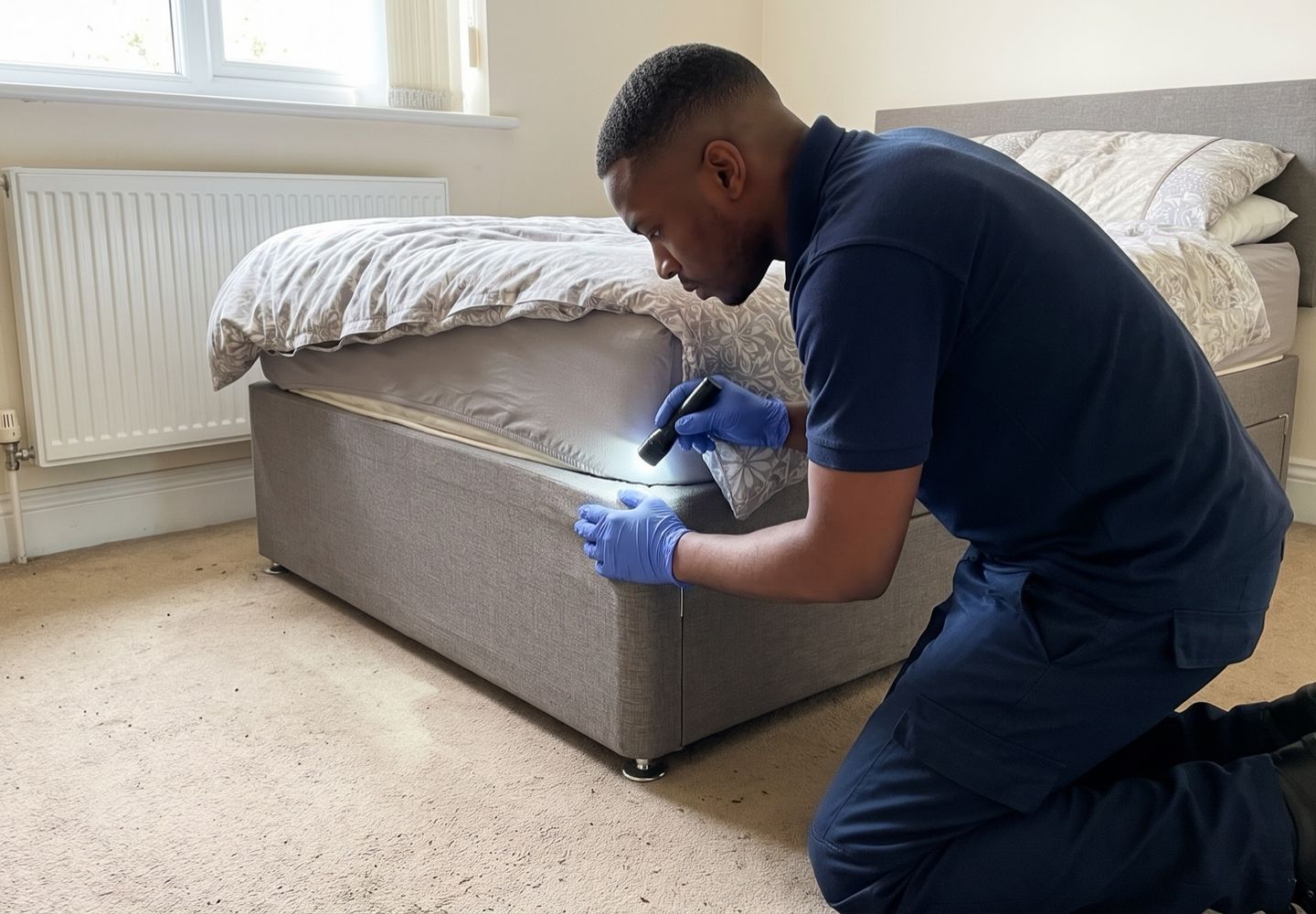
Manchester Pest Solutions treats bed bugs in Manchester City Centre flats, from warehouse conversions in the Northern Quarter and Castlefield to the newer towers. We inspect your flat and the walls you share, treat twice about two to three weeks apart, and plan around children and pets. Call or message us and we'll offer the earliest slot we have.
Why do bed bugs get into city-centre flats so easily?
There’s nothing about a city-centre flat that draws bed bugs in by itself. It’s the comings and goings. The centre is built around travel and study: Piccadilly station handled around 27.4 million passengers in 2024/25, the Oxford Street/Oxford Road corridor heading south from St Peter’s Square has around 74,000 students, and every September brings a wave of moves into rented flats. Suitcases, rucksacks, sofas sold on between flatmates and mattresses carried down from the last tenant all give a bug a lift.
Once one arrives, the building does the rest. A single mated female that slips under a front door or along a heating pipe can start a fresh problem next door. The eggs take roughly a week to hatch, and the young look for a meal soon after, so numbers creep up quietly before anyone notices bites.
What do we usually find in flats here?
City-centre homes are small, and that changes where bed bugs live. At the 2001 census most households in the old Central ward were one person living alone, and small households tend to mean studios and one-bedroom flats. In a studio the bed is often a stride from the sofa, so we treat the whole space as one room. Sofa beds, storage beds with slatted bases and upholstered headboards fixed to the wall are favourite spots.
Warehouse conversions in the Northern Quarter and Castlefield can bring their own quirks. Where a flat has kept exposed brickwork or old timber beams, the mortar joints and cracks give bed bugs plenty of places to tuck away, and we spend longer on the wall nearest the bed. In the newer towers, hiding places are more predictable, such as the skirting, sockets and the back of the headboard, but with so many flats on each floor, the risk of the problem spreading along the corridor is higher.
How does a bed bug job run in a block of flats?
We start with a chat: where you sleep, any recent trips or second-hand furniture, and who lives with you, including children and pets. If you can, photograph the marks on the mattress or trap a bug under clear tape; either one helps us plan.
First time round, we go over the bed, sofa, skirting and any shared walls, then give you a short prep list. We treat the places bugs actually shelter, such as mattress seams, frame joints and cracks along the skirting, and steam the mattress and soft furnishings. About two to three weeks later we return for anything that has hatched since. Heavier problems, or ones shared with a neighbour, may need a final check.
If the flat next door shows signs too, we’ll write that down for your landlord or managing agent. In a block, coordinated treatment of neighbouring flats is what stops the problem bouncing back and forth.
Is it safe with a baby or pets in a small flat?
Yes, with some planning, because in a one-bedroom flat the cot may have nowhere else to go. Cots and children’s mattresses get steam and their bedding a hot wash, and we avoid spraying them wherever we can. Keep everyone, pets included, out of a treated room until it has dried, which normally takes a few hours and in a studio means heading out for a while. Cover any fish tank and turn its pump off, and mention pregnancy, asthma or a pet that’s unwell when you book.
How can I keep bed bugs out of my flat?
- After a trip, unpack on the kitchen floor or in the bath rather than on the bed, and tip clothes directly into the washing machine on a hot cycle.
- Leave any mattress or sofa you find in a corridor or by the bin store where it is, however good it looks.
- Check second-hand furniture from flat-move sales closely, especially joints, seams and the underside.
- If bed bugs have turned up anywhere in your building, fit a zipped cover to your mattress as an early warning.
- Ask your managing agent to remove dumped mattresses from communal areas quickly, so bugs can’t spread from them.
What we tend to find in Manchester City Centre
- The Oxford Street/Oxford Road corridor south of St Peter's Square counts around 74,000 students, and the city's three universities had more than 80,000 between them in 2022, so every September a great deal of luggage and second-hand furniture moves around the centre.
- Roughly 27.4 million passengers used Piccadilly station in 2024/25, and because suitcases are one of the commonest ways bed bugs reach a home, we always ask about recent trips.
- If your converted warehouse flat in the Northern Quarter or Castlefield has kept exposed brickwork or old timber beams, the mortar joints and gaps around the timber give bed bugs extra hiding places close to the bed.
- In towers and converted warehouses where many flats open onto shared corridors and risers, bed bugs can spread next door, so we check the walls and doors you share with neighbours as well as the bed.
What happens when you call us
- 1
Tell us what you've found
Call or message us with what you've seen. A photo of spots on the mattress, or a bug stuck to clear tape, really helps, and we'll ask who sleeps where, including babies and pets.
- 2
A proper inspection
We check the mattress seams, bed frame, headboard, skirting, sofa and the rooms either side, so we know whether it's one bedroom or the whole house or flat.
- 3
Getting the room ready
You'll get a short prep list: hot-wash the bedding and clothes, bag them up clean, clear under the bed and keep belongings in the room rather than moving them elsewhere.
- 4
First treatment
Treatment goes into the seams, joints and crevices where bed bugs hide, with steam on mattresses and soft furnishings where a spray isn't right. You'll know which rooms to keep out of and for how long.
- 5
Second treatment
We come back about two to three weeks later to deal with the young bugs that hatched from eggs the first visit couldn't reach.
- 6
Final check and advice
If the problem was heavy or had spread, a final check shows whether anything's left. We leave a written note of what we found and did, plus tips to stop bed bugs coming home again.
Bed Bug Removal in Manchester City Centre: your questions
Can bed bugs spread from one flat to another in my building?
Yes, they can. Bed bugs walk rather than fly, and in a block they follow the easiest route: under front doors and along corridors, through gaps around heating pipes, and along cable runs behind skirting. A mattress dumped by the bin store can start a problem on another floor entirely. If we find signs near a shared wall, we'll note it for your landlord or managing agent, because treating one flat while the neighbouring one stays infested rarely ends it.
How do you treat a studio flat where I sleep, cook and relax in one room?
We treat the studio as one space, because bed bugs don't stay put when the sofa is a few feet from the bed. That means the bed, any sofa bed or armchair, skirting and the wall behind the headboard, with steam on soft furnishings. You'll need to be out until treated surfaces are dry, usually a few hours, so plan to head out for the afternoon. Bag up clean washing before we arrive, since there's no spare room to store it in.
I've just moved into a city-centre flat and woken up with bites. Were the bugs here before me?
Quite possibly. Lots of dark spotting on the mattress seams, shed skins and bugs of several sizes within your first week or two usually point to an infestation that was already established. Put it in writing to your landlord or letting agent today, attaching photos and your move-in date. If the bugs came with the flat, it's normally theirs to arrange treatment. Don't move furniture from your old place into other rooms until we've checked it too.
Does Manchester City Council treat bed bugs in city-centre flats?
Many councils run a pest control service for residents, but what is covered, who can book and the charges all vary and can change, so check the council's own pest control pages before you book. If you rent from a council or housing association, report the problem to your landlord first. If you would rather book a private firm, call or message us and we'll offer the earliest slot we have.
Should I sleep in a different room if I have bed bugs?
No, keep sleeping in your own bed if you can. Bed bugs find people by the warmth and carbon dioxide we give off, so if you move to the sofa or a housemate's room they tend to follow, and you end up with two infested rooms instead of one. Staying put also means the bugs have to cross the surfaces we've treated to reach you, which is a big part of how the treatment works. Wash your bedding hot, pull the bed a little away from the wall and keep the duvet off the floor.
Is it possible to get rid of bed bugs overnight?
Not usually, and we'd rather be straight with you about that. Treatment kills the bugs it reaches, but eggs tucked into crevices often survive and hatch over the following week or so, which is why we plan two visits about two to three weeks apart. Whole-room heat treatment can kill every stage in a single day in some homes, but it still needs a check afterwards. Realistically, expect it to take a few weeks, and doing the prep and aftercare makes a real difference.
What kills 100% of bed bugs?
No one method is certain to get every bug, but heat is the most reliable thing. A 60°C wash followed by at least 30 minutes in a hot tumble dryer kills every stage in bedding and clothes, and steam kills the bugs and eggs it touches on a mattress or sofa. The hard part is reaching every bug, because they squeeze into joints, seams and gaps about as thin as a bank card. No single spray does it all, partly because many bed bugs now cope with common insecticides. That's why we combine methods and come back to catch anything that hatched in between.
More help in Manchester City Centre
Last updated: