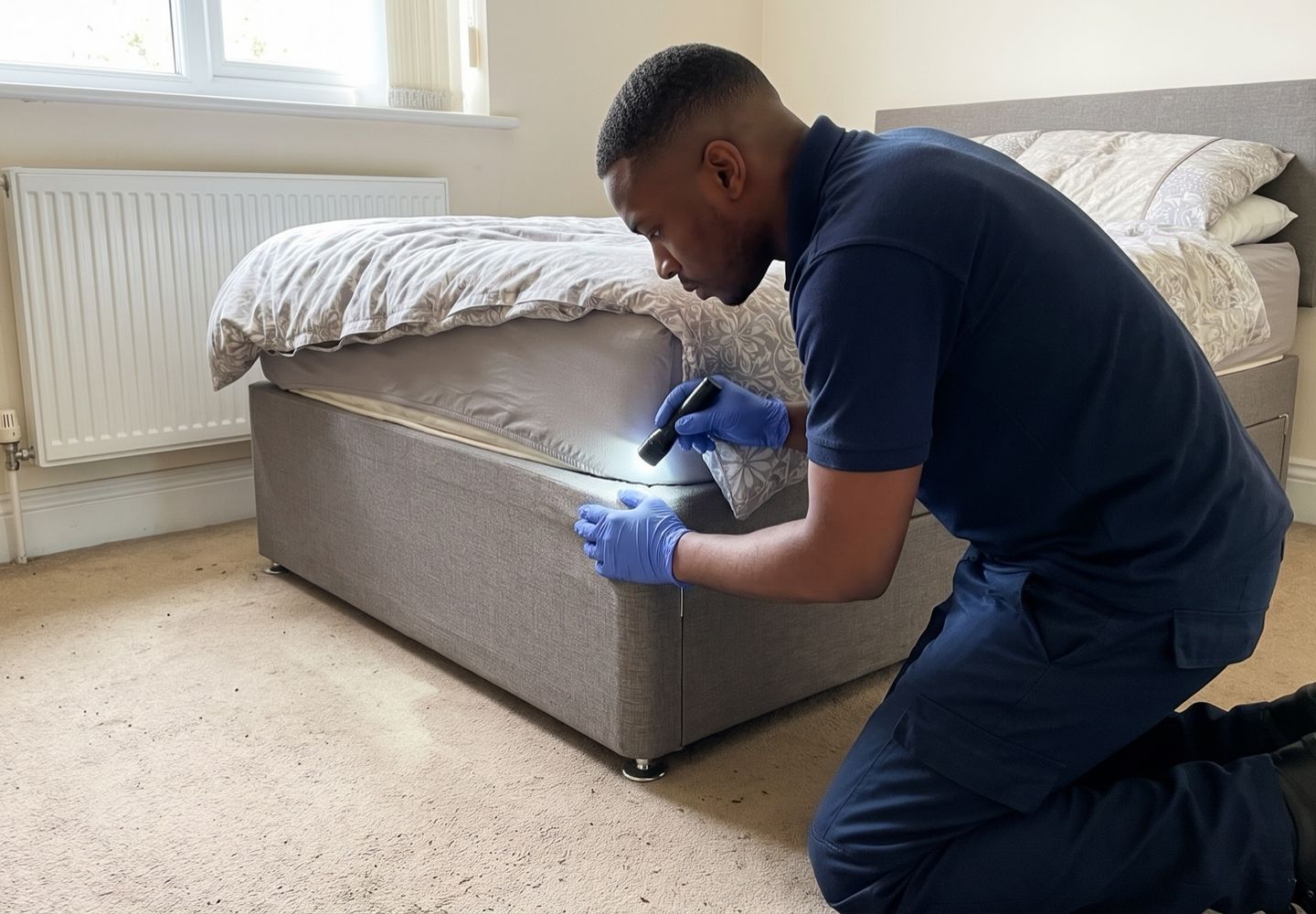
Manchester Pest Solutions treats bed bugs in Salford homes, from Seedley and Langworthy terraces to Pendleton and Quays flats and student houses. We inspect, send a short prep list and treat on two visits two to three weeks apart, working around children and pets. Call or message us and we'll offer the earliest slot we have, often the same day.
Why do bed bugs end up in Salford homes?
Bed bugs aren’t a sign of a grubby house, and nothing about Salford breeds them. They arrive with people: folded into a suitcase, wedged in the stitching of a second-hand bed or riding home in an overnight bag. The more often beds, sofas and luggage change hands, the more chances they get.
The University of Salford alone has more than 19,000 students, so each new academic year fills shared houses and flats at once, often with mattresses and furniture inherited from whoever lived there before. Back in 2011, over a third of households across the wider city were people living on their own. If you live alone, there’s nobody to compare marks with, and some people hardly react to bites, so bugs can multiply for weeks before anyone lifts the sheet.
In a heated home there’s no real bed bug season. The busy spells follow the moves instead: tenancy changeovers, the weeks after summer holidays and the return from visiting family at Christmas.
What do we usually find in Salford’s terraces and flats?
In the terraced houses of Seedley and Langworthy, bed bugs mostly travel indoors: from the mattress to the skirting, along the landing and into the next bedroom, especially where a terrace is shared room by room. Moving next door is less common, but it happens, so we check the party walls too.
Flats behave differently. Pendleton’s high-rise blocks and the towers around Salford Quays, including Imperial Point, Sovereign Point and the three NV Buildings, put many homes around shared corridors and service risers. Bed bugs follow pipe runs and squeeze under front doors, so we check where your flat meets the corridor and the walls you share, and we’ll tell you if the pattern suggests they’re coming in from a neighbour.
Newer homes get them as well. The 672 redeveloped homes on the Ordsall estate, finished in 2017, and the town houses and flats built in Broughton more recently are just as easy to reach in a suitcase as any Victorian terrace. Tighter joinery leaves fewer hiding places, which helps the treatment, but it won’t keep bugs out.
What does treatment look like in a Salford home?
The steps match our main bed bug removal page. We begin with a chat about what you’ve noticed and who lives with you, including babies, children and pets. First time round we check the bed, frame, headboard, sofa and the rooms either side, then treat the seams, joints and crevices where the bugs shelter, using steam for mattresses and upholstery instead of spray. We’re back roughly two to three weeks later for the young bugs that have hatched in between. A heavy or widespread problem may need a final check, and you’ll have a written note after each visit.
Children’s rooms are only treated if we find signs, and cots get steam rather than spray wherever we can. Everyone, pets included, stays out of treated rooms until they’re dry, usually a few hours. In a one-bedroom Quays flat, plan an afternoon out and take the cat or dog with you.
Renting in Salford: who do you tell first?
Your landlord, in writing, with photos and dates. If you rent from Salix Homes, which provides social housing across central Salford, or another social landlord, report it to them before booking anything. Private tenants should contact the landlord or letting agent. In a block, ask the managing agent whether neighbours have reported the same, because clearing one flat while the next stays infested rarely lasts.
By law, most rented homes in England have to stay fit to live in, so a serious infestation you didn’t bring in is often the landlord’s to sort out. Where it’s less clear-cut, our written notes give tenants, landlords and agents the same facts to work from, and we’re glad to deal with all three on one job.
Can Salford City Council deal with bed bugs?
Many councils run a pest control service for residents, but what is covered, who can book and the charges all vary and can change, so check the council’s own pest control pages before you book. If you rent, report the problem to your landlord first. If you would rather book a private firm, call or message us and we’ll offer the earliest slot we have.
How do you keep bed bugs out of a Salford home?
- Leave any mattress or sofa dumped by the bins where it is. Check Salford City Council’s website for current pest control services and charges.
- On moving day, inspect the mattress edges and the bed base before a single bag lands on them.
- Back from a trip? Open the case on a hard floor, not the bed, and run the clothes through a hot cycle.
- Zipping the mattress into a bed bug-proof encasement takes away the outer seams they like to hide in.
Bites clustered round the ankles and a scratching cat point to fleas instead, which our flea removal service covers. If you run a small guest house, our commercial pest control service is the place to start. We also look after homes just over the boundary in Eccles and Swinton.
What we tend to find in Salford
- In the Seedley and Langworthy terraces, bed bugs mostly spread from room to room inside the house, so when a terrace is shared we check every bedroom and the landing, not only the bed with the bites.
- Pendleton's high-rise flats and Quays towers such as Imperial Point, Sovereign Point and the NV Buildings stack many homes around shared corridors and service risers, so we look at where your flat meets the corridor and the walls you share with neighbours.
- With more than 19,000 students at the University of Salford, each new academic year sees mattresses, suitcases and handed-on furniture pour into student houses and flats over the same few weeks.
- In 2011 more than a third of households across the City of Salford were one person living alone, and with nobody to compare bites with, a quiet infestation can go unnoticed until spots appear on the mattress.
- Salix Homes provides social housing across central Salford, so its tenants who find bed bugs should report them to Salix in writing before arranging anything themselves.
What happens when you call us
- 1
Tell us what you've found
Call or message us with what you've seen. A photo of spots on the mattress, or a bug stuck to clear tape, really helps, and we'll ask who sleeps where, including babies and pets.
- 2
A proper inspection
We check the mattress seams, bed frame, headboard, skirting, sofa and the rooms either side, so we know whether it's one bedroom or the whole house or flat.
- 3
Getting the room ready
You'll get a short prep list: hot-wash the bedding and clothes, bag them up clean, clear under the bed and keep belongings in the room rather than moving them elsewhere.
- 4
First treatment
Treatment goes into the seams, joints and crevices where bed bugs hide, with steam on mattresses and soft furnishings where a spray isn't right. You'll know which rooms to keep out of and for how long.
- 5
Second treatment
We come back about two to three weeks later to deal with the young bugs that hatched from eggs the first visit couldn't reach.
- 6
Final check and advice
If the problem was heavy or had spread, a final check shows whether anything's left. We leave a written note of what we found and did, plus tips to stop bed bugs coming home again.
Bed Bug Removal in Salford: your questions
Can I get Salford City Council to treat bed bugs in my home?
Many councils run a pest control service for residents, but what is covered, who can book and the charges all vary and can change, so check the council's own pest control pages before you book. If you rent, report the problem to your landlord first. If you would rather book a private firm, call or message us and we'll offer the earliest slot we have.
I'm a Salix Homes tenant and I've found bed bugs. Should I ring Salix or you?
Report it to Salix first, in writing if you can, with photos of the spots or bugs and the date you first noticed them. As your landlord, they'll explain how they handle bed bugs and whether they'll arrange treatment. If they ask you to sort it yourself, or you'd like a clearer picture of how far it has spread, we're happy to inspect and leave a written note you can pass on. The same goes if your landlord is a housing association.
My neighbour in our Pendleton block has bed bugs. What can I do to protect my flat?
Check your own bed every few days: the mattress piping, the joints of the frame and behind the headboard. Plastic interceptor cups under the bed legs trap bugs trying to climb up, so you'll know early if any arrive. Fill gaps around heating pipes and loose skirting with decorator's caulk, and never bring in furniture left in the corridor or bin store. Tell your landlord or managing agent too, because a problem in a block needs the flats either side checked, not just the one where it started.
We have young children in a Seedley terrace and only our bed has bites. Will you treat the kids' rooms too?
We'll inspect them, because bugs often wander from the main bedroom along the landing, but we only treat rooms where we find signs. If the children's rooms are clear, they carry on sleeping there as normal, and we'll show you what to look for between visits. If we do find bugs near a cot or child's bed, we use steam and a hot wash on the mattress and bedding rather than spray, and treated rooms stay empty until they've dried.
Should I sleep in a different room if I have bed bugs?
No, keep sleeping in your own bed if you can. Bed bugs find people by the warmth and carbon dioxide we give off, so if you move to the sofa or a housemate's room they tend to follow, and you end up with two infested rooms instead of one. Staying put also means the bugs have to cross the surfaces we've treated to reach you, which is a big part of how the treatment works. Wash your bedding hot, pull the bed a little away from the wall and keep the duvet off the floor.
Is it possible to get rid of bed bugs overnight?
Not usually, and we'd rather be straight with you about that. Treatment kills the bugs it reaches, but eggs tucked into crevices often survive and hatch over the following week or so, which is why we plan two visits about two to three weeks apart. Whole-room heat treatment can kill every stage in a single day in some homes, but it still needs a check afterwards. Realistically, expect it to take a few weeks, and doing the prep and aftercare makes a real difference.
What kills 100% of bed bugs?
No one method is certain to get every bug, but heat is the most reliable thing. A 60°C wash followed by at least 30 minutes in a hot tumble dryer kills every stage in bedding and clothes, and steam kills the bugs and eggs it touches on a mattress or sofa. The hard part is reaching every bug, because they squeeze into joints, seams and gaps about as thin as a bank card. No single spray does it all, partly because many bed bugs now cope with common insecticides. That's why we combine methods and come back to catch anything that hatched in between.
More help in Salford
Last updated: