Manchester Pest Solutions clears rats from Salford homes, gardens and yards, including the riverside streets of Lower Broughton and Kersal and the Langworthy terraces. We check drains, decking and airbricks, fix locked boxes away from children and pets, come back to check, then close the way in. Call or message us to book a visit.
Why do rats find so many Salford homes?
Water is the starting point. The Irwell forms the boundary with Manchester, the Manchester Ship Canal and the Quays basins lie to the south, and there’s the Bridgewater Canal as well as the Manchester, Bolton & Bury Canal, which passes Pendleton. Brown rats need to drink every day and like to live near water, so these corridors, together with big green spaces such as Kersal Dale, Peel Park and Buile Hill Park, give them cover within reach of a lot of back gardens.
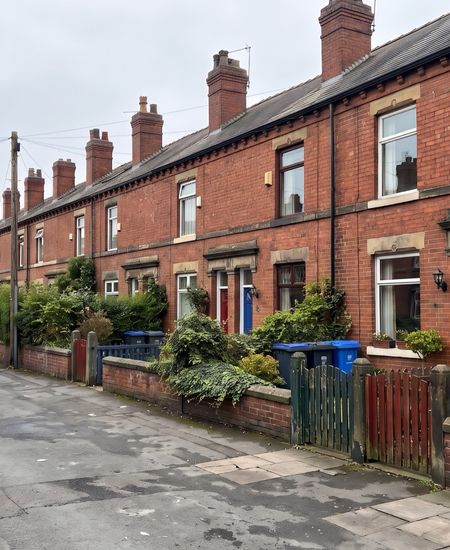
Then there’s the housing. Terraced streets from Salford’s industrial years often have old clay drains, suspended floors and airbricks that have lost their grilles. A cracked drain beneath a Langworthy or Seedley terrace can give rats a route straight under the kitchen floor without them ever crossing the garden.
Riverside streets in Lower Broughton and Kersal
Lower Broughton has a long history as land prone to flooding, and on Boxing Day 2015 the river proved it, flooding around 400 homes there and in Kersal, nearly 300 of them on the Spike Island and Riverside estates. The flood basin and wetland now in place at Kersal gives those streets much better protection. Rats still live along the banks and in the drains, though, and after heavy rain they move to whatever dry ground is nearest: compost heaps, sheds, the space under decking and sometimes the void beneath a house.
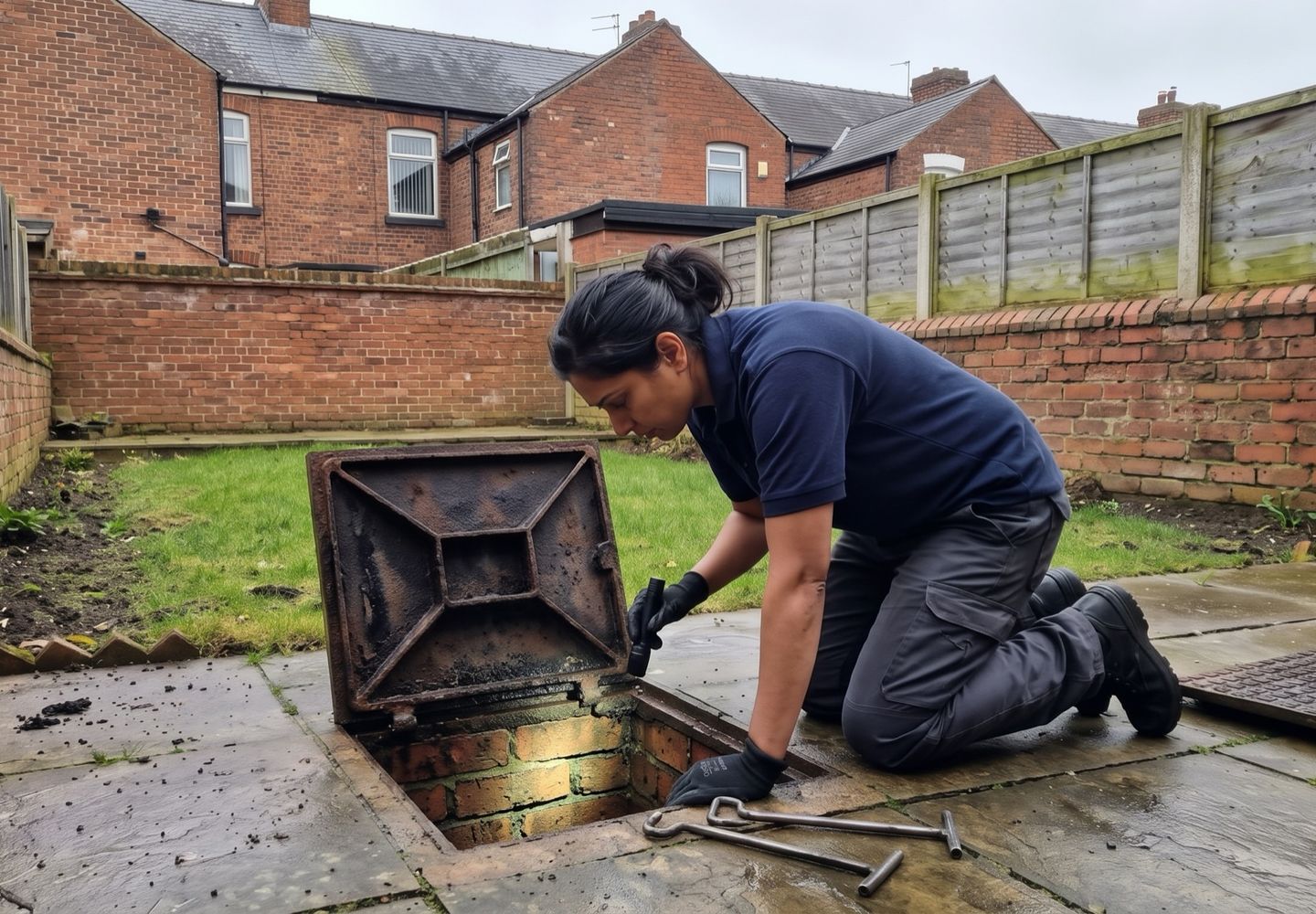
On riverside streets we spend more of the survey outside the building, lifting drain inspection covers and checking gullies, airbricks and the base of walls and fences for holes.
Bin stores, blocks and shared yards
Blocks of flats offer rats a different set of chances. A bin room serving dozens of households is warm and well stocked, and in some buildings it connects with drains and service voids. In July 2026, residents of a block on Camp Street in Lower Broughton described years of rats and cockroaches, and the landlord said bait was going down across the estate while gaps were closed. Problems like that need the whole site treating, not one flat. We’ll work with managing agents and housing providers when they ask us to, and if you’re a resident, we’ll give you notes on what we found to pass on.
Terraced yards have their own version. Check Salford City Council’s website for current pest control services and charges.
What a rat visit looks like in Salford
We’ll ask what you’ve seen, where, and who lives with you, pets included, then offer the earliest slot we have, often the same day.
The first visit is a full survey inside and out: decking, sheds, trampolines, airbricks, pipe entries, the loft if the noise is overhead, and the drain inspection covers. Traps and, where it suits, bait go into locked, tamper-resistant boxes fixed along the routes rats use, away from children and pets. Rats are cautious of new objects, so a quiet first few days is normal.
We return about a week to ten days later to check and adjust the boxes and remove any rats we can reach. Most homes need three visits over two to three weeks. Once the signs stop, everything comes away and we seal the gaps we can, or tell you plainly what needs a builder, a drain specialist or your landlord.
Keeping rats away through a Salford winter
Beyond that, close the open sides of decking with mesh buried into the soil, keep the ground under sheds and trampolines clear, swap broken airbricks for mesh-backed ones and get a camera survey if the drains are suspect. If you see a rat on a path or in a park rather than on your own property, report it to the council, because those reports guide where it baits the sewers.
What we tend to find in Salford
- The Irwell flooded around 400 homes in Lower Broughton and Kersal on Boxing Day 2015, and the streets nearest the river are where we look hardest at drains and airbricks after heavy rain.
- The Manchester, Bolton & Bury Canal passing Pendleton, the Bridgewater Canal, and the Ship Canal with its Quays basins give rats water and cover close to homes in several parts of Salford.
- Residents of a Camp Street block in Lower Broughton reported years of rats before the landlord described an estate-wide baiting programme and work to close gaps, a reminder that blocks need treating as a whole.
What happens when you call us
- 1
Tell us what you've seen
A quick chat about what you've seen or heard, where, and who lives in the house, pets included. We'll offer the earliest slot we have, often the same day.
- 2
A proper look round
Inside and out: decking, sheds, airbricks, pipe holes, the loft and the drain inspection covers, so we know where the rats are living, feeding and getting in.
- 3
Treatment set up for your home
Traps and, where it suits, bait in locked boxes fixed along the routes rats use, well away from little hands and paws. We show you where every box is.
- 4
Follow-up checks
We come back about a week to ten days later to check the boxes, move or top them up, and take away any dead rats we can reach.
- 5
Close the way in
Once the signs stop, we clear everything away and seal the gaps we found, or tell you plainly what a builder or drain specialist needs to put right.
Rat Control in Salford: your questions
I've seen a rat on the path behind our house. Who do I tell?
If it's on public land, such as a park, street or path, report it to Salford City Council. The council uses those reports to decide where to bait the sewers, so even a single sighting helps. For rats in your own garden, yard or house, the route is the council's own service or a private visit like ours. Keep bin lids shut and don't leave food out for birds or wildlife near the boundary, and call us if you find burrows or droppings on your side of the fence.
We've found holes under the trampoline in our Kersal garden. Is that a common spot?
Yes. A trampoline gives rats much the same as decking does: a dry, sheltered patch of ground that cats and foxes rarely bother with, often beside a lawn where crumbs get dropped. The council lists trampolines alongside decking and sheds as places to check. Look for holes a few centimetres across with smooth, worn edges. We fix locked boxes around the edge, well away from where children play, and once the activity stops, moving the trampoline now and then makes the spot far less inviting.
The council told me to contact my landlord about rats. What if nothing happens?
Many councils run a pest control service for residents, but what is covered, who can book and the charges all vary and can change, so check the council's own pest control pages before you book. If you rent, report the problem to your landlord first. If you would rather book a private firm, call or message us and we'll offer the earliest slot we have.
Rats keep appearing in our block's bin store. Can you treat it?
Yes, with the agreement of whoever manages the building, because a bin store is a shared area. Bin rooms are warm, sheltered and full of food, and rats often reach them along drains or through gaps where pipes enter. In Salford blocks we look at the drainage, the doors and any holes at floor level, then fix locked boxes in place away from where residents and children pass. Tell your managing agent or housing provider in writing first; we're happy to work with them so the whole building is covered.
Will rats go away on their own if I leave them?
Rarely. If your garden or home gives them food, water and shelter, rats have every reason to stay, and a pair can turn into a colony within a few months because young rats can breed themselves at around three months old. They sometimes seem to vanish for a while, then come back when the weather turns. The sooner the food is taken away and the way in is found, the smaller and quicker the job, so a single rat seen by the back door is worth getting looked at.
Can I legally put rat poison down in my garden?
You can use shop-bought rat poison, but only exactly as its label allows. Products sold to the public are generally meant for bait points inside or close around buildings, not scattered across lawns, borders or the back entry, and the bait should sit in a tamper-resistant box. Loose poison is a real danger to dogs, cats, children and to wildlife such as hedgehogs and birds of prey that eat poisoned rats. Professional-use rodenticides can only be supplied to people who can show certified competence under the UK Rodenticide Stewardship Regime.
Can rats really come up through the toilet?
It's uncommon, but it does happen. Rats swim well and live in sewers, and where a drain is cracked, badly joined or left open under the floor after old building work, they can find their way into the house or up through a toilet. If you hear scratching under a bathroom floor or see droppings near an inspection cover, we'll check the drains on our visit. Keeping the toilet lid down is a sensible stopgap, and a one-way rat blocker fitted in the drain can stop rats coming in from the sewer side.
More help in Salford
Last updated: