Manchester Pest Solutions deals with rats in Stretford homes and gardens, including canal-side streets, Gorse Hill, Firswood and the flood-plain roads towards Sale Water Park. We survey inside and out, lift the drain covers, fix locked boxes where children and pets can't get at them, and close the gaps afterwards. Call or message us to book.
Why do rats do so well in Stretford?
Stretford hands rats everything they need within a few streets. Water comes first. The Bridgewater Canal has cut through the middle of the town since 1761, the Manchester Ship Canal closes off Trafford Park to the north, and the southern edge of town sits on the Mersey flood plain. Cover comes next: canal banks, the rough margins of parks and playing fields, and the gardens, sheds and decking of the semis that make up nearly half the homes in Stretford ward. Food finishes the picture, from bird seed spilled on lawns and open compost heaps to bin bags left in side passages.
Trafford Park, on the town’s northern doorstep, has a long history of storing and processing food, with the flour mill the Co-operative Wholesale Society opened there and Kellogg’s plant among the best known. For a household, though, the rats that matter are the ones living in and around its own garden, drains and outbuildings, and that’s where our work starts.
What we tend to find in Stretford semis, terraces and flats
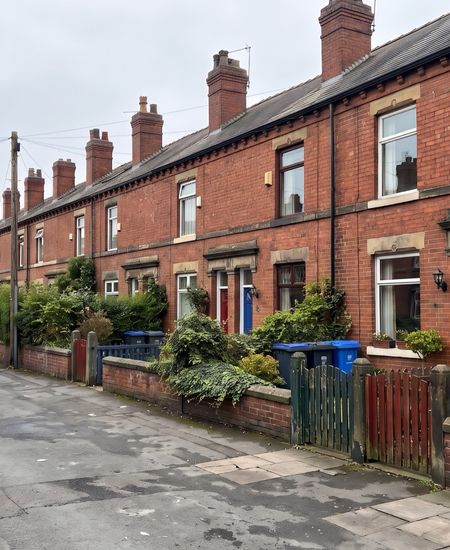
In a semi, the trail usually starts in the side passage where the bins are kept, or under the shed or decking at the bottom of the garden. Rats then work along the shared boundary, and because a semi pair often shares a drain run, the neighbours may already be seeing droppings too. The airbricks that keep the floors of older semis dry are another frequent way in; one cracked airbrick can lead straight into the void under the kitchen.
Terraces, about a fifth of homes in Stretford ward, bring back yards and older drains, where a broken joint or a disused pipe left from past building work can let rats in under the floor. In purpose-built flats, also about a fifth, the communal bin store is the usual draw. If it overflows before collection day, rats settle into the nearby shrubs and landscaping and return every night.
Gardens that back onto the canal, or lie towards Sale Water Park, tend to see more pressure from rats living outdoors. Near the A56 in Gorse Hill, some homes sit close to the small industrial estates on either side of the road, and rats feeding around those yards can forage into gardens.
How does a rat job run in Stretford?
It starts with a phone call or message. Tell us about the droppings, noises or burrows, and mention everyone at home, including rabbits or chickens kept outside, and we’ll offer the earliest slot we have.
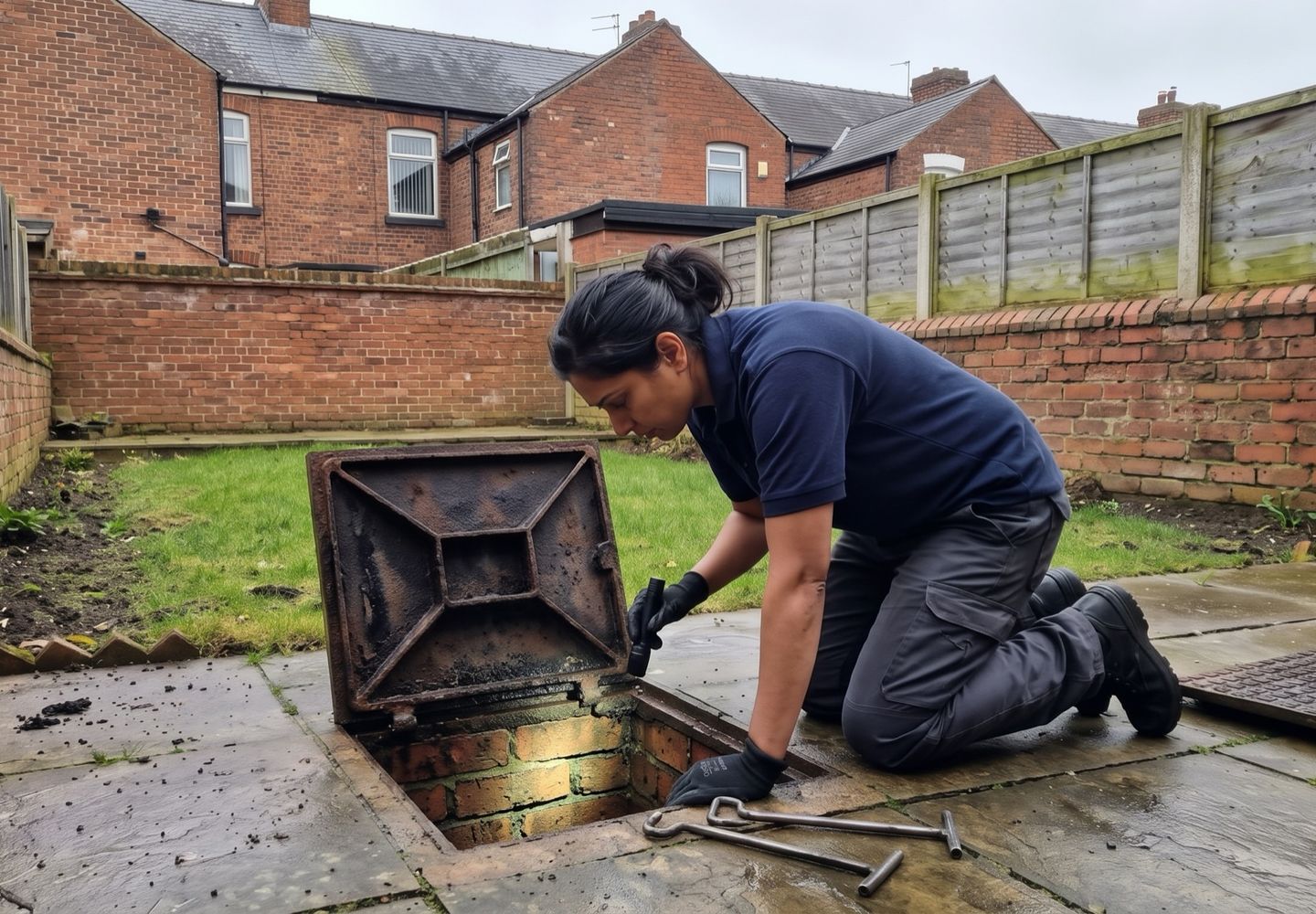
The survey works from the outside in. We check the boundary nearest any water or open ground, the edges of sheds and decking, the airbricks and pipe entries, and we lift the inspection covers to see whether the drains are intact and running freely. Indoors, we look under sinks, behind kitchen units and in the loft if the noises come from above.
Treatment goes into locked, fixed boxes on the routes the rats are using, with traps favoured in gardens a dog or cat uses. We return seven to ten days after the first visit, then once more for a final check, and only clear everything away when the signs have stopped. Most homes need about three visits spread across two or three weeks. If a broken drain is to blame, we’ll tell you plainly and suggest a camera survey to pinpoint it.
Keeping rats out once they’ve gone
Proofing is where Stretford jobs are won or lost. On a canal-side or flood-plain plot, galvanised mesh buried along the base of the boundary fence and around the edges of decking stops rats tunnelling back in. Mesh-backed airbricks, sealed pipe entries and a kick plate on the garage door close off the house itself. Because rats move freely between the gardens of a semi pair or a terrace row, it helps a great deal when neighbours treat and proof at the same time, and we’re happy to look at next door too with their permission.
The daily habits matter just as much: a tray under the bird feeder cleared before dusk, compost in a closed bin, pet food stored indoors, and every bag inside the wheelie bin with the lid down.
Renting? Tell your landlord early
Around one household in five in the Stretford, Gorse Hill and Longford wards rents from a council or housing association, and plenty of others rent privately. If rats are getting in through the structure or the drains, that’s usually your landlord’s to fix, so let them know in writing, with photos, as soon as you see signs. If the droppings turn out to be smaller than a rat’s, our mice control service is the better fit, and we’ll tell you which it is on the first visit.
What we tend to find in Stretford
- The Bridgewater Canal has run through the middle of Stretford since 1761, and its banks give rats water, cover and a sheltered route that passes close to back gardens on both sides of town.
- The southern edge of the town sits on the Mersey flood plain, with Sale Water Park acting as a flood basin just beyond it, so a spell of high water can push rats from the riverside towards sheds, decking and the voids under homes.
- Almost half the homes in Stretford ward are semi-detached, and the shared side passage, garage and drain run of a semi pair are where rat trails usually start and where both households tend to see signs.
- Gorse Hill is split by the A56 Chester Road with a small industrial estate on each side, so some homes there sit close to yards and bins that can feed rats foraging into nearby gardens.
- Stretford Mall closed in February 2026 and is due to be demolished, and work on that scale in the town centre can disturb rats living around old buildings and send them towards neighbouring homes.
What happens when you call us
- 1
Tell us what you've seen
A quick chat about what you've seen or heard, where, and who lives in the house, pets included. We'll offer the earliest slot we have, often the same day.
- 2
A proper look round
Inside and out: decking, sheds, airbricks, pipe holes, the loft and the drain inspection covers, so we know where the rats are living, feeding and getting in.
- 3
Treatment set up for your home
Traps and, where it suits, bait in locked boxes fixed along the routes rats use, well away from little hands and paws. We show you where every box is.
- 4
Follow-up checks
We come back about a week to ten days later to check the boxes, move or top them up, and take away any dead rats we can reach.
- 5
Close the way in
Once the signs stop, we clear everything away and seal the gaps we found, or tell you plainly what a builder or drain specialist needs to put right.
Rat Control in Stretford: your questions
Our garden backs onto the Bridgewater Canal. Can you treat the canal bank as well?
We can't put boxes or bait on the canal bank or towpath, because that land isn't yours or ours to treat. Instead, we make your boundary the end of the line: locked boxes on your side of the fence where rats cross, galvanised mesh buried along the base of the fence and around sheds or decking, and sealed gaps around the house. If you're seeing a lot of rats on the bank itself, report it to the canal's owner, and we'll give you a note of what we found to back it up.
Next door's semi has rats too. Do we both need treating?
It works far better if you both do. A pair of semis often shares a drain run, a party wall and a garden boundary, and rats treat both plots as one territory. If only one house is treated, the rats next door simply move back in once the boxes come away. If your neighbour agrees, we can look at both houses in one trip, place boxes where they'll do most good on either side, and give you both the same proofing advice. It usually ends the job sooner for everyone.
Will the Stretford Mall demolition send rats into homes nearby?
It could, so it's worth getting ready. The mall closed at the end of February 2026 and is due to come down, with a new King Street planned on the site. Knocking down large buildings and digging out foundations disturbs rats that have lived around them, and a share of them will move into houses close by. If you live near the town centre, check airbricks, pipe gaps and the bottoms of garage and back doors now, keep bin lids shut, and book a visit if you spot droppings, gnawing or new holes.
We live near the Chester Road industrial estates in Gorse Hill. Will the rats keep coming back?
Many councils run a pest control service for residents, but what is covered, who can book and the charges all vary and can change, so check the council's own pest control pages before you book. If you rent from a council or housing association, report the problem to your landlord first. If you would rather book a private firm, call or message us and we'll offer the earliest slot we have.
Will rats go away on their own if I leave them?
Rarely. If your garden or home gives them food, water and shelter, rats have every reason to stay, and a pair can turn into a colony within a few months because young rats can breed themselves at around three months old. They sometimes seem to vanish for a while, then come back when the weather turns. The sooner the food is taken away and the way in is found, the smaller and quicker the job, so a single rat seen by the back door is worth getting looked at.
Can I legally put rat poison down in my garden?
You can use shop-bought rat poison, but only exactly as its label allows. Products sold to the public are generally meant for bait points inside or close around buildings, not scattered across lawns, borders or the back entry, and the bait should sit in a tamper-resistant box. Loose poison is a real danger to dogs, cats, children and to wildlife such as hedgehogs and birds of prey that eat poisoned rats. Professional-use rodenticides can only be supplied to people who can show certified competence under the UK Rodenticide Stewardship Regime.
Can rats really come up through the toilet?
It's uncommon, but it does happen. Rats swim well and live in sewers, and where a drain is cracked, badly joined or left open under the floor after old building work, they can find their way into the house or up through a toilet. If you hear scratching under a bathroom floor or see droppings near an inspection cover, we'll check the drains on our visit. Keeping the toilet lid down is a sensible stopgap, and a one-way rat blocker fitted in the drain can stop rats coming in from the sewer side.
More help in Stretford
Last updated: