Manchester Pest Solutions deals with rats in homes, gardens and rented properties across Manchester and nearby Greater Manchester towns. We find where they're getting in, check the drains, treat with children and pets in mind, then close the gaps. We'll offer the earliest slot we have, often the same day. Call or message us to book a visit.
How do I know it’s rats and not mice?
Plenty of people in Manchester first spot rats in the garden: a dark shape running along the fence at dusk, or a new hole beside the shed. Indoors, it’s usually the noise. Rats are much heavier than mice, so scratching and thudding in a ceiling or under the floorboards at night sounds like something with real weight to it.
Other clues:
- droppings about 1 to 1.5 cm long, dark and pointed at the ends, often in small groups along walls or behind the bins;
- burrows roughly 6 to 9 cm across with smooth, worn entrances, under decking, beside compost bins or in a bank;
- dark, greasy smears along skirting boards, pipes and the edges of holes, where their fur rubs as they pass;
- gnawing on door corners, plastic waste pipes, bin lids and bags of bird seed or pet food;
- a sharp, stale smell in a cupboard, garage or under the stairs.
Tiny droppings a few millimetres long in kitchen drawers point to mice instead; our mice control page is the place to start.
Why are rats turning up in so many Manchester homes?
Rats want three things: food, water and a dry, safe spot to nest. A lot of Greater Manchester offers all three within a few metres of the back door.
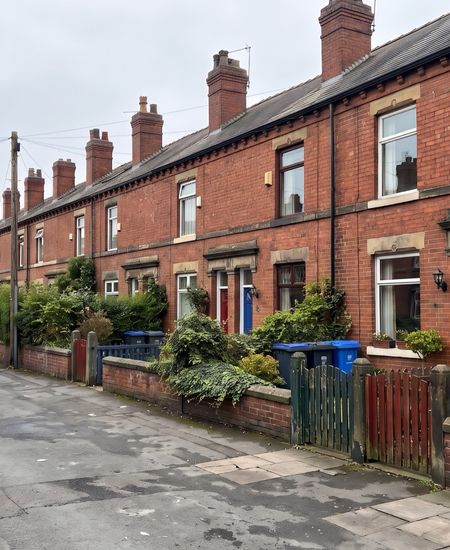
Start with the houses. Many of the city’s older homes are Victorian and Edwardian terraces, like Levenshulme’s two-up two-downs from the 1880s with back entries behind the yards. Homes of that age often have suspended timber floors, cellars and clay drains well over a century old. A cracked drain, a redundant pipe left from a long-gone outside toilet, or one broken airbrick is all a rat needs to get under the floor and up inside a wall. Even where a back alley is gated, bags left behind the gate still feed rats.
The 1930s and 1940s semis of Burnage and the suburbs bring different weak spots: decking, sheds and garages with gaps under the doors, and side passages where the bins live.
Then there’s water. The Mersey, the Bridgewater, Rochdale and Ashton canals, and rivers such as the Medlock and the Irk, which run through culverts under parts of the city, all give rats water and cover. When the Mersey runs high, as it did when the Didsbury flood basin was filled in January 2021 and again on New Year’s Day 2025, rats living along the banks can be pushed towards homes.
Food does the rest: a grey bin that’s full before collection day, bags left beside it, communal bin stores in blocks of flats and seed scattered on the lawn. Building work and drain repairs disturb settled burrows and send rats looking for somewhere new.
If it feels as though rats are everywhere lately, you’re not alone. Figures from a national pest control firm, reported in October 2026, put Manchester’s rodent-control enquiries up 26% between 2024 and 2025, the biggest rise of the cities it named. They’re the firm’s own figures, not an official count.
What happens when you call us?
We’ll ask what you’ve seen or heard and who lives in the house, pets included, then offer the earliest slot we have, often the same day.
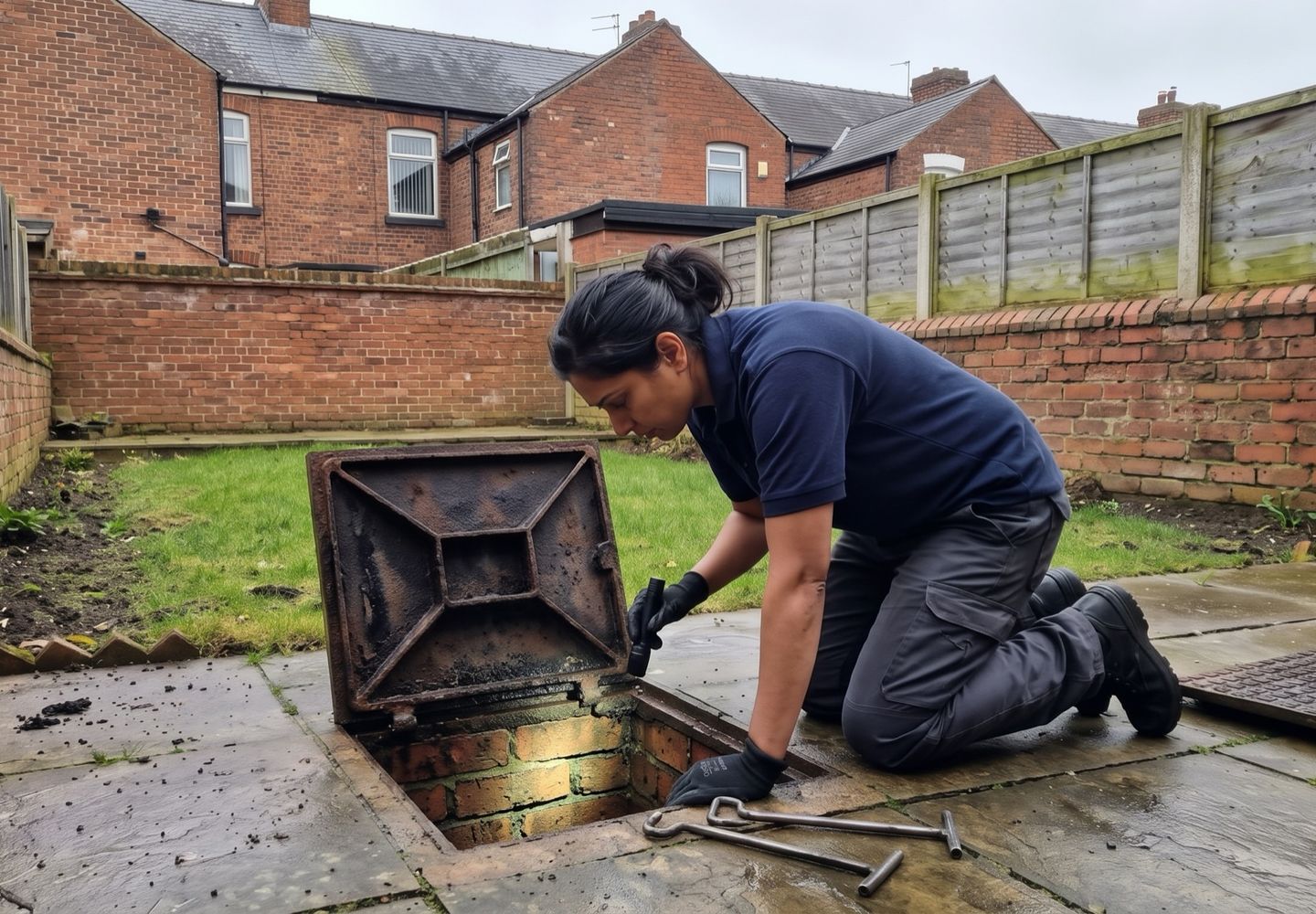
On the first visit we look round properly, inside and out: airbricks, pipes where they pass through the brickwork, decking, sheds, the loft if the noise is overhead, and the drain inspection covers. Treating without knowing where rats live, what’s feeding them and how they get in tends to clear one lot and leave the door open for the next.
Treatment is usually a mix of traps and bait, both inside lockable, tamper-resistant boxes fixed along the routes rats use. Rats are wary of anything new, so it’s normal for nothing to happen for the first few days. We’ll show you where every box is.
About a week to ten days later we come back to check the boxes, move or top them up, and take away any dead rats we can reach. Once there are no fresh signs, everything comes away and we talk you through proofing: what we can fix there and then, and what might need a builder or a drain specialist.
Is it safe with children and pets in the house?
Yes, done properly, and it’s the part we take most care over. There’s never loose bait. Anything we use sits in a locked box, secured so a toddler or a curious dog can’t open it, drag it or tip it over, and traps go inside boxes too. Where pets have the run of the garden, we lean more on traps and proofing.
Most rat baits are anticoagulants, which stop blood clotting, so a dog that eats bait, or a cat that eats a poisoned rat, can become seriously ill. That’s why placement matters so much, and why we leave a note of exactly what was used. If you ever think a pet has eaten bait, ring your vet straight away and tell them the product.
Professional-use baits can only be supplied to people with certified competence under the UK Rodenticide Stewardship Regime, which the industry body CRRU UK runs with government oversight. Its approach is to survey first, use the least risky method that will work, and take bait away once the job is done, not leave it down for months where hedgehogs and birds of prey might find poisoned rats.
How many visits does rat control take?
Most homes need three visits over two to three weeks: treatment, a follow-up and a final check. A large colony, a drain fault, or rats feeding in a neighbour’s garden can stretch that out. We won’t call it finished while there are still fresh droppings, new holes or bait being taken.
How do I stop rats coming back?
Treatment clears the rats you have; proofing stops the next ones. The usual fixes are:
- replace broken airbricks with mesh-backed ones (never block them, as they keep floor timbers dry);
- pack gaps around pipes and cables with wire wool and seal them with mortar or sealant;
- close the open sides of decking with galvanised mesh buried a little way into the soil;
- fit a metal kick plate or bristle strip along the bottom of garage and shed doors;
- if the drains are the route, get a camera survey to find the break, and ask about a one-way rat blocker.
Day to day, put a tray under the bird feeder, keep cooked food out of the compost, keep bin lids shut and bags off the floor, and store pet food and seed in sealed tubs. In a terrace, have a word with the neighbours too, because rats don’t stop at the fence.
When does DIY stop being enough?
A snap trap set inside a box along a wall can deal with one rat passing through. It’s time to call someone when you see rats in daylight or more than one at once, when they’re inside the walls, loft or under the floor, when there are burrows, when signs keep appearing after a week or two of trapping, or when you suspect the drains.
A few things to steer clear of. Since April 2024 it’s been an offence in England to use a glue trap on a rat or mouse without a licence from Natural England, and those are only for professional pest controllers in exceptional cases. Don’t block a hole while rats might still be inside, either; they’ll chew a new way out, sometimes into the house, or die where you can’t reach them and smell for weeks.
Is it my landlord’s job, or will the council help?
If you rent and rats are getting in through the building, the repair usually falls to your landlord. Section 11 of the Landlord and Tenant Act 1985 covers the structure, exterior and drains of most lets, the Homes (Fitness for Human Habitation) Act 2018 requires a rented home to be fit to live in, and councils can assess pests as a hazard under the Housing Health and Safety Rating System. Where the cause is within the tenant’s control, such as rubbish piling up in the yard, the tenancy may share that out differently. Report it in writing and keep photos. We work with landlords and letting agents too, and our visit notes give everyone a clear record.
Check Manchester City Council’s website for current pest control services and charges. If rats are coming from a neighbour’s rubbish-filled yard, councils have powers under the Prevention of Damage by Pests Act 1949 to require the owner or occupier to deal with it.
Running a café or corner shop? Food law expects you to have proper pest control in place, so see our commercial pest control page.
What happens when you call us
- 1
Tell us what you've seen
A quick chat about what you've seen or heard, where, and who lives in the house, pets included. We'll offer the earliest slot we have, often the same day.
- 2
A proper look round
Inside and out: decking, sheds, airbricks, pipe holes, the loft and the drain inspection covers, so we know where the rats are living, feeding and getting in.
- 3
Treatment set up for your home
Traps and, where it suits, bait in locked boxes fixed along the routes rats use, well away from little hands and paws. We show you where every box is.
- 4
Follow-up checks
We come back about a week to ten days later to check the boxes, move or top them up, and take away any dead rats we can reach.
- 5
Close the way in
Once the signs stop, we clear everything away and seal the gaps we found, or tell you plainly what a builder or drain specialist needs to put right.
How many visits? Usually three visits over two to three weeks: the survey and treatment, a follow-up about a week to ten days later, and a final check before we clear up. Drain faults or a large colony can mean more.
Rat Control: questions people ask us
Will rats go away on their own if I leave them?
Rarely. If your garden or home gives them food, water and shelter, rats have every reason to stay, and a pair can turn into a colony within a few months because young rats can breed themselves at around three months old. They sometimes seem to vanish for a while, then come back when the weather turns. The sooner the food is taken away and the way in is found, the smaller and quicker the job, so a single rat seen by the back door is worth getting looked at.
Can I legally put rat poison down in my garden?
You can use shop-bought rat poison, but only exactly as its label allows. Products sold to the public are generally meant for bait points inside or close around buildings, not scattered across lawns, borders or the back entry, and the bait should sit in a tamper-resistant box. Loose poison is a real danger to dogs, cats, children and to wildlife such as hedgehogs and birds of prey that eat poisoned rats. Professional-use rodenticides can only be supplied to people who can show certified competence under the UK Rodenticide Stewardship Regime.
Can rats really come up through the toilet?
It's uncommon, but it does happen. Rats swim well and live in sewers, and where a drain is cracked, badly joined or left open under the floor after old building work, they can find their way into the house or up through a toilet. If you hear scratching under a bathroom floor or see droppings near an inspection cover, we'll check the drains on our visit. Keeping the toilet lid down is a sensible stopgap, and a one-way rat blocker fitted in the drain can stop rats coming in from the sewer side.
Are rats in the drains my responsibility or the water company's?
It depends where the fault is. Since October 2011, sewers and lateral drains that are shared with neighbours or run beyond your boundary have generally been the water company's responsibility, so report rats or damage there to them. A drain that serves only your home and sits inside your boundary is usually yours to maintain. In a rented home, drains normally fall under the landlord's repair duty. We'll lift the inspection covers on a visit and tell you which part looks to be at fault.
What time of year are rats worst in Manchester?
Most households notice rats from autumn into winter, when it turns cold and wet and rats look for warm, dry spots close to food: lofts, garages and the space under kitchen floors. Rats breed all year, though, and summer can be busy too: one national pest control firm reported rat sightings up by around 15% over June to August 2026, during a very hot summer. If you're seeing them in October, treat it as the start of the season rather than the end of it.
Is rat treatment safe if I have a baby, a dog or a cat?
Yes, with the right approach. Tell us about everyone in the house, including rabbits, guinea pigs or chickens kept outside. Every trap and any bait goes inside a locked, secured box placed where children and pets can't get at it, and we show you where each one is. Where a dog or cat has the run of the garden, we lean more on traps and proofing. We take everything away once the rats have gone and leave a note of any product used, in case you ever need to tell your vet.
Will Manchester City Council deal with rats for me?
Manchester City Council runs its own pest control service for homes inside the city boundary. Council tenants can have rats treated free by saying they're a council tenant when they get in touch; other households pay and book through the council's online system. If you rent from a housing association, start with your landlord. Neighbouring councils such as Salford and Stockport run their own arrangements, and terms change, so check your own council's website before booking. If you'd rather book a private visit, we're happy to help.
My landlord says rats are my problem. Is that right?
Not usually, if the rats are getting in because of the building. In most tenancies the landlord must keep the structure, exterior and drains in repair under section 11 of the Landlord and Tenant Act 1985, and the home has to be fit to live in under the Homes (Fitness for Human Habitation) Act 2018. If the cause is within your control, such as rubbish piling up in the yard, your tenancy may put that part on you. Report it in writing with photos and keep copies. If nothing happens, the council's private housing team can inspect.
Why are rats living under my decking?
Decking is dry, dark, close to the house and hard for cats and foxes to get under, and it often sits right next to the things rats like most: a bird feeder, the barbecue, pet bowls or the bins. Look for burrows in the soil at the edges and droppings in the gaps between boards. We treat around the edges with secured boxes, then the lasting fix is to close the open sides with galvanised mesh buried a little way into the ground and stop food dropping through the boards.
Rats near you
- Levenshulme
- Didsbury
- Stretford
- Salford
- Chorlton
- Fallowfield
- Manchester City Centre
- Stockport
- Bury
- Cheadle & Cheadle Hulme
- Eccles & Swinton
- The Heatons
- Longsight
- Prestwich & Whitefield
- Sale
- Urmston
- Withington
- Wythenshawe & Northenden
- Ashton-under-Lyne
- Bramhall & Hazel Grove
- North Manchester (Blackley, Moston & Harpurhey)
- Rusholme & Moss Side
Last updated: