Manchester Pest Solutions tackles rats in Didsbury homes and gardens, including houses near the Mersey around Palatine Road and Stenner Lane, East Didsbury semis and West Didsbury flats. We survey, check the drains, set locked boxes away from children and pets, then seal the way in. Call or message us to book.
What does living near the Mersey mean for rats?
The river forms Didsbury’s southern and south-western edge, and the ground beside it is flood plain. Between the houses and the water sits a broad strip of the kind of land brown rats like best: Fletcher Moss Botanical Garden, the partly flooded Stenner Woods in an old loop of the river, the grazed Millgate Fields and the water meadows beyond. There is cover, water and plenty to eat, with back gardens close by.
That land has flooded twice in recent years. During Storm Christoph in January 2021 the Didsbury flood storage basin was filled and around 2,000 homes across Didsbury and Northenden were evacuated. Early on New Year’s Day 2025 the sluice gates into Fletcher Moss were opened, and water crossed Stenner Lane. Local councillors’ flood updates in 2025 said more than 500 people had to leave homes on Palatine Road and Stenner Lane. When water floods their burrows, rats head for the nearest dry ground, which tends to mean sheds, decking, garages and the voids under houses. The breached embankments were repaired in October 2025, but rats displaced by a flood don’t always move back.
Railway banks, tram lines and parks
The river isn’t the only corridor. The Styal Line and the Metrolink both run through Didsbury’s housing, and green spaces such as Fog Lane Park, Didsbury Park and Marie Louise Gardens sit among the streets. Lineside banks and the rougher edges of parks are good places for rats to burrow, and a garden with a bird feeder, a compost heap or a run of decking is the obvious next stop. We can’t treat land that isn’t yours, so the job is to make your boundary and your house hard to cross.
Bins, bars and flats above shops
Food is the other half of the story. West Didsbury has a lot of purpose-built flats and converted houses, and shared bin stores that fill up before collection day are a regular draw. In Didsbury Village, the bars around Wilmslow Road and Warburton Street trade late into the night, one of them winning a 3am weekend closing on appeal in 2026, and some still have flats lived in above them. The restaurants and supermarket at Parrs Wood are another busy spot. When waste sits out, or rubbish is dumped in a quiet car park, rats find it quickly. Residents in flats above or behind food businesses often feel the effect first.
How does a rat job run here?
Get in touch with what you’ve spotted, where, and whether there are children or animals at home, and we’ll offer the earliest slot we have, often the same day.
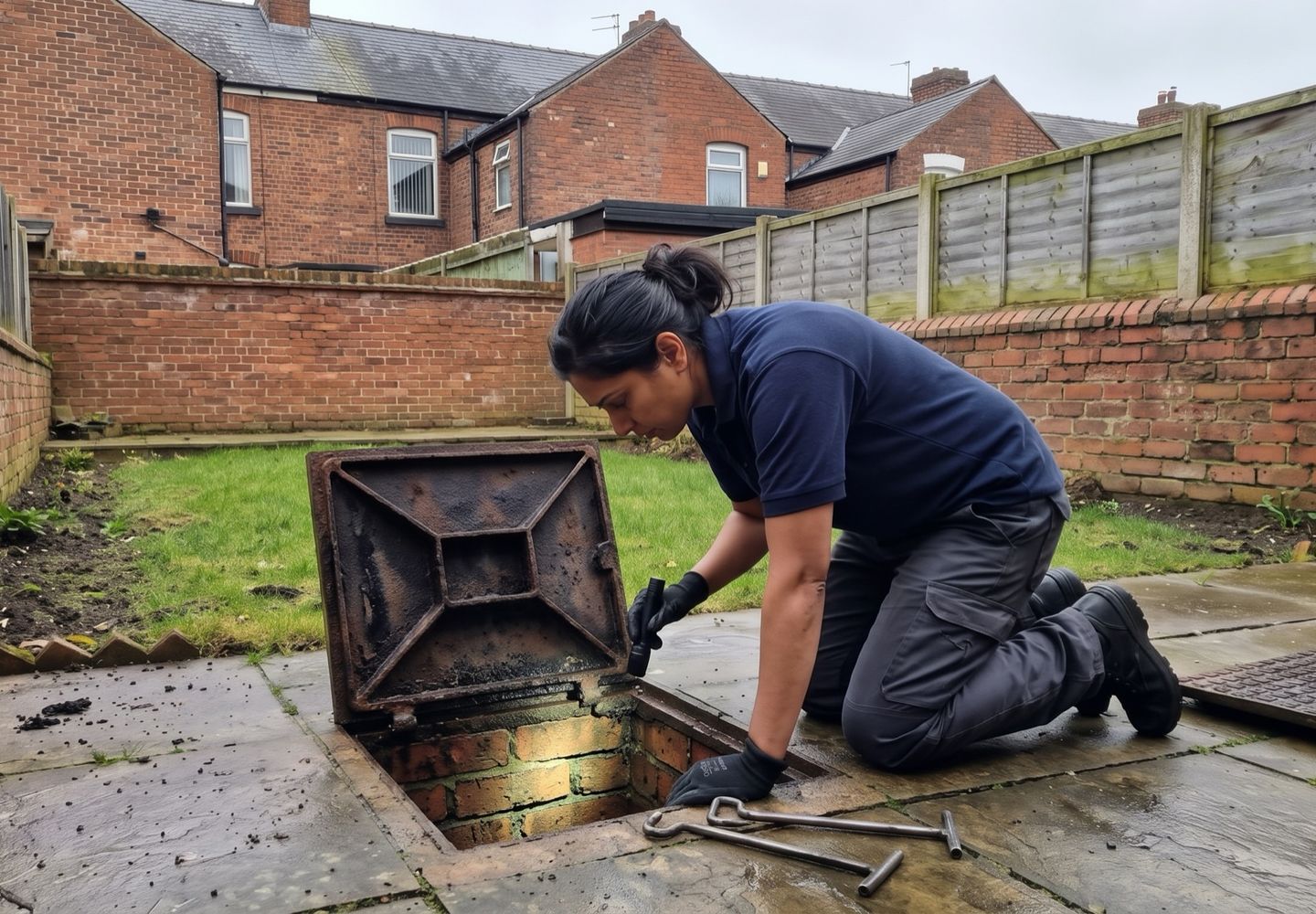
When we arrive, we walk the outside of the house and the garden boundary, look at airbricks, pipe holes, sheds and decking, and lift the drain inspection covers. Near the river we pay extra attention to anything repaired or replaced after the floods. Every trap, and any bait, sits in a locked box secured on the runs rats take, where children and dogs can’t reach, and we’ll point out each one before we go. Rats are wary of new objects, so a quiet first few days is normal.
The second visit falls seven to ten days after the first, when we check every box and take away any rats we can get at. Three visits spread over a fortnight to three weeks covers most Didsbury homes. Once the activity has stopped, the boxes come out and the proofing goes in, or we explain plainly which parts need a builder or a drain specialist.
Keeping rats away from a Didsbury home
On the river side of Didsbury, check your airbricks after any flood repairs and make sure the replacements have fine mesh behind them, because airbricks need to stay open to keep floors dry. Skirt any decking with galvanised mesh sunk a short way into the ground. If you back onto a railway bank or a park, keep the strip along the fence clear of piled wood and rubbish so rats have nowhere to settle. In flats, ask the agent to keep bin store doors shut and bins emptied on time. For smaller droppings in kitchen drawers, our mice control page is the better place to start.
What we tend to find in Didsbury
- The Mersey runs along Didsbury's southern and south-western edge, and whenever it floods, as in January 2021 and at New Year 2025, water fills bank-side burrows and sends rats looking for dry shelter in gardens nearby.
- Stenner Woods, the grazed Millgate Fields and the water meadows around Fletcher Moss give rats plenty of cover and food within reach of back gardens on the river side of Didsbury.
- The Styal Line and the Metrolink, with four stops in Didsbury, run between the houses, and lineside banks are a common place for rats to burrow before moving into gardens.
- Purpose-built flats make up over a third of West Didsbury homes, and a shared bin store that overflows before collection day is one of the commonest reasons rats settle behind a block.
- Food waste and dumped rubbish around the village bars, like the fly-tipping recorded in 2026 at a boarded-up former bar's car park on Warburton Street, can feed rats until it is cleared.
What happens when you call us
- 1
Tell us what you've seen
A quick chat about what you've seen or heard, where, and who lives in the house, pets included. We'll offer the earliest slot we have, often the same day.
- 2
A proper look round
Inside and out: decking, sheds, airbricks, pipe holes, the loft and the drain inspection covers, so we know where the rats are living, feeding and getting in.
- 3
Treatment set up for your home
Traps and, where it suits, bait in locked boxes fixed along the routes rats use, well away from little hands and paws. We show you where every box is.
- 4
Follow-up checks
We come back about a week to ten days later to check the boxes, move or top them up, and take away any dead rats we can reach.
- 5
Close the way in
Once the signs stop, we clear everything away and seal the gaps we found, or tell you plainly what a builder or drain specialist needs to put right.
Rat Control in Didsbury: your questions
We had to leave our home during the Mersey floods. Should we expect rats now?
Not necessarily, but it's worth keeping an eye out. Flood water fills the burrows rats dig into river banks and rough ground, and they move to the nearest dry shelter, often a shed, decking or the space under a floor. Repairs afterwards can leave new gaps around pipes, replaced airbricks and doors. If you've seen droppings, fresh holes in the soil or gnawing since you moved back, book a check, and we'll look at the outside of the house and lift the drain covers.
Our garden backs onto the railway or the tram line. Can you deal with rats coming from there?
We can protect your side of the fence. We can't put boxes on railway or tram land, so we set locked boxes along your boundary where rats cross, find where they're getting into the garden and the house, and close those routes with buried mesh, kick plates and sealed pipe holes. If you're seeing a lot of activity on the lineside itself, report it to the operator of that line so they can look at their land too. We'll note what we saw to help you do that.
I live in a flat above a bar or shop in Didsbury Village. Who deals with rats?
Tell your landlord in writing first, because the structure and drains of the building are usually their responsibility. If rats are coming from the business below, its bins or its waste, that business has legal duties of its own, and food premises in particular must keep pests out and keep records. The best result comes when the landlord and the business book one visit together, so the whole building is checked. We're happy to talk to both and send the same notes to everyone.
How can you tell if our rats are coming from the drains or from the river side?
The signs usually point one way. Burrows in the soil near a boundary, runs through the grass and droppings by a shed suggest rats living outside and coming in from the garden. Scratching under a bathroom or kitchen floor, droppings near an inspection cover and no burrows at all suggest the drains. We lift the covers on the first visit, and if a drain fault looks likely, we'll recommend a camera survey so the break can be found and repaired.
Will rats go away on their own if I leave them?
Rarely. If your garden or home gives them food, water and shelter, rats have every reason to stay, and a pair can turn into a colony within a few months because young rats can breed themselves at around three months old. They sometimes seem to vanish for a while, then come back when the weather turns. The sooner the food is taken away and the way in is found, the smaller and quicker the job, so a single rat seen by the back door is worth getting looked at.
Can I legally put rat poison down in my garden?
You can use shop-bought rat poison, but only exactly as its label allows. Products sold to the public are generally meant for bait points inside or close around buildings, not scattered across lawns, borders or the back entry, and the bait should sit in a tamper-resistant box. Loose poison is a real danger to dogs, cats, children and to wildlife such as hedgehogs and birds of prey that eat poisoned rats. Professional-use rodenticides can only be supplied to people who can show certified competence under the UK Rodenticide Stewardship Regime.
Can rats really come up through the toilet?
It's uncommon, but it does happen. Rats swim well and live in sewers, and where a drain is cracked, badly joined or left open under the floor after old building work, they can find their way into the house or up through a toilet. If you hear scratching under a bathroom floor or see droppings near an inspection cover, we'll check the drains on our visit. Keeping the toilet lid down is a sensible stopgap, and a one-way rat blocker fitted in the drain can stop rats coming in from the sewer side.
More help in Didsbury
Last updated: