Manchester Pest Solutions deals with wasp nests at homes across Didsbury, from Didsbury East semis to West Didsbury flats and conversions. We check it isn't bees, trace the flight line, dust the entrance and tell you how to keep children and pets clear. Call or message us and we'll offer the earliest slot we have, often the same day.
Why do wasps nest in Didsbury homes?
A queen coming out of hibernation in spring needs a dry cavity with a narrow way in, and Didsbury’s two wards, East and West, offer her rather different options.
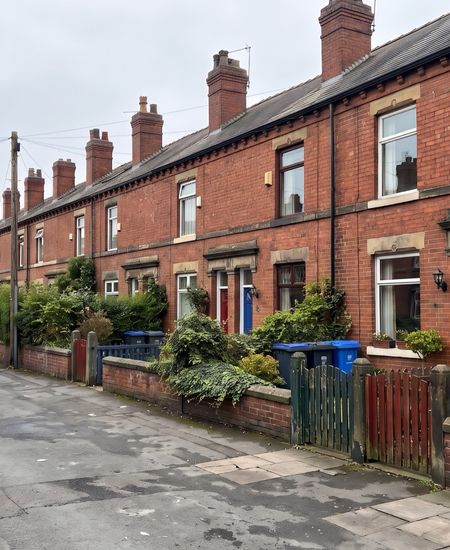
In the Didsbury East ward, more than half of households live in a semi, according to the 2021 Census. Semis carry a lot of roofline: soffits, fascia boards, the corners where gutters turn, and airbricks near the ground. Once a board warps or a joint opens, a queen can get into the loft or the wall cavity behind it. West Didsbury looks different: purpose-built flats and converted or shared houses between them hold more than half of its households, so the roof above a nest may cover several homes, and the person bothered by the wasps is often not the person in charge of the roof.
Green space adds to it. Down by the Mersey are Fletcher Moss Botanical Garden, which combines garden and wildlife habitat, along with the wet woodland of Stenner Woods and the grazed fields at Millgate. Marie Louise Gardens, Didsbury Park and, on the northern side, Fog Lane Park bring the same mix in among the streets. That means plenty of insects for workers to hunt and old wood to chew into nest paper.
Where is the nest likely to be?
On a semi, look at the corner of the soffit, the bottom row of tiles and any cracked airbrick. In the garden, nests turn up in compost bins, under decking, in sheds and down old mouse holes in the lawn, which matters if the trampoline or the paddling pool is close by.
In a converted house, the nest is often in the shared roof void above the top flat or behind an old vent, so the wasps can be pestering one flat while the entrance sits over someone else’s bedroom. In purpose-built blocks, check balconies, extractor vents and the gaps around pipes.
What happens on the day?
Tell us whether it’s a house or a flat, which floor you’re on, where the wasps go in and whether anyone at home reacts badly to stings. A photo taken from well back helps us rule out bees, and we’ll offer the earliest slot we have, often the same day.
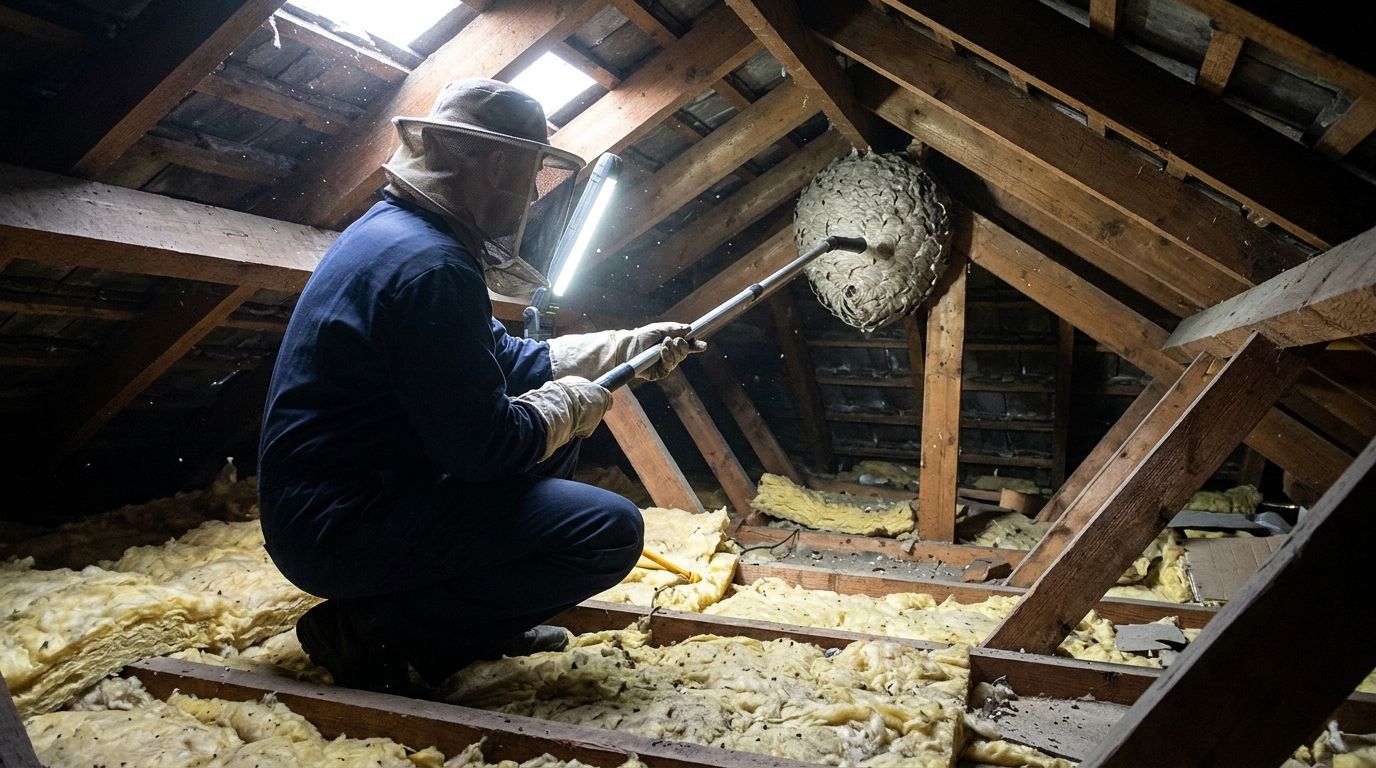
We watch the flight line before anything else, because tree bumblebees like eaves too and we don’t routinely treat bees. Once we’re sure, a long lance lets us place the dust right in the entrance, in most cases without a ladder, and the wasps flying home take it deep into the nest. In a flat we may need a communal door, the loft hatch or a back yard opened, so let the managing agent and the other flats know we’re coming.
Children and pets should be indoors, with the windows on that side closed, while we work. For the rest of the day nobody should hang about by the entrance or touch any powder they can see, and cats are best kept in, as they’re especially sensitive to some insecticides. One visit usually does it, with the traffic dropping away over a day or two.
Who pays if you rent?
Plenty of Didsbury homes are rented. The 2021 Census counted 43.7% of West Didsbury households in private lets, and one in four in Didsbury East. Clearing the nest is usually down to whoever lives there unless the tenancy says otherwise. The gap is a different matter: a rotten fascia or a cracked airbrick is disrepair, and section 11 of the Landlord and Tenant Act 1985 normally makes fixing it the landlord’s job. In a converted house the roof is usually part of the shared building, so write to the managing agent and include a photo.
Can Manchester City Council help?
Many councils run a pest control service for residents, but what is covered, who can book and the charges all vary and can change, so check the council’s own pest control pages before you book. If you rent from a council or housing association, report the problem to your landlord first. If you would rather book a private firm, call or message us and we’ll offer the earliest slot we have.
How do you stop it happening next year?
For Burton Road’s independent traders and the bars in Didsbury Village, late summer brings foraging wasps after sugar, so keep food and drinks covered, bins lidded and any nest in the building treated promptly. There’s more on that in our commercial pest control section, and if it turns out to be bees, see our bees and bumblebees page for what to do instead.
What we tend to find in Didsbury
- In the Didsbury East ward, 57% of households lived in a semi-detached house at the 2021 Census. Semis carry a long run of soffit and fascia, and a split board or an open corner joint is where a flight line usually leads.
- In West Didsbury, flats and converted or shared houses account for more than half of all households, so a nest in the roof can sit above several homes and the freeholder or managing agent usually has to be involved.
- Between the riverside green of Fletcher Moss and Stenner Woods and the parks within the streets, such as Marie Louise Gardens, Didsbury Park and Fog Lane Park, wasps are never far from insects to feed their grubs or old wood to chew into nest paper.
What happens when you call us
- 1
Tell us what you're seeing
Where the wasps are flying in, roughly how high it is, and whether anyone at home is allergic to stings. A photo of the entrance from a safe distance helps us check it's wasps, not bees.
- 2
Finding the way in
We watch the flight line first, because where you see wasps isn't always where they go in. It might be a slipped slate, a split soffit, an airbrick or a hole in the lawn.
- 3
Treating the nest
An approved insecticidal dust goes into the entrance, usually with an extension lance from the ground. Wasps walking in and out carry it deep into the nest for us.
- 4
Aftercare, in plain English
Before we leave we show you where we've treated, which windows to keep shut, and where children and pets should steer clear of until the next day.
- 5
Checking it's worked
Wasps stay busy for a few hours, then tail off over a day or two. If they're still flying in steadily after that, let us know and we'll come back for a look.
- 6
Taking the nest away, if it's in the way
Dead nests are never reused, so most are left in place. If one is in a shed, garage or bird box you use, we can remove it once it has gone quiet.
Wasp Nest Removal in Didsbury: your questions
We're in the top-floor flat of a converted West Didsbury house and the wasps are using the roof. Who do we contact?
Your managing agent or freeholder first, because the roof of a converted house is normally shared and looked after for the whole building, not by one flat. If you rent, tell your landlord too. It's best if whoever is responsible for the building agrees before we treat, and we'll need a way to the entrance, perhaps through the communal loft hatch or the back garden. Warn the other flats as well, since the wasps may be using a gap right above their windows.
We live in one of Didsbury's conservation areas. Does that affect wasp treatment?
Many councils run a pest control service for residents, but what is covered, who can book and the charges all vary and can change, so check the council's own pest control pages before you book. If you rent from a council or housing association, report the problem to your landlord first. If you would rather book a private firm, call or message us and we'll offer the earliest slot we have.
It's autumn and slow, dozy wasps keep turning up indoors. Is there still a live nest?
Probably not one that needs treating. As the weather cools the colony breaks down: the old queen stops laying, the workers wander about looking for sugar and die off, and the young queens fly off to spend the winter somewhere sheltered, sometimes a loft, a curtain fold or a pile of washing. A few sleepy wasps on a windowsill in October or November are usually those stragglers. If you still see a steady stream going in and out of one spot on a mild afternoon, ring us and we'll take a look.
We back onto Fletcher Moss or one of the parks. Will we get a nest every year?
Not necessarily. Living beside Fletcher Moss, Fog Lane Park or any of Didsbury's other green spaces means wasps have food and building material close by, but a queen still needs a sheltered gap at your place to move into. A sound roofline, meshed airbricks and a lidded compost bin make the house and garden far less tempting. A quick look inside the shed, the play house and any rough corners of the garden in late spring will catch a new nest while it's still tiny.
Can I get a wasp nest removed for free in Manchester?
Usually not. Councils have no legal duty to deal with wasps, so it comes down to what each one chooses to offer. Check Manchester City Council's website for current pest control services and charges. Check your council's website for current pest control services and charges. Its website sets out the current pest list and booking conditions, so read those before you book. Other Greater Manchester councils set their own rules, and housing association tenants should ask their landlord first.
Can I just leave the nest until winter?
Often, yes. If the nest is somewhere nobody goes, such as high on a gable or at the bottom of a big garden, it will die off on its own once the frosts arrive, and wasps never reuse an old nest. It's worth treating if the entrance is next to a back door, a window you open, a path, a pram or a play area, or if anyone at home is allergic. Remember that wasps get more bad-tempered in late summer, so a nest that's tolerable in June can be a real nuisance by September.
How do I know if it's wasps or bees?
Wasps are bright yellow and black, smooth and shiny, with a narrow waist, and they fly straight in and out of a small gap. Bumblebees are round and furry; the tree bumblebee, with a ginger body, black middle and white tail, loves bird boxes and eaves. Honeybees are slimmer, golden brown and slightly fuzzy, and a swarm hanging from a branch is almost always honeybees. We don't routinely treat bees. Send us a photo if you're unsure, and see our bees and bumblebees page for what to do instead.
More help in Didsbury
Last updated: