Manchester Pest Solutions treats wasp nests at Cheadle and Cheadle Hulme homes, including the Hursthead estate and the 1930s roads around Grove Lane. We check the insects aren't bees, follow the flight line to the entrance and dust it, then explain how to keep children and pets clear. Call or message us to book the earliest slot we have.
Why do queens pick Cheadle and Cheadle Hulme roofs?
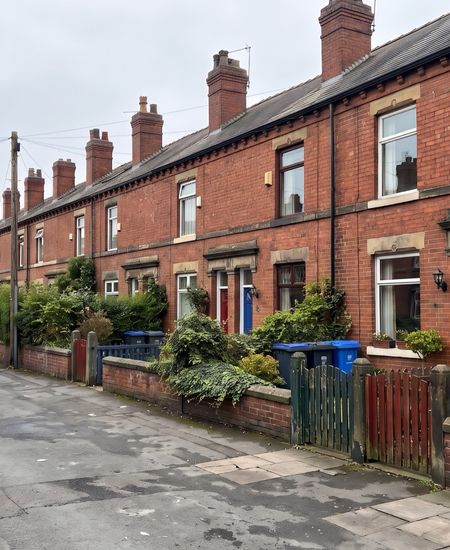
In April and May a queen wasp that has spent the winter tucked away somewhere dry comes out looking for a dark cavity with a small entrance. Cheadle Hulme has no shortage. Most of its homes were built in the twentieth century, and the 1930s houses around Grove Lane, Pingate Lane and Gill Bent Road are now nearing their hundredth summer. Fascia boards warp, soffit joints open and the odd tile slides out of line, and each of those can become a front door into the loft or the wall behind it. The 1960s houses on the Hursthead estate are younger, but sixty-odd years of weather finds gaps there too.
The green spaces help her along. Bruntwood Park’s mature trees, the woodland at Oak Meadow Park and the banks of the Micker Brook all sit close to housing. Workers scrape fibre from weathered fences and dead wood to make the grey nest paper, and they hunt caterpillars and flies to feed the grubs, so a garden next to that kind of cover keeps a colony well fed through June and July.
Where do nests usually turn up here?
On the interwar and 1960s houses, the entrance is most often at a soffit corner, under the bottom row of roof tiles, behind a loose fascia or through an airbrick low in the wall. The nest itself is then usually in the loft, sometimes in the cavity.
Older buildings are trickier. The timber-framed buildings around Swann Lane and Hulme Hall Road, the Victorian houses scattered through Cheadle Hulme and the 1800s houses in Cheadle village have old timbers, chimneys and deep joints, and a nest can sit well inside the structure with more than one way in. That is why we spend longer watching the flight line on these homes before treating.
Gardens give up their own share: compost bins, sheds, the void under decking and old rodent holes in a lawn. Where a garden runs down to the brook, or backs onto the Styal line cutting in Cheadle West, the quiet corner at the far end is often where a nest grows unnoticed until wasps start bothering everyone in late summer.
What happens on the day?
When you get in touch, tell us where the wasps are flying in, roughly how high, and whether anyone at home reacts badly to stings. A photo taken from well back lets us check they really are wasps. That matters here, because Stockport Council doesn’t treat bees, and if you’ve got bees our bees and bumblebees page sets out what to do instead. We’ll offer the earliest slot we have, often the same day.
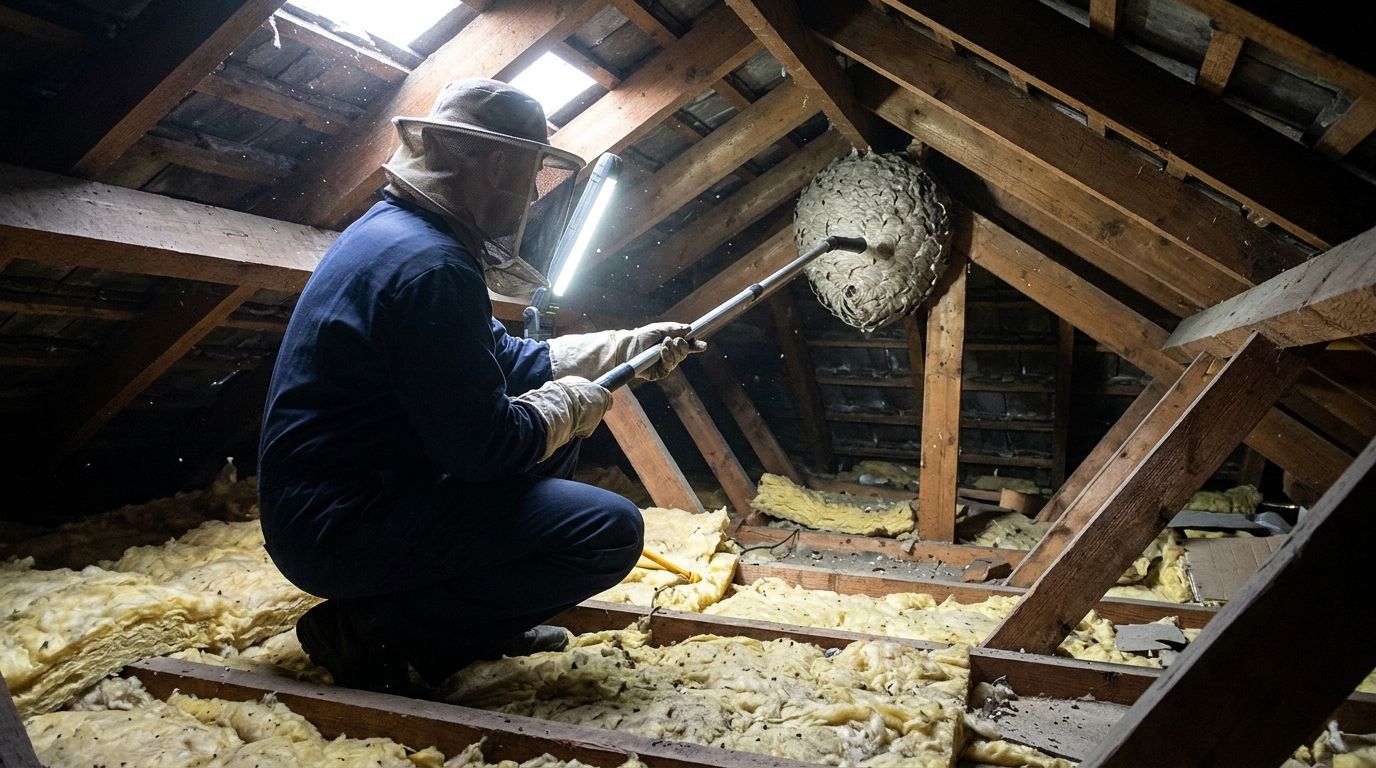
On arrival we watch the traffic first, because where the wasps gather isn’t always where they enter. Once we’ve found the entrance, an approved insecticidal dust goes into it, usually from the ground with an extension lance. Foragers walking through it carry it deep into the nest. You’ll see a busy, bad-tempered few hours, then the activity fades over a day or two. Leave the hole open meanwhile, because wasps shut inside can chew through into a room. One visit covers most jobs.
Keeping children and pets safe
While we treat, bring everyone indoors and close the windows on that side of the house. Afterwards, keep children away from the treated entrance and any visible dust until the following day, and remember that cats are the pet to watch, so keep yours inside for the rest of the day if you can. If the nest is near a trampoline, a sandpit or a pond, say so and we’ll plan where the dust goes.
How do you stop a nest coming back next spring?
The colony dies off as the weather cools and the nest is never used again, but the gap that suited this year’s queen will suit another. Once the nest has gone quiet, get the tile, soffit or airbrick fixed. On a listed home or one in a conservation area, check with the council’s planners first so the repair matches. Then, in April and May, take a look inside the shed, the compost bin and the bird box, when a new nest is no bigger than a golf ball and far easier to deal with.
What we tend to find in Cheadle & Cheadle Hulme
- The 1930s roads around Grove Lane, Pingate Lane and Hulme Hall Road are now close to a century old, and on houses of that age a warped fascia, an open soffit joint or a slipped tile is the usual way a queen gets into the roof.
- Bruntwood Park's mature trees and the woodland at Oak Meadow Park sit beside a lot of back gardens, giving wasps weathered wood to chew into nest paper and plenty of insects to feed their grubs.
- The timber-framed buildings in the Swann Lane, Hulme Hall Road and Hill Top Avenue conservation area, and the 1800s houses in Cheadle village's conservation area, have old timbers and deep joints where a nest can sit well inside the structure.
- Gardens that run down to the Micker Brook, or back onto the Styal line cutting in Cheadle West, often have quiet, overgrown corners where a nest in the ground, a compost bin or a shed can go unnoticed until late summer.
What happens when you call us
- 1
Tell us what you're seeing
Where the wasps are flying in, roughly how high it is, and whether anyone at home is allergic to stings. A photo of the entrance from a safe distance helps us check it's wasps, not bees.
- 2
Finding the way in
We watch the flight line first, because where you see wasps isn't always where they go in. It might be a slipped slate, a split soffit, an airbrick or a hole in the lawn.
- 3
Treating the nest
An approved insecticidal dust goes into the entrance, usually with an extension lance from the ground. Wasps walking in and out carry it deep into the nest for us.
- 4
Aftercare, in plain English
Before we leave we show you where we've treated, which windows to keep shut, and where children and pets should steer clear of until the next day.
- 5
Checking it's worked
Wasps stay busy for a few hours, then tail off over a day or two. If they're still flying in steadily after that, let us know and we'll come back for a look.
- 6
Taking the nest away, if it's in the way
Dead nests are never reused, so most are left in place. If one is in a shed, garage or bird box you use, we can remove it once it has gone quiet.
Wasp Nest Removal in Cheadle & Cheadle Hulme: your questions
Can Stockport Council treat our wasp nest instead?
Many councils run a pest control service for residents, but what is covered, who can book and the charges all vary and can change, so check the council's own pest control pages before you book. If you rent, report the problem to your landlord first. If you would rather book a private firm, call or message us and we'll offer the earliest slot we have.
Our house is listed, or sits in the Swann Lane or Cheadle village conservation area. Is treatment a problem?
Treatment itself isn't, because the dust goes into the nest entrance and nothing about the building changes. Planning matters afterwards, when you close the gap. The wider Cheadle area has 37 listed buildings, most of them houses, and altering historic timbers, vents or rooflines on a listed home can need listed building consent. In a conservation area, some outside changes need permission too. Have a word with Stockport Council's planners before the repair, and we'll show you exactly where the wasps got in so it can be matched in like-for-like materials.
The nest is in a tree or bank where our garden meets Bruntwood Park or the Micker Brook. Is it ours to deal with?
It depends on whose land the nest is on. If it's in your garden, a fence post or your side of the boundary, it's yours to sort out, and we can treat it. If your garden runs down to the brook, you may well own the bank as well, so check your deeds. A nest in a park tree is for the park's managers to decide on, so report it to Stockport Council rather than tackling it yourself. If the wasps are crossing into your garden in large numbers, tell us and we'll advise.
I rent from a housing association in Cheadle. Who should sort out a wasp nest?
Ask your landlord first, in writing, with a photo of the entrance. Check Stockport Council's website for current pest control services and charges. If the wasps are getting in through a defect such as a missing tile or a split soffit, fixing that is usually the landlord's job. When it's urgent, for example a nest by a child's bedroom window, tell them so plainly.
Can I get a wasp nest removed for free in Manchester?
Usually not. Councils have no legal duty to deal with wasps, so it comes down to what each one chooses to offer. Check Manchester City Council's website for current pest control services and charges. Check your council's website for current pest control services and charges. Its website sets out the current pest list and booking conditions, so read those before you book. Other Greater Manchester councils set their own rules, and housing association tenants should ask their landlord first.
Can I just leave the nest until winter?
Often, yes. If the nest is somewhere nobody goes, such as high on a gable or at the bottom of a big garden, it will die off on its own once the frosts arrive, and wasps never reuse an old nest. It's worth treating if the entrance is next to a back door, a window you open, a path, a pram or a play area, or if anyone at home is allergic. Remember that wasps get more bad-tempered in late summer, so a nest that's tolerable in June can be a real nuisance by September.
How do I know if it's wasps or bees?
Wasps are bright yellow and black, smooth and shiny, with a narrow waist, and they fly straight in and out of a small gap. Bumblebees are round and furry; the tree bumblebee, with a ginger body, black middle and white tail, loves bird boxes and eaves. Honeybees are slimmer, golden brown and slightly fuzzy, and a swarm hanging from a branch is almost always honeybees. We don't routinely treat bees. Send us a photo if you're unsure, and see our bees and bumblebees page for what to do instead.
More help in Cheadle & Cheadle Hulme
Last updated: