Manchester Pest Solutions deals with wasp nests at Chorlton homes, including Chorltonville, Chorlton Green and the streets near the Mersey. We trace the flight line, rule out bees, treat the entrance from the ground and tell you how long to keep children and pets back. Get in touch by phone or message to book the earliest slot we have.
Why do Chorlton gardens attract so many wasps?
A wasp colony needs three things: a dry cavity for the nest, wood to chew into paper, and a steady supply of insects to feed the grubs. Chorlton has all three close together. The gardens that run back towards Chorlton Ees, the Water Park, the fields of Hardy Farm and the golf course at Barlow Hall are full of hedges, old fence posts and insect life. Southern Cemetery adds about 190 acres of trees and grass along Barlow Moor Road, and the Fallowfield Loop and the Metrolink line add long green edges through the middle of the neighbourhood.
The houses supply the cavity. A queen coming out of hibernation in April or May wants a sheltered gap with a small way in, and older roofs, porches and soffits have more of those than newer buildings do.
Where do we usually find nests in Chorlton homes?
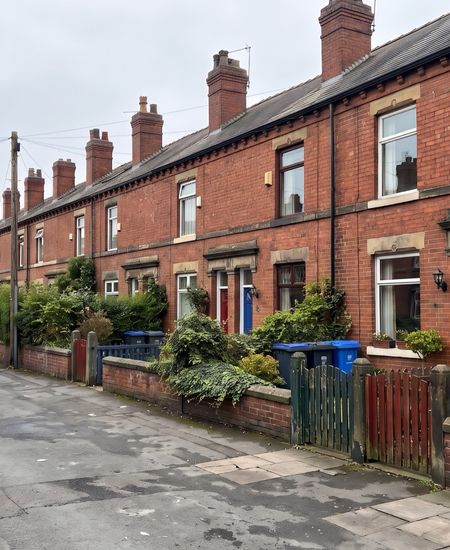
On Chorltonville, the 1911 semis sit among mature trees and verges, and queens like the eaves, the porches and the sheds at the bottom of the garden. More than a century of weather on a roof edge leaves the odd lifted tile or split board, and that’s all a queen needs.
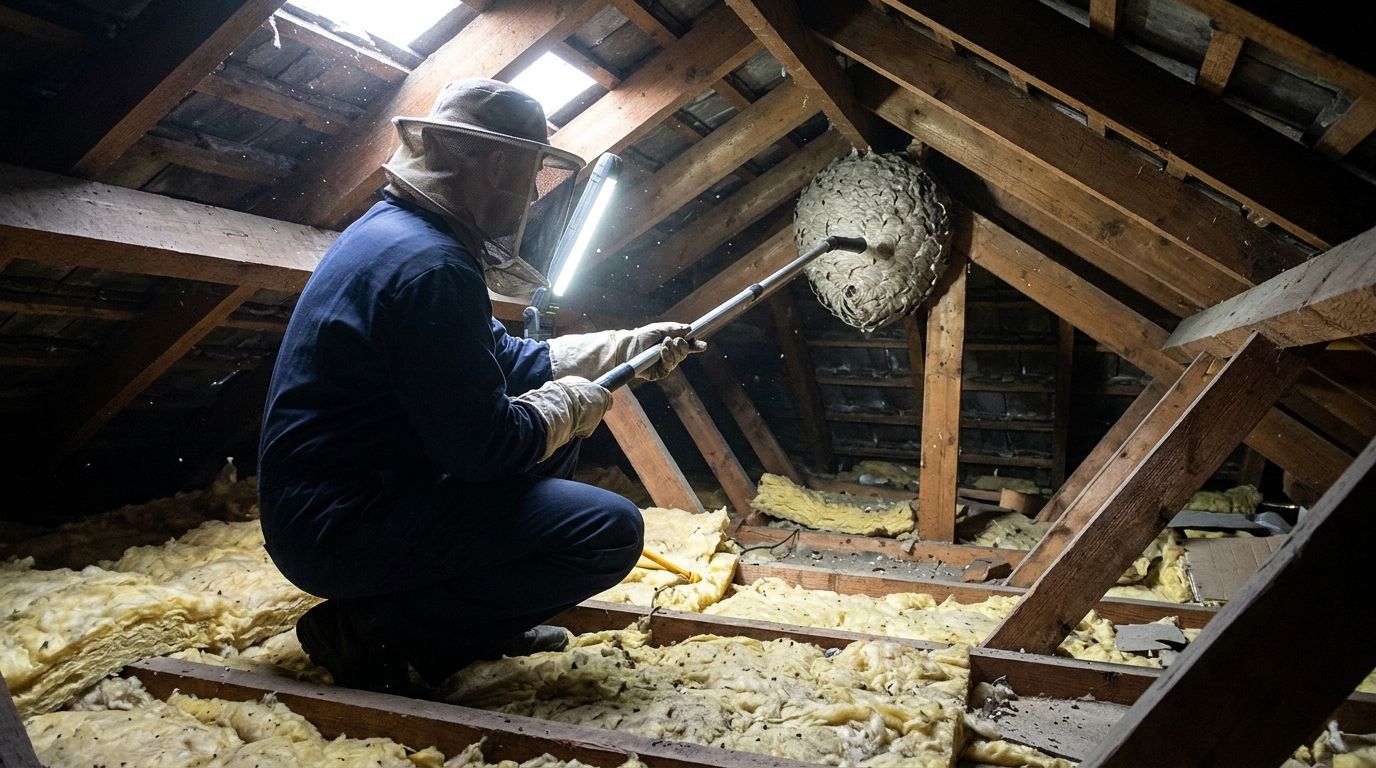
In the larger houses that have been split into flats, nests often sit in the roof space above the top flat, with the wasps using a gap under the eaves. The people downstairs may never see them, while the top-floor tenant has wasps at the bedroom window every afternoon. Getting to the nest can mean going through that flat or a communal loft hatch, so it helps if the landlord or freeholder knows we’re coming.
Gardens nearer the river can also have nests in the ground, often in an old mouse hole under a lawn or rockery, as well as in bird boxes and compost bins.
How does a wasp job run here?
A quick photo of the hole the wasps are using, snapped from well back, tells us most of what we need, along with how far off the ground it is and whether anyone in the house reacts badly to stings. It also lets us rule out bees, which we don’t routinely treat.
On a converted house with one big roof over several flats, the wasps at your window may be using a gap a couple of metres along the eaves, so we spend a few minutes tracing their flight before treating anything. The treatment itself is a small amount of approved insecticidal dust placed in the entrance, normally from the ground with a long lance, and the colony does the rest by tracking it inside. Expect a few busy, grumpy hours at the entrance, then calm within a couple of days. A single visit usually does it.
Keeping children and pets safe
While the lance is out, the children and the dog are best indoors, with the windows nearest the nest closed. Until the following day, give the treated spot a wide berth and don’t let anyone touch dust on the wall or path. Cats are the ones to watch, because they love a warm sill beside a nest, so keep yours in for the evening if you can. Everywhere else in the house and garden carries on as normal.
If the nest is in a park or public open space rather than your garden, such as Beech Road Park or Hough End Playing Fields, let the people who look after the site know rather than tackling it yourself. Nests on Chorlton Ees and the Water Park are a matter for the warden service that looks after the reserves.
What should I do about a nest in late autumn?
As we write this, at the end of October, Chorlton’s wasp season is all but over. New queens have already left to hibernate, the old nests are dying back, and none will be used again. Unless wasps are getting into the house, it’s usually best to leave the nest alone and plan the repair instead.
Use the winter to get the gap sealed: a roofer can re-seat a lifted slate or patch a split soffit board, and a vent can take a fine mesh cover. In the conservation areas around Chorlton Green and Chorltonville, like-for-like repairs are normally straightforward, but anything that alters the look of the roof or frontage deserves a quick call to the council’s planners first. Next spring, peer into the shed and under the porch roof every week or so, because a queen’s first nest is no bigger than a walnut and easy to deal with. If you spot one, or you’re unsure whether it’s bees, our bees and bumblebees page explains what to do, and we’re a call away for wasps.
What we tend to find in Chorlton
- Weathered fencing and hedges in gardens beside Chorlton Ees, the Water Park and the Barlow Hall golf course give queens nest material close at hand, while the reserves supply insects to feed the grubs.
- Chorltonville's 1911 semis, set among mature trees and verges, give queens sheltered eaves, porches and garden sheds to start a nest in each spring.
- In houses split into flats, a nest in the shared roof space or eaves is usually for the landlord or freeholder to arrange, and we may need access through the top flat.
- Late-summer wasps hunting for sugar are drawn to food and drink at the pubs and bars along Beech Road and around the crossroads, so homes close by notice them most in August and September.
- A nest out on the Chorlton Ees or Water Park reserves isn't for householders to treat, because the Mersey Valley Countryside Warden Service looks after those sites.
What happens when you call us
- 1
Tell us what you're seeing
Where the wasps are flying in, roughly how high it is, and whether anyone at home is allergic to stings. A photo of the entrance from a safe distance helps us check it's wasps, not bees.
- 2
Finding the way in
We watch the flight line first, because where you see wasps isn't always where they go in. It might be a slipped slate, a split soffit, an airbrick or a hole in the lawn.
- 3
Treating the nest
An approved insecticidal dust goes into the entrance, usually with an extension lance from the ground. Wasps walking in and out carry it deep into the nest for us.
- 4
Aftercare, in plain English
Before we leave we show you where we've treated, which windows to keep shut, and where children and pets should steer clear of until the next day.
- 5
Checking it's worked
Wasps stay busy for a few hours, then tail off over a day or two. If they're still flying in steadily after that, let us know and we'll come back for a look.
- 6
Taking the nest away, if it's in the way
Dead nests are never reused, so most are left in place. If one is in a shed, garage or bird box you use, we can remove it once it has gone quiet.
Wasp Nest Removal in Chorlton: your questions
It's the end of October. Is it still worth treating a wasp nest in Chorlton?
Usually not. By now the new queens have left to hibernate, the workers are dying off as the cold nights arrive, and an old nest is never used a second time. The exception is wasps finding their way indoors, into a bedroom or a top-floor flat, in which case we'll come and treat it. Otherwise, note exactly where they were going in, and have the gap mended over winter so a new queen can't move in next April.
Our house is in the Chorltonville or Chorlton Green conservation area. Do we need permission to have a nest treated?
No. Treating a nest means puffing dust into its entrance and nothing more, so it's the same as for any other house. Permission only comes into it when you fix the gap afterwards. Like-for-like repairs to slates, soffits or mortar are normally straightforward, but if a repair would change how the outside of the house looks, check with the council's planning team first. On Chorltonville, let the owners' committee know if the work affects the estate's trees or verges.
There's a nest in a tree on the nature reserve behind our garden. Will you deal with it?
If the nest is on your side of the fence, yes, once we've checked it's wasps and not bees. If it's out on Chorlton Ees or the Water Park, it isn't yours to treat, and we won't work on land we have no permission to be on. The Mersey Valley Countryside Warden Service looks after those reserves, so let them know, especially if the nest is beside a path. Wasps out in the open rarely trouble people who keep a few metres back.
We run a café near Beech Road and get wasps every August. What can we do?
First find out whether there's a nest in your own building or yard. A nest in a wall, a store room or a bin area can be treated, and food businesses are expected to keep pests out under food hygiene law. If the wasps are foragers from elsewhere, keep sweet drinks and food covered, empty and lid outdoor bins often, wipe tables down promptly and fit fly screens to kitchen windows that open. Write down what you've done so it's in your records.
Can I get a wasp nest removed for free in Manchester?
Usually not. Councils have no legal duty to deal with wasps, so it comes down to what each one chooses to offer. Check Manchester City Council's website for current pest control services and charges. Check your council's website for current pest control services and charges. Its website sets out the current pest list and booking conditions, so read those before you book. Other Greater Manchester councils set their own rules, and housing association tenants should ask their landlord first.
Can I just leave the nest until winter?
Often, yes. If the nest is somewhere nobody goes, such as high on a gable or at the bottom of a big garden, it will die off on its own once the frosts arrive, and wasps never reuse an old nest. It's worth treating if the entrance is next to a back door, a window you open, a path, a pram or a play area, or if anyone at home is allergic. Remember that wasps get more bad-tempered in late summer, so a nest that's tolerable in June can be a real nuisance by September.
How do I know if it's wasps or bees?
Wasps are bright yellow and black, smooth and shiny, with a narrow waist, and they fly straight in and out of a small gap. Bumblebees are round and furry; the tree bumblebee, with a ginger body, black middle and white tail, loves bird boxes and eaves. Honeybees are slimmer, golden brown and slightly fuzzy, and a swarm hanging from a branch is almost always honeybees. We don't routinely treat bees. Send us a photo if you're unsure, and see our bees and bumblebees page for what to do instead.
More help in Chorlton
Last updated: