Manchester Pest Solutions deals with mice in Chorlton homes, including flats in converted houses near the Barlow Moor Road crossroads, Chorltonville semis and the estates around Nell Lane. We survey, set covered traps or locked bait boxes, seal the gaps and come back to check. Call or message us and we'll offer the earliest slot we have.
Why are Chorlton homes getting mice right now?
Late October is when mice start looking for a way in. Mice that spent the summer in hedges, sheds and long grass look for somewhere warmer as the nights cool, and Chorlton has a lot of green edges for them to come in from. Chorlton Ees and the Water Park lie along the river in the south, the fields of Hardy Farm run beside Chorltonville, the golf course at Barlow Hall is close by, and Southern Cemetery stretches along Barlow Moor Road. Houses that back onto any of these usually notice first, often as a faint scratching behind the kitchen units after dark.
The district centre has its own pressures. Pubs, bars and other food businesses around Beech Road and the crossroads keep bins and food waste close to people’s homes, and the empty Chorlton Cross site is due to be rebuilt as 262 homes, with construction expected to begin during 2026. Large demolition and groundworks can unsettle mice that have lived quietly in old foundations, so homes nearby are worth checking over.
What do we find in split-up houses?
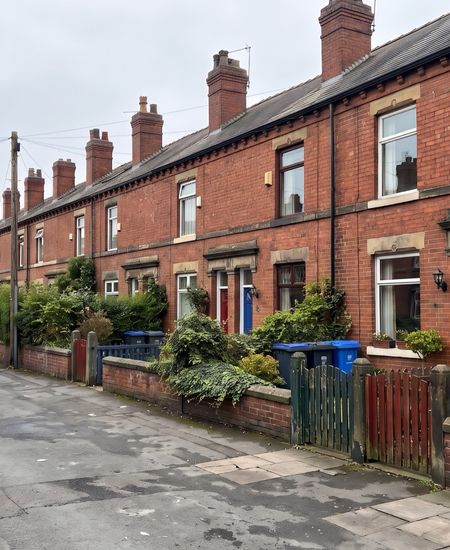
Many of Chorlton’s larger houses were turned into flats or bedsits during the last century. That’s done a lot for housing people and very little for keeping mice in one place. A conversion often leaves a floor void running under several flats, boxed-in pipes shared between kitchens stacked one above the other, and old fireplaces sealed at one end but open at the other. Mice treat every one of those as a corridor.
So when a ground-floor tenant rings us, we’ll ask whether the people upstairs have noticed anything and whether the landlord can get us into the hallway, the meter cupboard and the bin store. Treating a single flat often just sends mice up a floor for a few weeks. When the landlord or managing agent arranges the work for the whole house, the job tends to finish faster and stay finished.
What about Chorltonville and the estates in the south?
Chorltonville’s houses date from 1911 and were built as mirror-image semi-detached pairs. More than a century of new pipes, cables and boiler flues pushed through the walls leaves plenty of small gaps, and mice can work along a shared wall from one half of a pair to the other. It’s worth a word with the family next door, because sorting one half of a pair while the other half still has mice rarely lasts.
The estates at Merseybank, Nell Lane and Barlow Moor are younger but have their own weak spots: gaps where services have been renewed, garages and sheds full of pet food or bird seed, and gardens that run back towards open ground.
How does a mouse job run in Chorlton?
When you get in touch, we’ll want to know what you’ve heard or found and who shares the home with you, from a new baby to the family cat. We’ll offer the earliest slot we have, often the same day.
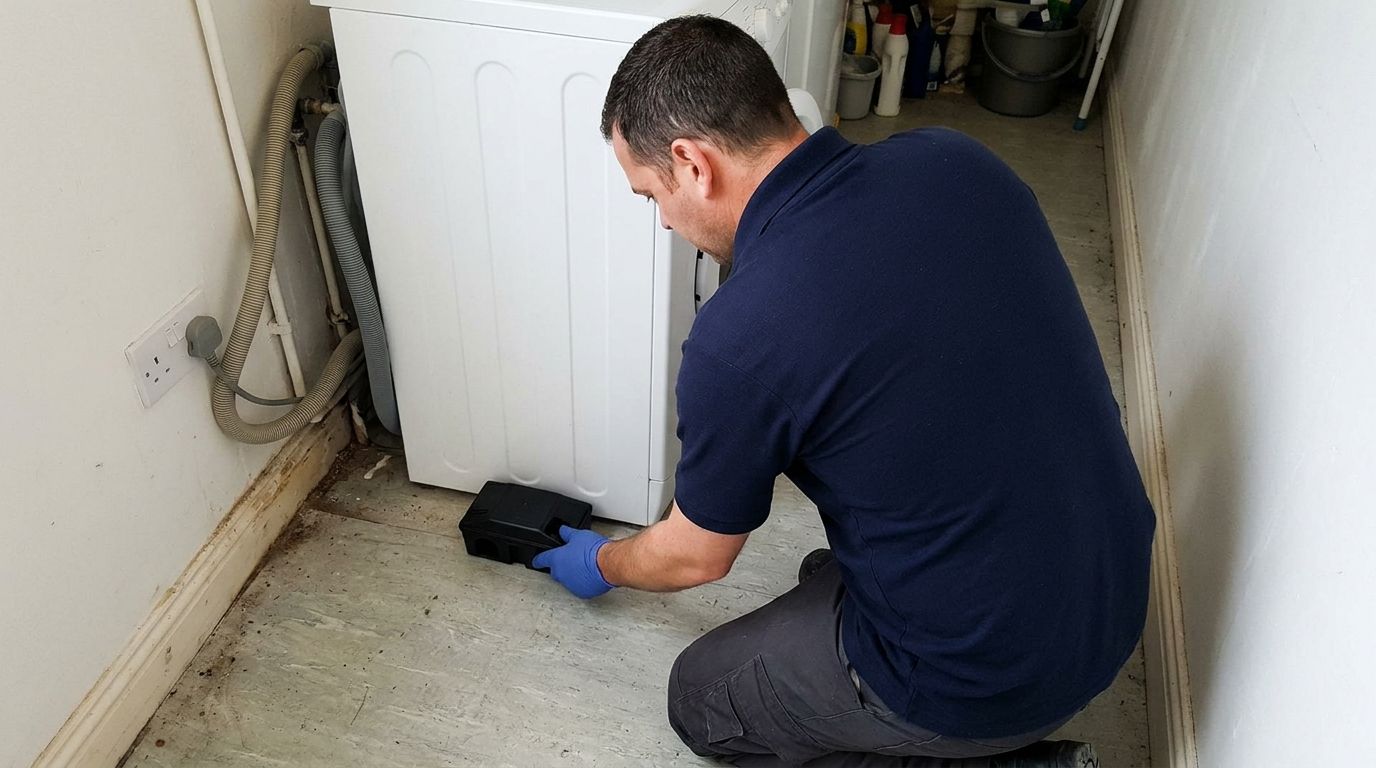
The first visit is mostly looking. In a Chorlton conversion that means the shared hallway, the meter cupboard and any loft hatch as well as your kitchen plinths and the space behind the fridge, because we need to find the nest and the way in before anything else. Then we set covered snap traps along the runs, add locked bait boxes where activity is heavy or hidden, and keep everything out of reach. If there’s a cat in the house, we stick mostly to traps. Gap-sealing starts there and then, and anything that needs a bricklayer or a word with your landlord, we’ll point out on the spot.
Expect two or three visits, roughly a week apart. Converted houses, where several flats share the same voids, can take longer, since we’re not done until every gap they use has been sealed.
How can I keep mice out of an M21 home?
Before winter sets in, walk round the outside and look at the airbricks, the gaps where pipes leave the wall and the bottom of the back door. Anything you can push a pencil into is big enough for a mouse. Inside, move cereal, rice and pet food into lidded tubs, and pull the cooker out once to clear the crumbs behind it.
If you feed the birds near Chorlton Ees or the cemetery, use a tray and clear the spilled seed before dusk. Compost belongs in a lidded bin rather than an open heap by the back fence. In a flat, ask your landlord to seal the gaps in shared areas as well as your own kitchen. If you also have bigger droppings or burrows in the garden, our rat control page explains the different approach rats need.
What we tend to find in Chorlton
- Many of Chorlton's larger houses were split into flats or bedsits, and mice in one flat often travel through shared floor voids and pipe boxing into the next.
- Chorltonville's houses were built in 1911 as mirror-image semi-detached pairs, so when one half of a pair has mice, we suggest the neighbours check their kitchen too.
- Homes backing onto Chorlton Ees, the Water Park or the fields of Hardy Farm tend to notice mice coming in from the long grass as the weather turns in October and November.
- Southern Cemetery's roughly 190 acres of grass, trees and old buildings sit close to the Nell Lane estate and Barlow Moor Road, giving mice cover right up to garden fences.
- Plans to rebuild the empty Chorlton Cross shopping centre as 262 homes were approved in December 2025, and groundworks on that scale can unsettle mice living in old foundations and drains nearby.
What happens when you call us
- 1
Tell us what you've noticed
Call or message us with what you've seen or heard and where. We'll ask about children, pets and anyone vulnerable at home, and we'll offer the earliest slot we have, often the same day.
- 2
A proper look round
We check under kitchen plinths, behind the cooker and washing machine, around pipes and meters, under the stairs, in the loft and along the outside walls to find where mice are living and getting in.
- 3
Treatment chosen for your home
Snap traps inside covered boxes, locked tamper-resistant bait boxes, or both, placed along the runs and out of reach. We show you where every box is before we leave.
- 4
Sealing the way in
We block the gaps we found with materials mice can't easily chew through, such as wire wool packed in with sealant, metal mesh, airbrick covers and door brush strips, and flag anything that needs a builder or your landlord.
- 5
Follow-up and clear-up
We come back to check traps and boxes, remove any mice, look for fresh droppings and finish the proofing, then take all our equipment away once things have gone quiet.
Mice Control in Chorlton: your questions
There are mice in the flat below ours in a converted Chorlton house. Will they reach us?
Quite possibly, if they haven't already. In a split-up house the space under one floor usually connects with the walls and pipe boxing of the flat above, and mice follow the warmth upwards in autumn. Ask your landlord or managing agent to arrange treatment for the whole building rather than flat by flat, and keep food in sealed tubs meanwhile. We can survey the communal areas and every flat that lets us in, then write up what we found for the landlord.
We're on Chorltonville. Does the conservation area change how you mouse-proof?
Many councils run a pest control service for residents, but what is covered, who can book and the charges all vary and can change, so check the council's own pest control pages before you book. If you rent from a council or housing association, report the problem to your landlord first. If you would rather book a private firm, call or message us and we'll offer the earliest slot we have.
Our garden backs onto Chorlton Ees. Are these field mice, and do you treat them differently?
They may well be wood mice, which most people call field mice: warmer brown, with a pale belly, larger ears and eyes, and a tail about as long as the body. House mice are smaller and a duller greyish brown. Treatment is much the same, but wood mice usually arrive from outdoors in autumn, so sealing gaps in back walls, airbricks and back doors matters even more. Keep bird seed in a lidded tin and sweep up spills under feeders, which draw them in.
I rent on the Merseybank or Nell Lane estate. Who should I call about mice?
Council services and charges change, so check the council's own website for the current position, and if you rent, ask your landlord first.
Why have I suddenly got mice when I've never had them before?
It's usually a mix of season and opportunity. Mice move indoors as the weather turns in autumn, and a new gap is often all it takes: a pipe replaced under the sink, a broken airbrick, or a neighbour having building work done or clearing out a shed. In terraces and converted flats, mice can also travel through shared floor voids, so the problem may have started next door. It doesn't mean your home is dirty. Mice find warmth and crumbs in the tidiest of kitchens.
If I've seen one mouse, are there more?
Probably. Mice are shy and mostly active at night, so the one you spot is rarely the only one. A female can start breeding at around six weeks old and have a new litter every few weeks when food and warmth are easy to find, which is how a couple of mice in October can become a busy kitchen by Christmas. Fresh droppings in more than one room, or scratching in the ceiling as well as the kitchen, suggest they're already well settled.
Is mouse treatment safe with a baby, a cat or a dog at home?
Yes, with the right set-up. We ask who lives with you before we choose anything. Traps go inside covered boxes, and any bait is locked inside tamper-resistant boxes placed out of reach, so there's nothing loose for a crawling baby or a nosy dog to find. In homes with cats we lean on trapping, because a cat that eats a poisoned mouse can be harmed. We show you where everything is and take it all away when we're done.
More help in Chorlton
Last updated: