Manchester Pest Solutions deals with mice in Sale homes, including converted flats and villas in Sale Moor and Brooklands, 1930s semis and 1970s estates in Ashton upon Mersey. We find the runs, place lidded traps or locked bait stations out of reach of children and pets, seal the gaps and return to check. Call or message us to book.
Why do Sale homes let mice in so easily?
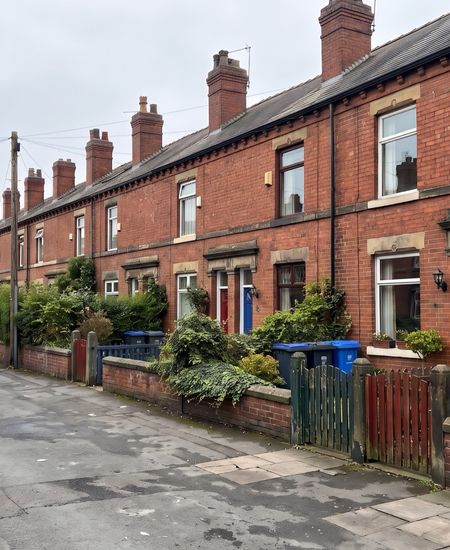
Sale’s housing grew in bursts, and every burst left its own weak points. The villas and terraces that went up after the railway arrived in 1849 now carry well over a century of alterations: new kitchens, central heating, replumbed bathrooms, each one cutting fresh holes through floors and walls. Interwar council houses and 1930s semis came next, then the 1970s estates in Ashton upon Mersey and the east of the town. A mouse only needs a gap it can squeeze its head through, and after that much building work most houses have several.
Timing does the rest. Mice that spent the summer outdoors start looking for warmth from October onwards, which is why calls from M33 tend to bunch up just as the clocks go back.
What do we usually find in Sale’s flats, villas and semis?
In a villa that has been divided into flats, mice are rarely confined to one home. The original timber floors stay in place, so the void under the ground-floor flat links up with pipe runs, stair cupboards and the boxing around soil pipes all the way up the building. The nest can be in one flat while the droppings turn up in another, which is why we ask about the neighbours early on.
The Victorian terraces tend to have mice living under the floor, coming and going through airbricks and around old gas and water pipes. In the 1930s semis the way in is often at the side of the house: around the meter box, under a back door that has dropped on its hinges, or through a garage that’s become a utility room. On the 1970s estates, the void behind fitted kitchen units and the boxing round the soil stack act like a corridor between floors.
Does being near the water make a difference?
It can, for homes towards the northern edge of town. The Mersey floods after heavy rain, and Sale Water Park is there partly to hold that water. When ground near the river is waterlogged, mice and rats in the banks and long grass move somewhere drier, and a garden shed or an airbrick at the back of a house is the obvious next stop. The wetland at Broad Ees Dole and the banks of the Bridgewater Canal offer the same kind of cover.
Some of the mice that turn up near green space are wood mice rather than house mice. They need the same treatment, but they’re a reminder to check the garden end of the house as well as the kitchen.
What does a mouse visit in Sale involve?
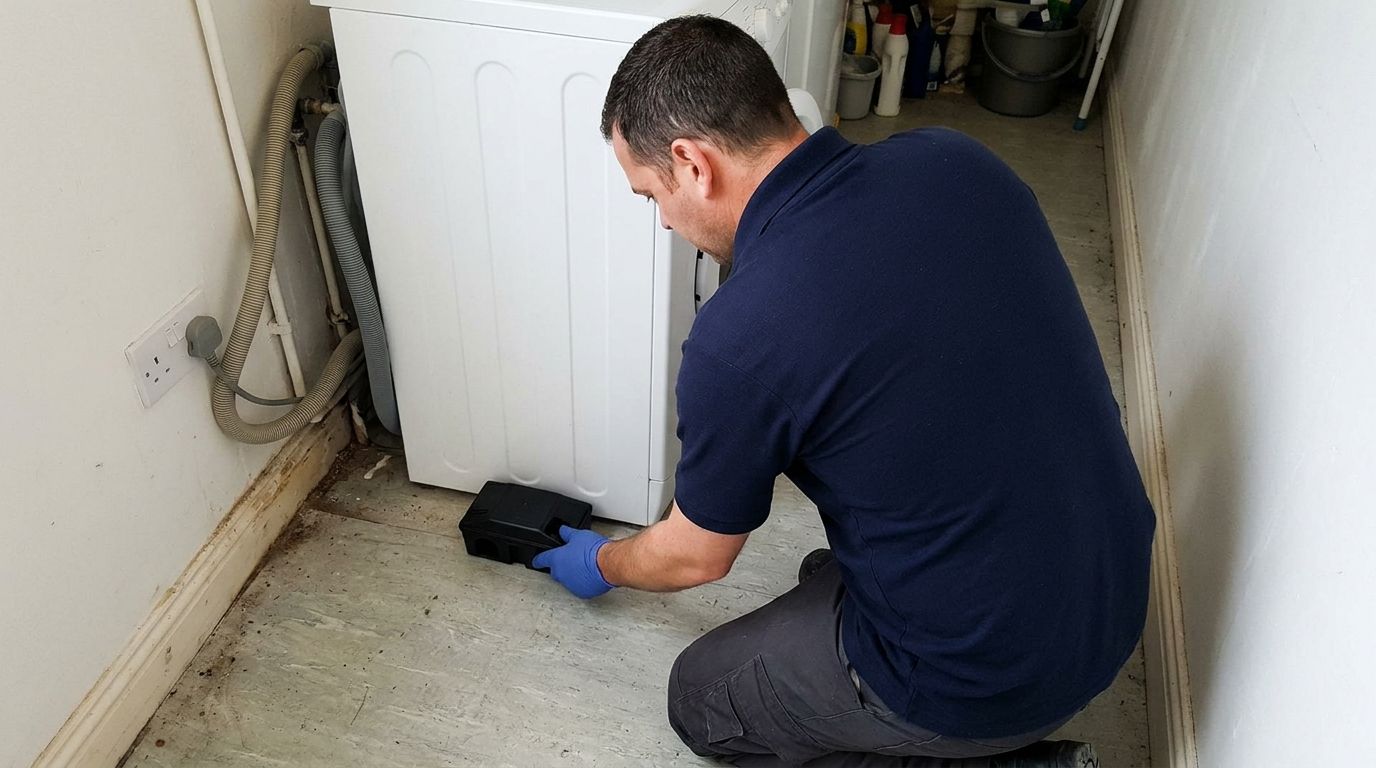
We use the same process everywhere. First we ask who’s at home, including children, pets and anyone vulnerable. Then we go round the house looking for droppings, smear marks and the gap the mice are using. Traps sit inside covered boxes, and bait, when it’s needed, goes in tamper-resistant stations that lock. Proofing starts as soon as we’ve found the entry points, and we return roughly a week later to check, usually two or three visits in all.
What changes here is who needs to be involved. In a converted villa we’ll ask for access to the communal hallway and, ideally, the other flats, or at least for the freeholder or managing agent to see what we’ve found. If you rent from Trafford Housing Trust or a private landlord, report the mice in writing, because the gaps in walls and floors are normally theirs to repair. If you’d like rats checked at the same time, because there are burrows by the shed as well, our rat control service can be booked alongside.
How can you keep mice out over the winter?
Start with the outside of the house once the mice inside are dealt with. Walk round and check each airbrick, every point where a pipe or cable enters, and the bottoms of doors, especially along the side passage of a semi or the back of a terrace. Bird seed and pet food stored in a shed or garage are easy pickings, so keep them in sealed bins.
If your garden backs onto the canal, the Water Park or one of the town’s parks, keep compost bins closed and cut back long grass along the fence line so mice have less cover right up to the wall. And if you share walls with neighbours who’ve had mice too, booking treatment for both homes in the same week makes the proofing far more likely to hold.
What we tend to find in Sale
- Plenty of Sale's bigger Victorian houses are now divided into flats, and mice in a converted villa usually move between flats through the original floor voids and boxed-in pipework rather than across the rooms.
- Sale Moor's villas went up in the decades after the railway arrived in 1849, so their walls and floors carry well over a century of holes for pipes, cables and later alterations.
- The 1930s semis found across the town tend to let mice in low down at the side of the house, around the meter box, under a dropped back door or through a garage turned into a utility room.
- On the 1970s estates in Ashton upon Mersey and the east of Sale, we most often trace mice to boxed-in soil stacks and the hidden space behind fitted kitchen plinths.
- Homes near Sale Water Park, Broad Ees Dole or the Bridgewater Canal can see mice arrive from waterside cover as the weather turns, and again after the Mersey has been running high.
What happens when you call us
- 1
Tell us what you've noticed
Call or message us with what you've seen or heard and where. We'll ask about children, pets and anyone vulnerable at home, and we'll offer the earliest slot we have, often the same day.
- 2
A proper look round
We check under kitchen plinths, behind the cooker and washing machine, around pipes and meters, under the stairs, in the loft and along the outside walls to find where mice are living and getting in.
- 3
Treatment chosen for your home
Snap traps inside covered boxes, locked tamper-resistant bait boxes, or both, placed along the runs and out of reach. We show you where every box is before we leave.
- 4
Sealing the way in
We block the gaps we found with materials mice can't easily chew through, such as wire wool packed in with sealant, metal mesh, airbrick covers and door brush strips, and flag anything that needs a builder or your landlord.
- 5
Follow-up and clear-up
We come back to check traps and boxes, remove any mice, look for fresh droppings and finish the proofing, then take all our equipment away once things have gone quiet.
Mice Control in Sale: your questions
Mice are coming up from the flat below in our converted Sale house. What can you do from our side?
We can deal with the mice in your flat and block the gaps we find in your floors and pipe boxing, which often slows things down a great deal. But if the mice are living in the void beneath you, they'll keep testing your side until the source is dealt with. Ask your landlord, freeholder or managing agent to organise treatment for every flat, or let us speak to them for you. Sharing what we find with the other flats usually gets the quickest result.
Do floods along the Mersey push mice into homes in Sale?
They can. When heavy rain sends the river up and the Water Park starts storing floodwater, burrows in the banks and low ground fill with water and the animals living there have to move. Some head for sheds, decking and the backs of nearby houses. It won't happen to every home after every storm, but if you notice droppings or scratching a week or two after a wet spell, call us before the mice settle in for the winter.
Where do mice usually get into a 1970s house in Ashton upon Mersey?
Most often low down at the back. The usual culprits are gaps around the waste pipes from the kitchen and bathroom, the boxing around the soil stack, a garage door that no longer meets the floor, and holes left when a boiler or cooker was moved. Inside, the space behind the kitchen plinths works as a hidden runway between rooms. We'll lift the plinths, follow the droppings and show you each gap before we seal it.
How many visits will an older villa in Sale Moor or Brooklands need?
Usually two or three, about a week apart, as with most homes. Bigger, older houses can take a little longer, because there are more rooms, more voids and more places where pipes have been rerouted over the years. If the villa is split into flats, expect us to ask for a look at the neighbouring flats as well. After the first visit we'll tell you how many more we think it will take and why.
Why have I suddenly got mice when I've never had them before?
It's usually a mix of season and opportunity. Mice move indoors as the weather turns in autumn, and a new gap is often all it takes: a pipe replaced under the sink, a broken airbrick, or a neighbour having building work done or clearing out a shed. In terraces and converted flats, mice can also travel through shared floor voids, so the problem may have started next door. It doesn't mean your home is dirty. Mice find warmth and crumbs in the tidiest of kitchens.
If I've seen one mouse, are there more?
Probably. Mice are shy and mostly active at night, so the one you spot is rarely the only one. A female can start breeding at around six weeks old and have a new litter every few weeks when food and warmth are easy to find, which is how a couple of mice in October can become a busy kitchen by Christmas. Fresh droppings in more than one room, or scratching in the ceiling as well as the kitchen, suggest they're already well settled.
Is mouse treatment safe with a baby, a cat or a dog at home?
Yes, with the right set-up. We ask who lives with you before we choose anything. Traps go inside covered boxes, and any bait is locked inside tamper-resistant boxes placed out of reach, so there's nothing loose for a crawling baby or a nosy dog to find. In homes with cats we lean on trapping, because a cat that eats a poisoned mouse can be harmed. We show you where everything is and take it all away when we're done.
More help in Sale
Last updated: