Manchester Pest Solutions treats rats, mice, wasp nests, fleas and bed bugs in Stretford homes, including Gorse Hill, Firswood, Old Trafford and the streets either side of the Bridgewater Canal. We plan each visit around the children and pets at home, and we'll offer the earliest slot we have, often the same day. Call or message us to book.
Semis built for the Trafford Park workforce
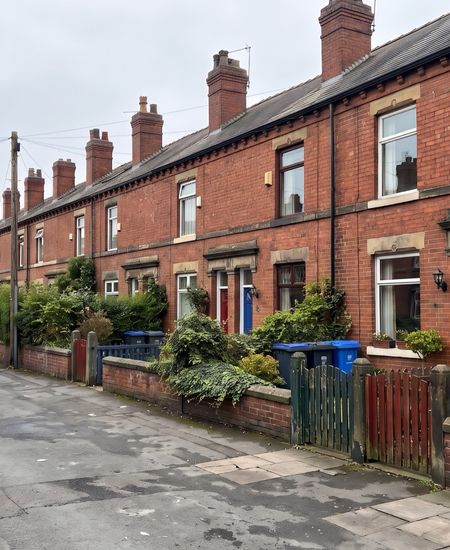
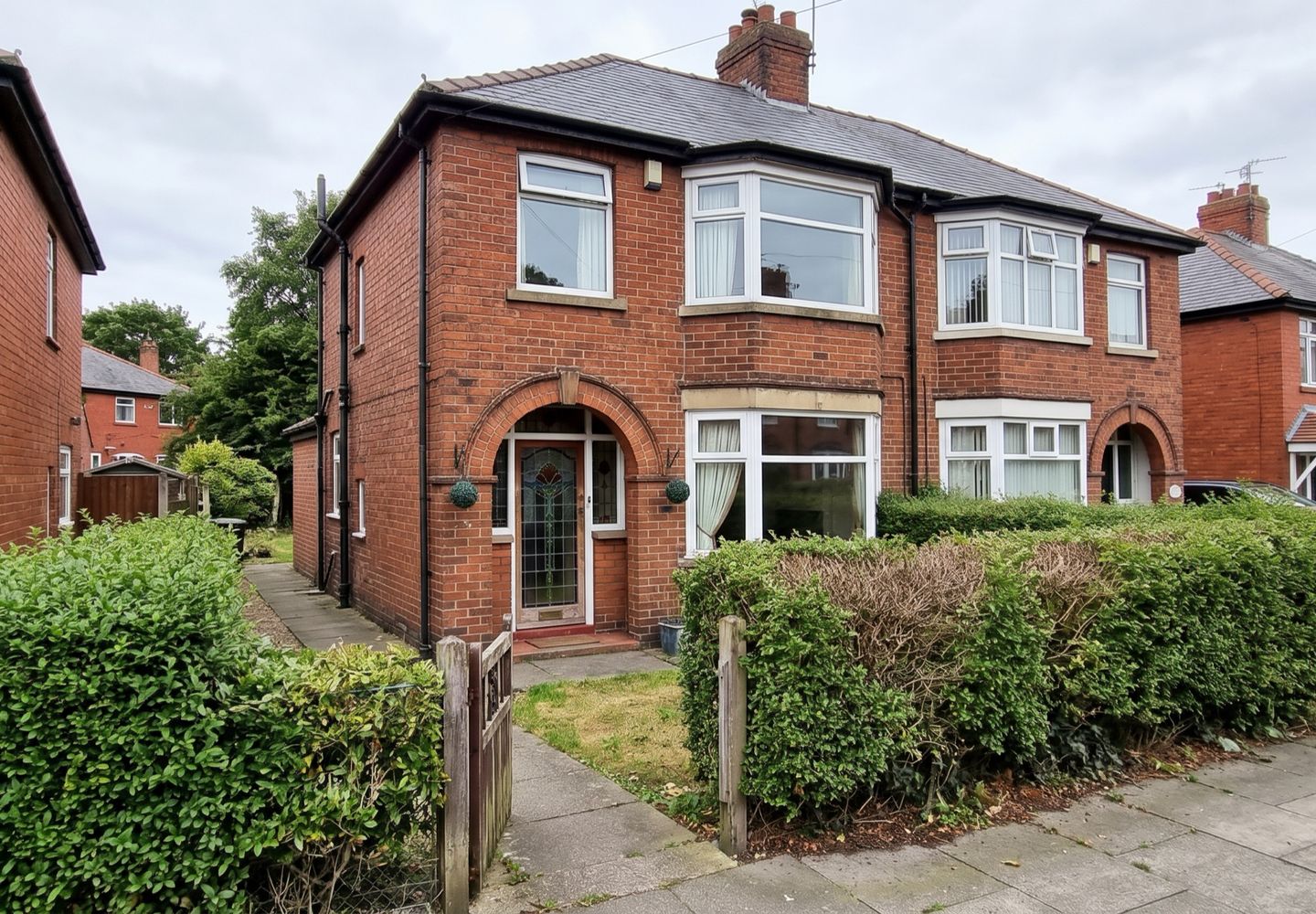
Stretford has a Manchester postcode, but it’s a Trafford town, and it grew quickly once Trafford Park was opened up for industry. The land around it had been farmed, and much of the housing for the park’s workers went up on those old fields. The result is mostly family streets. At the 2021 Census almost half the households in Stretford ward lived in a semi-detached house, about a fifth in a terrace and another fifth in a purpose-built flat.
Firswood’s private houses along Rye Bank Road and Warwick Road date from about 1930, when they replaced Rye Bank Farm; post-war social housing was built on part of neighbouring Firs Farm, and Darley Park is Firswood’s oldest residential corner. Gorse Hill, at the northern tip of the borough, is a mostly residential district cut in two by the A56 Chester Road.
That housing shapes the pests we deal with. A pair of semis shares a party wall, a roof line and often a drain run, so mice or rats in next door’s half rarely stay put. Side passages where the wheelie bins live, garages with a gap under the up-and-over door and timber sheds by the back fence are where we look first. In the terraces it tends to be back yards and older drains; in the flats, shared bin stores and the gaps where pipes run between floors.
A canal through the middle of town
The Bridgewater Canal has been part of Stretford since 1761 and runs straight through its centre, so plenty of homes are only a street or two from the water. Brown rats are capable swimmers and keen burrowers, and a canal bank gives them water, soft ground and cover along its whole length. They forage outwards at night, and any garden offering spilled bird seed, an open compost bin or a split bin bag soon becomes part of their nightly round.
That’s why our rat control visits here start outside: the boundary nearest the water, the base of sheds and decking, the airbricks and the drain covers. We can’t treat canal land, but we can make your side of the fence far harder to cross. Many of those gardens are where children play and dogs run about, so every box we fit is locked, fixed in place and shown to you, and we lean on traps and proofing where pets have the run of the lawn.
Down by the Mersey and Sale Water Park
The far south of the town lies on the River Mersey’s flood plain and has a long record of flooding. Since the 1970s the Mersey Valley has had a run of flood mitigation schemes, and one of them is Sale Water Park, a flood basin sitting just past the town’s southern edge. When the river runs high, water can swamp the burrows rats dig along the banks, and the occupants move to wherever is dry: under a shed, beneath a garage floor or into the void below a house. If your road is towards the water park and it’s been a wet winter, check the bottom of garden buildings in spring for fresh holes and droppings.
Mice in shared walls, wasps under the eaves
Mice make good use of the same shared walls and floors as rats. Once the weather turns in autumn they follow pipe runs into kitchens and airing cupboards, and in a block of flats one affected home usually means the neighbours are too. Nowhere is immune: during a food hygiene inspection in April 2025, officers found signs of mice in several hospitality suites at the Old Trafford stadium. Our mice control work concentrates on finding the way in and sealing it, not just on treatment.
Summer brings wasps. The lofts, eaves and soffits of the town’s semis, Firswood’s houses from around 1930 among them, are exactly the kind of sheltered spot a queen looks for in spring, and by late summer a nest in a roof space can hold thousands of workers. For wasp nest removal we usually treat through the entrance from outside, while children and pets stay indoors.
Fleas after a house move
Cocooned fleas can survive in an empty home’s carpets for months and hatch as soon as vibration and warmth signal that people are back. That’s why new tenants sometimes find bites in the first week, even without a pet of their own. Private renting accounts for more than one home in five in Longford ward, and with tenants coming and going, flea calls often follow a move. Our flea removal visits include advice on treating the animal at the same time, because spraying the house alone rarely works.
Renting from a housing association or a private landlord
In 2021 roughly one household in five in the Stretford, Gorse Hill and Longford wards rented from a council or housing association. Where pests are using a defect in the building to get in, fixing it is normally the landlord’s job, because most tenancies leave the structure, exterior and drains with them. Social tenants are best going to their landlord first, as many handle pest treatment through their repairs service. Private tenants should email or write to the landlord or agent, attaching dated photos. We’re happy to send our findings straight to the landlord or agent so everyone works from the same notes.
Manchester postcode, Trafford council
Many councils run a pest control service for residents, but what is covered, who can book and the charges all vary and can change, so check the council’s own pest control pages before you book. If you rent from a council or housing association, report the problem to your landlord first. If you would rather book a private firm, call or message us and we’ll offer the earliest slot we have.
King Street, the mall and Talbot Road
The centre of town is about to change a great deal. Stretford Mall, which opened as the Arndale in 1969, closed on 28 February 2026 and is due to be demolished, with a new King Street planned in its place. Demolition and groundworks on that scale disturb rats and mice that have lived around old buildings and service yards for years, and a share of them will move into houses close by. Living near the centre? It’s worth looking over your airbricks, the holes where pipes go through the wall and the gap under the back door, and calling early if droppings show up. Along Talbot Road, a 2.9-hectare brownfield site is also listed as suitable for up to 150 homes, although no planning permission is in place.
Cafés, corner shops and the industrial park next door
Most of our Stretford work is in homes, but the town’s cafés, takeaways and corner shops get the same straightforward service. Trafford Park, the world’s first planned industrial estate, has stored and processed food for generations, with the Co-operative Wholesale Society’s food-packing works and Kellogg’s plant among its best-known names. Businesses there will find more on our commercial pest control page.
Between Chorlton and Urmston
Stretford sits between Chorlton to the east and Urmston to the west, and we cover both, so the town is right in the middle of our usual rounds. Describe what you’ve noticed and where, and we’ll offer the earliest slot we have.
Common pests in Stretford homes
Rats
The Bridgewater Canal runs straight through the middle of Stretford and the Mersey flood plain borders the south of the town, so rats have water and bank-side cover within a short run of many back gardens.
Mice
With semis making up almost half of Stretford ward's homes and flats another fifth, mice that settle in one home can travel through shared walls, lofts and pipe runs into the next.
Wasps & Hornets
The eaves, soffits and roof spaces of Stretford's many semis, including Firswood's c.1930 houses along Rye Bank Road and Warwick Road, give wasp queens the sheltered spots they look for each spring.
Fleas
Private renting runs from about one home in seven in Stretford ward to more than one in five in Longford, and tenants moving in after a previous occupant's cat or dog are a common source of flea calls.
Bed Bugs
Around a fifth of homes in Stretford ward are purpose-built flats, and where flats share walls, risers and corridors, bed bugs that arrive in a suitcase or on a second-hand sofa can make their way next door.
We also deal with:
Why Stretford gets the pests it does
- The Bridgewater Canal reached Stretford in 1761 and runs through the middle of the town; it also forms the south-east and south-west edges of Trafford Park. [Wikipedia]
- The southern tip of Stretford lies on the River Mersey flood plain and has a history of flooding. Flood work in the Mersey Valley since the 1970s includes Sale Water Park, which acts as a flood basin just south of the town. [Wikipedia]
- At the 2021 Census nearly half of the 4,669 households in Stretford ward lived in semi-detached houses, with roughly a fifth each in terraces and purpose-built flats and 7% in detached homes. [Office for National Statistics (Census 2021, via Nomis)]
- In 2021 around one household in five rented from a council or housing association in each of the Stretford, Gorse Hill and Longford wards, while private renting ranged from 14.5% in Stretford ward to 22.2% in Longford. [Office for National Statistics (Census 2021, via Nomis)]
- Private houses went up along Rye Bank Road and Warwick Road in Firswood around 1930 on the former Rye Bank Farm, and social housing followed on part of Firs Farm after the Second World War. [Wikipedia]
- Gorse Hill, the most northerly part of Trafford, is a mainly residential district divided by the A56 Chester Road, with a small industrial estate on each side of the road. [Wikipedia]
- The town's shopping centre, Stretford Mall, began life as the Arndale in 1969; it shut on 28 February 2026 and is set to be demolished to make way for a new King Street. [Wikipedia]
- An April 2025 food hygiene inspection turned up evidence of mice in several hospitality suites at the Old Trafford stadium, and the ground was handed a two-star rating once more. [Football365]
- Longford Park, in the east of the town, covers 22 hectares and is the largest park in Trafford, with a pets' corner and a wildlife garden. [Wikipedia]
- Trafford Park, the world's first planned industrial estate, has long been a place where food is made and stored: the Co-operative Wholesale Society opened a food-packing factory and flour mill there, and Kellogg's ran a plant and warehouse. [Wikipedia]
Pest control in Stretford: your questions
Do you cover Gorse Hill, Firswood, Old Trafford and the Longford Park side of town?
Yes, all of it. M32 is the Stretford district itself, Firswood and Old Trafford come under M16, a fringe of Old Trafford falls in M15, and Trafford Park is M17. That takes in the streets either side of the A56 in Gorse Hill, the houses around Longford Park in the east, the roads close to the canal and the south of town towards Sale Water Park. Tell us the street when you call if you'd like to double-check.
My address says Manchester. Is it Manchester City Council or Trafford I should ask about pests?
Many councils run a pest control service for residents, but what is covered, who can book and the charges all vary and can change, so check the council's own pest control pages before you book. If you rent from a council or housing association, report the problem to your landlord first. If you would rather book a private firm, call or message us and we'll offer the earliest slot we have.
I rent from a housing association in Stretford. Should I call you or them?
Start with your landlord. Around one household in five in the Stretford, Gorse Hill and Longford wards rents from a council or housing association, and many social landlords arrange pest treatment through their repairs service, particularly when pests are getting in through the building. Send the report in writing, add dated photos and keep a copy. Private tenants should do the same, since landlords normally have to keep the fabric of the building, its outside and its drains in good repair. We're glad to talk to your landlord or letting agent on your behalf.
We've just moved into a rented house in Stretford and keep getting bitten. Could it be fleas?
Quite possibly, even if you've never kept a pet. Fleas left behind by a previous tenant's cat or dog can wait in carpets and floorboard gaps as cocooned pupae for months, then emerge within days of new footsteps and body heat arriving. Bites around the ankles in the first week or two after moving in are a classic sign. Tell your landlord, vacuum thoroughly before we arrive, and we'll explain how to get the rooms ready and what to do afterwards.
Our road is in the south of Stretford near Sale Water Park. Does flooding bring pests?
It mostly affects rats. The southern end of the town sits on the Mersey flood plain, and Sale Water Park, just beyond it, acts as a flood basin. When ground near the river gets waterlogged, rats living in the banks get flooded out and go looking for dry shelter, and sheds, decking and the space under ground floors are obvious choices. Once the water drops, check the base of garden buildings for new burrows, droppings and chewed bin lids, and ring us early if you spot any.
We own a 1930s semi in Firswood. Where do mice usually get in?
Houses of that age along roads like Rye Bank Road and Warwick Road often have suspended timber floors kept dry by airbricks, and a cracked or missing airbrick is one of the commonest ways in. Other weak spots are the gaps where gas, water and waste pipes pass through the wall, the bottom of the garage door, and gaps in the party wall up in the loft. Mice fit through remarkably small gaps, roughly the thickness of a pencil, so sealing those routes matters as much as the treatment itself.
Can you deal with a wasp nest in the roof of a Stretford semi?
Yes, and it's one of the places we find them most. Queens pick sheltered spots in spring, and the eaves, soffits and roof voids of semi-detached houses suit them well. We usually treat through the nest entrance from outside, using an extension lance where it's high up, so we rarely need to go into the loft. Keep children and pets indoors while we work and for a little while afterwards, and leave the nest alone: the returning wasps need to carry the treatment inside.
Nearby areas
Sources (8)
Last updated: