Manchester Pest Solutions gives households across Greater Manchester straight answers about bees. Send a photo and we'll say whether it's bees or wasps and if anything needs doing; most bumblebee nests can stay and swarms go to a beekeeper. If a visit helps, we'll offer the earliest slot we have, often the same day. Call or message us.
Is it bees, wasps or something else?
Take a good look from a few steps back first, because plenty of “wasp nests” turn out to be bees.
- Bumblebees are round, furry and unhurried. The one we hear about most is the tree bumblebee: ginger on top, black in the middle and white at the tail. First found in Britain in 2001, it loves bird boxes, soffits and lofts. Other bumblebees nest low down, in compost bins, under decking or behind an airbrick.
- Honeybees are slimmer and less hairy, anything from golden to dark brown. A swarm is a hanging cluster of thousands of bees on a branch or fence, usually between May and July. A colony that has moved in shows as a steady stream of bees using one gap, week after week.
- Solitary bees nest alone, even when dozens sit side by side. Masonry bees use small holes in old mortar in spring, and mining bees leave tiny volcano-shaped heaps of soil on the lawn.
- Wasps are smooth, shiny, bright yellow and black, with a pinched waist. If that’s you, see our wasp nest removal page.
- Hoverflies wear wasp stripes but hang dead still in the air. They’re flies, and they can’t sting.
Why do bees choose Manchester homes?
Our houses are full of dry, sheltered gaps, and the gardens around them are full of flowers.
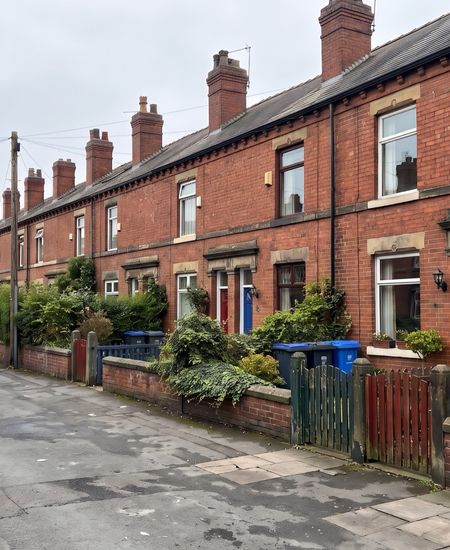
Much of Chorlton grew up around its railway station in the 1880s, and most of Levenshulme’s two-up two-downs went up between about 1880 and 1890. Houses of that age were usually built with soft lime mortar, and where it has weathered and crumbled it leaves exactly the holes masonry bees want, especially on a sunny wall. A chimney that’s no longer used is just the tall, dry cavity a honeybee swarm looks for.
Burnage is mostly semis from the 1930s and 1940s. Houses of that era typically have timber soffits, roomy lofts and, often, suspended timber floors ventilated by airbricks. Tree bumblebees head for the eaves and the loft; ground-nesting bumblebees slip through an airbrick into the void under the floor.
Then there’s the forage. Chorlton Ees and Sale Water Park are local nature reserves along the Mersey, Fog Lane Park on the Withington and Didsbury border has a wildflower area, and the Fallowfield Loop runs a long green strip behind houses in Levenshulme. Add the back gardens and bird boxes, and a house-hunting queen is spoilt for choice.
Season matters too. By September most bumblebee colonies have died off, so a nest that worried you in June is often a non-issue by the time the kids go back to school.
Can I just leave a bumblebee nest alone?
Usually, yes. A colony is small, from a few dozen to a few hundred bees, and it lasts one season, typically two to six months. The queen starts it alone in spring, the colony raises new queens and males, then dies; the new queens hibernate elsewhere and the nest is never reused. Tree bumblebee nests are often over by mid-summer.
Bumblebees aren’t aggressive. The little cloud around a bird box is mostly males waiting for new queens to emerge, a sign the nest is nearly done, and male bees can’t sting. Workers will defend a nest that’s knocked, so give the entrance some space and don’t mow straight over a ground nest. This usually isn’t about the law, as bees in England aren’t protected the way bats or nesting birds are. Treating a nest that will be gone in a few weeks just rarely makes sense, and the same bees are pollinating your fruit, veg and flowers.
What happens when you call us?
We’ll ask for a photo or short video, where the bees are going in and whether anyone at home has a sting allergy. Often that’s enough to answer there and then, with no visit needed.
A honeybee swarm is a job for a beekeeper, not a pest controller: the British Beekeepers Association website has a postcode search for volunteer swarm collectors, who only take honeybees.
If honeybees have settled inside a chimney, wall or roof, or a bumblebee nest sits right by a door or play area and someone at home is allergic, we’ll come and take a proper look. We’ll offer the earliest slot we have, often the same day. On the visit we confirm the species, find where the colony actually is and talk you through the options in plain English: leaving it, moving it if that’s realistic, a beekeeper or specialist removing an established honeybee colony, or, very occasionally, treatment.
We don’t routinely treat bees. If it truly is the only sensible option, say a serious allergy and no practical way to remove the colony, we’ll explain what’s involved first. A treated honeybee nest has to be sealed so foragers from healthy hives can’t carry the contaminated honey away, any insecticide must be used strictly as its label allows, and comb left in a wall can melt in summer and draw in other insects. It’s a last resort, never a quick fix.
Are bees a risk to children and pets?
Much less than most people fear. Bumblebees and solitary bees rarely sting unless they’re trodden on, grabbed or their nest is disturbed, and a hanging swarm is usually at its calmest, because it has no nest or honey to defend yet.
Keep children and pets back from the entrance or the swarm, teach little ones to watch rather than poke, and call the dog away from bees on the lawn, because snapping dogs are the usual casualties. Don’t block an entrance while bees are using it, or trapped bees may find their way into your rooms. If anyone has trouble breathing, swelling of the face, lips or throat, or feels faint after a sting, call 999.
How many visits will it take?
Often none. A photo and a conversation settle most bee questions. Where a visit helps, one is usually enough, with a short second visit to proof the gap once the colony has finished or a beekeeper has taken the honeybees away.
How do I stop bees using the same spot next year?
Bumblebees never reuse a nest, but a gap that suited one queen can suit another. Once the nest has died off, fit fine mesh over airbricks so the floor still ventilates, repair split soffits and seal gaps around pipes and the loft hatch. Clean bird boxes out in autumn once nothing is using them. An old nest left in loft insulation is worth bagging up, because the debris can feed carpet beetle larvae.
An old honeybee site, especially with comb still inside, smells like home to the next swarm, so the comb needs clearing and the gap closing properly. A cowl or mesh guard on an unused chimney pot is often the simplest fix.
For masonry bees, repointing crumbling mortar removes the nest holes. On Victorian brick a builder will usually recommend lime rather than hard cement, which can damage soft bricks. In a conservation area, such as Albert Park in West Didsbury or Chorltonville, check with the council’s planning team before changing the look of the front of the house.
When does DIY stop being enough?
For most bumblebee and solitary bee nests, doing nothing is the best DIY there is. Get help when honeybees are using a chimney, wall, roof or floor, when bees keep turning up indoors, or when the nest is beside a door and someone at home is allergic.
Please don’t spray a nest, pour boiling water or bleach into it, seal the entrance or try to shake a swarm into a box. That’s how people get stung, and with honeybees it can poison healthy colonies nearby.
Is it my job or my landlord’s?
It depends on your tenancy and how the bees are getting in; a short-lived bumblebee nest in the garden isn’t usually anybody’s job. If bees are using a defect, such as a broken airbrick, a gap at the eaves or an open chimney pot, the repair normally falls to the landlord under section 11 of the Landlord and Tenant Act 1985, which covers the structure and exterior of most rented homes. Councils can assess serious pest problems under the Housing Health and Safety Rating System, and the Homes (Fitness for Human Habitation) Act 2018 gives tenants a route to act if a home isn’t fit to live in. In a converted house or a block of flats, bees in the roof or communal parts are usually one for the freeholder or managing agent. Report it in writing, with a photo and the date you first noticed.
Small shops and cafés can usually leave a bumblebee nest in a planter with a little space around it; just keep food, sugary drinks and waste covered, as food hygiene law expects. Our domestic pest control and commercial pest control pages cover whatever else turns up.
What happens when you call us
- 1
Send us a photo
A clear photo or short video from a safe distance, plus where the bees are going in, how high it is and whether anyone at home is allergic to stings. That's often enough to tell bumblebees from honeybees, wasps or hoverflies.
- 2
Honest advice first
If it's bumblebees or solitary bees somewhere you can live with, we'll say so and tell you roughly how long they'll be around. For many households, that's the end of it.
- 3
Swarms go to a beekeeper
A honeybee swarm is good news to a beekeeper. We'll point you to the British Beekeepers Association's postcode search for a volunteer swarm collector near you.
- 4
A visit for awkward colonies
Honeybees inside a chimney, wall or roof, or a nest right by a door with an allergic person at home, need a proper look. We'll find where the colony really is and explain who's best placed to deal with it.
- 5
Closing the gap afterwards
Once the bees have gone or the colony has finished, we can mesh airbricks and vents and close gaps at the eaves, so the same spot is far less inviting next year.
How many visits? Often none: a photo and a phone call settle most bee questions. Where a visit helps, one is usually enough to identify the bees and talk through the options, with a short return visit to proof the gap once the colony has finished or been removed.
Bees & Bumblebees: What To Do: questions people ask us
Will you remove a bumblebee nest from my bird box?
Most of the time we'll advise you to leave it, and explain why. A bumblebee colony is small, lasts a single season and dies off by itself, and the nest is never used again. Tree bumblebees in a bird box are often finished by mid-summer. If the box is right beside a door you can't avoid, or someone at home has a serious sting allergy, we'll come and look at the options with you. A nest in something movable can sometimes be shifted a short distance after dark, though not every colony survives the move.
There's a swarm of bees on our fence. Who do I call?
A beekeeper rather than a pest controller. A big hanging cluster in late spring or early summer is almost always a honeybee swarm resting while scouts find a new home, and beekeepers are usually glad of it. The British Beekeepers Association website lets you search for a volunteer swarm collector by postcode. Its volunteers only deal with honeybees, so send us a photo first if you're not sure. Meanwhile keep children and pets indoors or well back, and don't spray, hose or poke the cluster. Left alone, many swarms move on within a day or two.
Honeybees are going in and out of our chimney. What can be done?
This is the trickiest bee problem, so we'll give you a straight answer once we've seen it. An established colony holds thousands of bees and a lot of comb and honey, and it won't leave on its own. The best outcome is a beekeeper or specialist removing bees and comb together, which can mean opening up the stack or chimney breast. Treatment is a last resort: the entrance then has to be sealed so other bees can't rob the honey, and comb left behind can melt and attract other insects. Once it's clear, a cowl or mesh guard on the pot helps prevent a repeat.
Are masonry bees damaging the brickwork on my Victorian terrace?
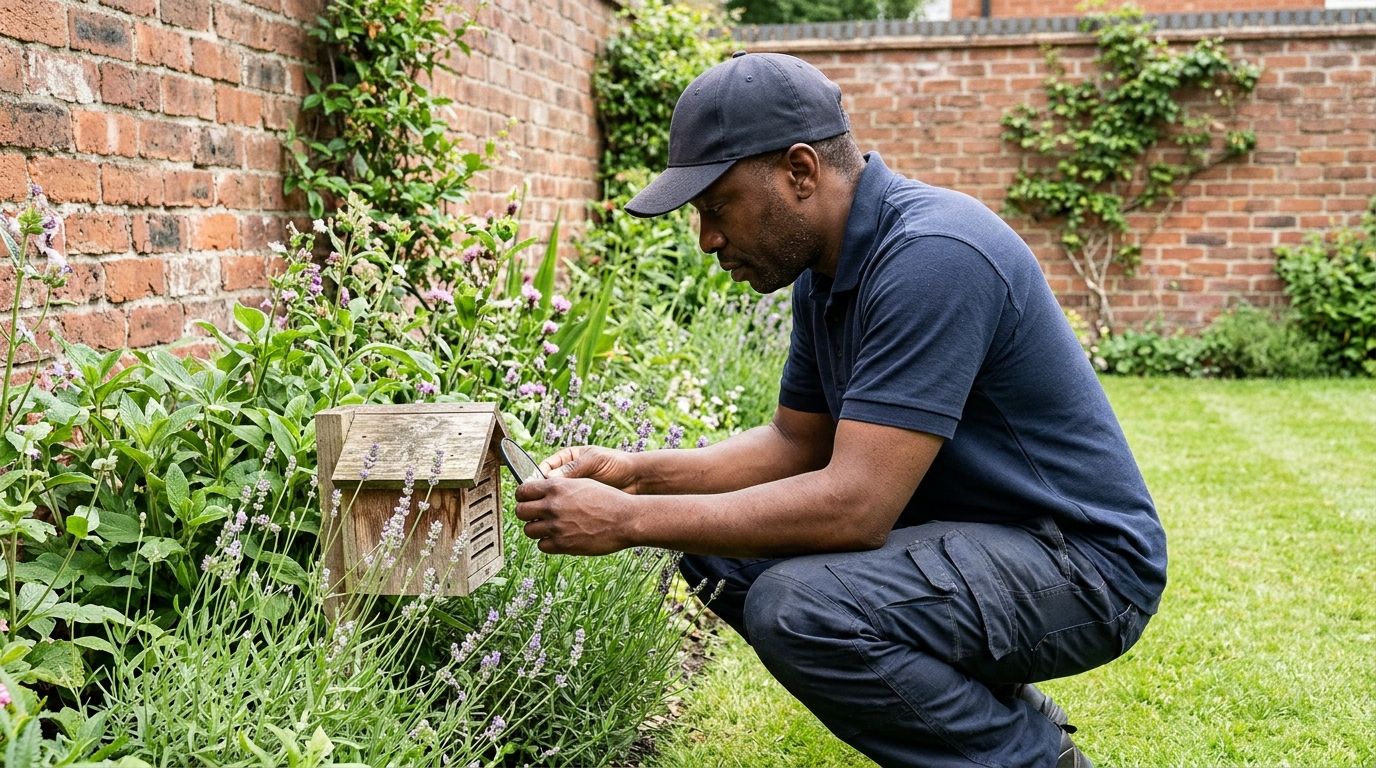
Rarely on their own. Masonry bees mostly move into mortar that's already soft or crumbling, which you often find in the weathered lime mortar of older brick houses, and they struggle with sound pointing. A wall full of little holes is usually telling you the pointing needs attention anyway. The bees are harmless, seldom sting and are only around for a few weeks in spring. Repointing the worst patches, ideally in lime on old brick, removes the nest holes, and a bee hotel on a sunny fence gives them somewhere better to go.
Will the council deal with bees for me?
Check your council's website for current pest control services and charges. Check your council's website for the current position. If you rent and bees are getting in through the structure, report it to your landlord as a repair.
Will bees sting my children or my dog?
It's unlikely if everyone gives them a bit of room. Bumblebees and solitary bees rarely sting unless they're stepped on, grabbed or their nest is disturbed, and male bees can't sting at all. Dogs that snap at bees on the lawn are the usual victims, so call them away. If a honeybee does sting, scrape the sting out sideways with a fingernail or the edge of a card rather than squeezing it, then wash the spot and use a cold compress. Call 999 if anyone has trouble breathing, swelling of the face or throat, or feels faint.
Bumblebees are nesting under our floorboards. Will they get into the house?
A few sometimes do. Bumblebees often go in through an airbrick and nest in the void under a suspended timber floor, which plenty of Manchester terraces and 1930s semis have. Don't block the airbrick while they're active, because trapped bees will hunt for another way out, and that can mean gaps around pipes and skirting boards indoors. Sealing those inside gaps is the safe fix for now. Once the colony has died off later in the year, fit fine mesh over the airbrick so the floor still ventilates but the next queen can't get in.
Is it illegal to kill bees or destroy a bees' nest?
In England, bees aren't a protected species in the way bats and nesting birds are, so wildlife law doesn't usually stand in the way. That doesn't make it a good idea. Most bee nests are harmless and short-lived, honeybees can be rehomed by a beekeeper, any insecticide must be used strictly as its label allows, and a badly handled treatment can poison healthy hives nearby when their foragers rob the honey. If tree bumblebees have taken over a bird box that birds were also using, remember an active bird's nest is protected under the Wildlife and Countryside Act 1981, so leave the box alone until the season ends.
Will the bees come back next year?
Bumblebees won't reuse the nest, because the colony dies in late summer or autumn and the new queens hibernate somewhere else. A snug gap can attract a different queen another spring, though, so close it once the nest is finished. Honeybees are a different story: an old colony site, especially with comb left inside, is very attractive to the next swarm, so the comb needs clearing and the entrance sealing properly. Masonry bees keep using the same wall for as long as the soft mortar is there, which is why repointing is the lasting answer.
Bees near you
- Chorlton
- Levenshulme
- Didsbury
- Withington
- Fallowfield
- Manchester City Centre
- Salford
- Stockport
- Bury
- Cheadle & Cheadle Hulme
- Eccles & Swinton
- The Heatons
- Longsight
- Prestwich & Whitefield
- Sale
- Stretford
- Urmston
- Wythenshawe & Northenden
- Ashton-under-Lyne
- Bramhall & Hazel Grove
- North Manchester (Blackley, Moston & Harpurhey)
- Rusholme & Moss Side
Last updated: