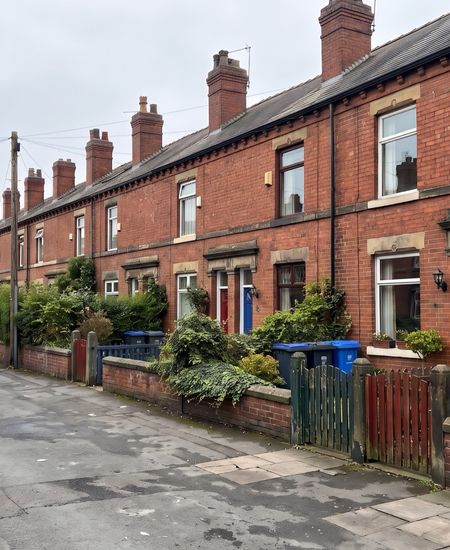
Manchester Pest Solutions is the local team for clothes and carpet moths in homes across Manchester and Greater Manchester, from Victorian terraces to rented flats. We find where the larvae are feeding, treat safely around children and pets, and return for the next hatch. Call or message us and we'll offer the earliest slot we have.
How do I know it’s moths?
Most people find the damage before they find the moths. You pull a wool jumper out of the drawer in October and there’s a scatter of small, uneven holes across the front, or you move the bed and find a threadbare strip of carpet along the skirting board. Moth damage nearly always starts somewhere dark and left alone, so look underneath, behind and at the back of things.
What we look for:
- small, golden-buff moths with a satiny sheen, about the length of a grain of rice, that flutter low or run across the carpet rather than heading for the light;
- creamy-white caterpillars up to about a centimetre long, with a brown head, tucked into the folds of clothes or the pile of a rug;
- fine silky webbing on fabric, or tiny cases that look like bits of fluff, which belong to case-bearing moths;
- gritty specks of droppings the same colour as whatever they’ve been eating;
- holes clustered around collars, cuffs and food stains, because larvae prefer fabric that hasn’t been washed.
It’s the larvae that do the harm. Adult clothes moths don’t feed at all. The caterpillars eat keratin, the protein in wool, cashmere, silk, fur and feathers, and they’ll chew through a wool blend to get at it.
Hairy brown larvae rather than smooth white ones point to carpet beetles instead, which our carpet beetle treatment page covers.
Why are moths turning up in Manchester homes?
Partly it’s the calendar. In a centrally heated home clothes moths can breed all year, but they’re most noticeable from spring into autumn, and late October is when most of us get the coats and knitwear out of storage. The holes you’re finding now were usually made quietly over the summer.
Partly it’s the homes themselves. Plenty of the city’s older housing, from the late-Victorian streets that grew up around Chorlton’s old railway station to the terraces off Burton Road, has timber floorboards whose gaps fill with fluff and hair over the decades. That’s larvae food, sitting right where the carpet meets the skirting. Many of the bigger Victorian houses in Chorlton and West Didsbury have since been split into flats or bedsits; in West Didsbury, more than half of households lived in a flat or a conversion at the 2021 Census. Shared stair carpets and communal storage are corners nobody quite owns the job of hoovering.
Then there’s what we bring home. Second-hand rugs, wool blankets and vintage jackets, whether from a charity shop or a rail on Oldham Street, can carry eggs you’d never spot. Old pigeon and sparrow nests in the loft are another common source, since moths breed in the feathers and debris and wander down into the bedrooms. If birds have been nesting in your roof or under your solar panels, our pigeon proofing page is worth a read.
None of this means your home is dirty. The tidiest wardrobe can hide moths if a good wool coat hangs untouched at the back all summer.
What happens when you call us?
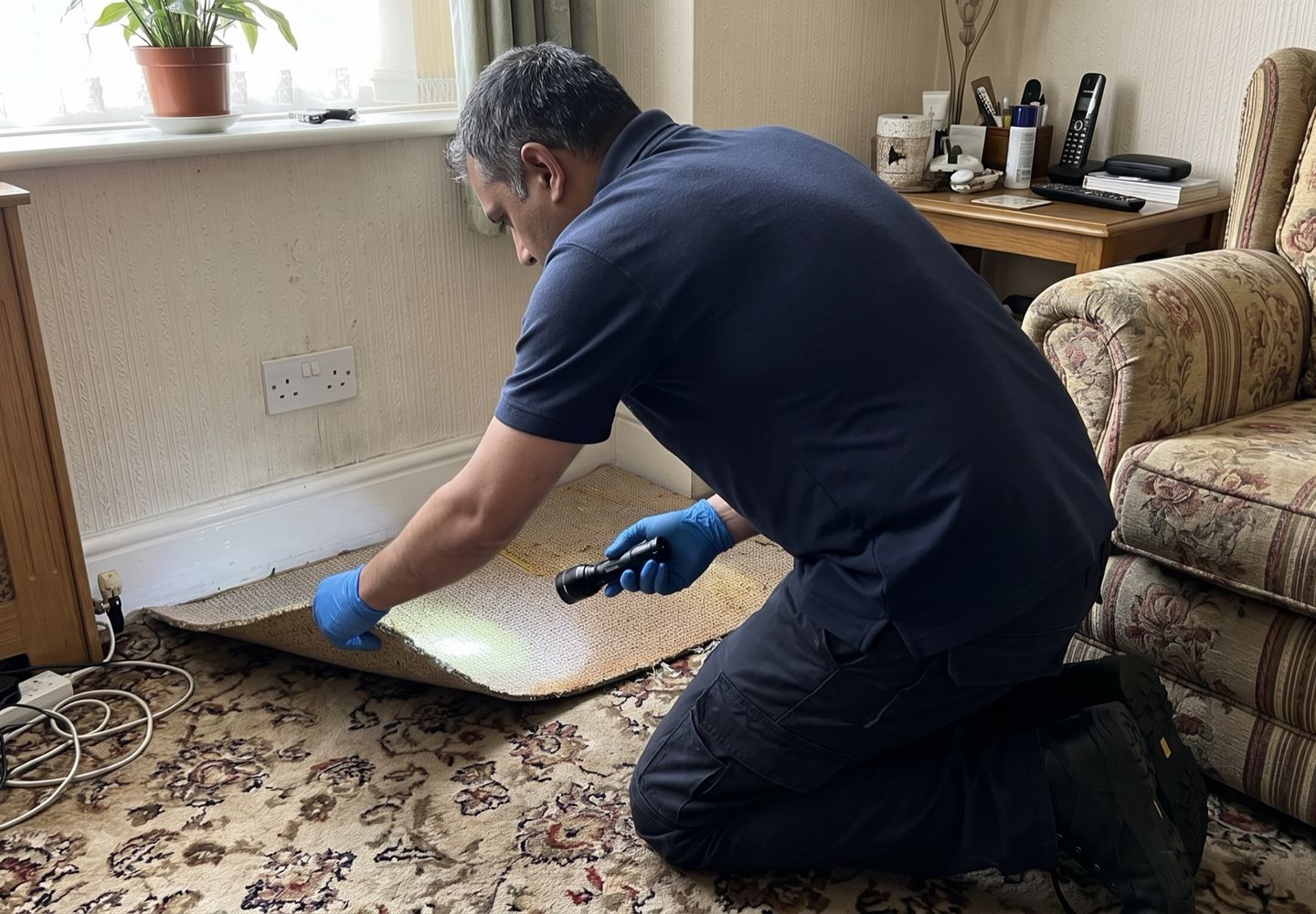
You tell us what’s been damaged and where, and we’ll ask who’s at home, fish included. On the first visit we work out where the larvae are actually living, because treating the wrong room is a common reason moths come back. We fold back rug corners, check carpet edges under beds and sofas, look at the backs of wardrobes and drawers and, where it’s safe, have a look in the loft. We may leave pheromone traps to show where the adults are busiest.
Preparation matters, so we’ll talk you through it: a thorough vacuum along the edges and under furniture, emptied wardrobes and drawers in the treated rooms, and clothes, bedding and soft toys bagged to wash, dry clean or freeze.
On treatment day we apply a professional residual insecticide to carpets, carpet edges, the floor under furniture and the inside of the emptied wardrobes and drawers. It goes where larvae hide, not over your clothes. If the source is a loft of stored blankets or an old bird nest, we’ll deal with that too. The Wildlife and Countryside Act 1981 protects wild birds’ nests while they’re in use, so a nest can usually only be cleared once it’s empty.
Is moth treatment safe with children and pets?
Yes, with sensible precautions. Children, pets and anyone vulnerable stay out of the treated rooms until the surfaces are completely dry, usually a few hours. We’ll give you a time before we go.
Fish need the most care, because moth insecticides are harmful to them even in small amounts, so cover the tank and switch off air pumps during treatment. Move bird cages and reptile tanks to another room. Cats like nothing better than a nap at the bottom of a wardrobe, so keep the doors shut until everything has dried.
Clothes, bedding, cots and soft toys are never sprayed. They go through the wash, the dry cleaner or the freezer instead.
How many visits will it take?
Most homes need two treatments, two to three weeks apart. Eggs laid shortly before the first visit can still hatch afterwards, and the second visit catches that generation before it can breed. Sometimes we start with a short survey, particularly if we need to check a loft or rule out carpet beetles. Wool carpet throughout, or moths coming from the loft or an old nest, can mean a third.
How do I stop moths coming back?
Moths hate being disturbed, so the habits that help are the dull ones. Vacuum under beds, sofas and heavy furniture and along the skirting, not just the middle of the room, and empty the vacuum outside. Turn and move rugs every few months.
Wash or dry clean wool and cashmere before you put it away for the summer, and store it in sealed bags or lidded boxes. Give the clothes you rarely wear a shake now and then, especially that coat at the back of the wardrobe. Anything second-hand made of wool, fur or feathers deserves a close look before it comes in, and a spell in the freezer is a cheap precaution for a vintage find.
After treatment, a pheromone trap in the wardrobe makes a handy early warning: if the catch starts climbing, ring us before the damage does.
When does DIY stop being enough?
If you’ve found one holed jumper and nothing else, wash it, vacuum out the drawer and keep watching. That’s often the end of it. For anything that can’t take a hot wash, seal it in a bag and freeze it for about two weeks, then let it come back to room temperature before opening the bag so condensation doesn’t soak in.
Shop-bought moth sprays and papers can help inside a wardrobe, but they won’t reach larvae in the carpet edges under the bed, where the breeding usually is. Lavender smells lovely but kills nothing.
It’s time to call us if holes keep appearing after you’ve cleaned and frozen things, if bare patches show up in the carpet, if you’re finding larvae in more than one room, or if an expensive rug, a wedding dress or a family heirloom is at risk. Fleas, silverfish and the rest of the household line-up are on our domestic pest control page.
Is it my landlord’s job or mine?
Moths are one of the less clear-cut pests, and the answer turns on the cause and your tenancy. Under section 11 of the Landlord and Tenant Act 1985, landlords of most homes let for under seven years must keep the structure and exterior in repair. Since the Homes (Fitness for Human Habitation) Act 2018, a rented home must also be fit to live in, and councils can separately assess pests as a hazard under the Housing Health and Safety Rating System. Clothes moths, though, usually live in the contents rather than the building, and an infestation bad enough to make a home unfit would be unusual.
If moths were in the landlord’s carpets or furniture when you moved in, or they’re coming from a bird nest in the roof that needs a gap sealed, tell your landlord or letting agent in writing. If they arrived with your own clothes or rugs partway through a tenancy, you’ll usually be expected to deal with them. Carpets on shared stairs and landings are normally for the landlord or managing agent to sort out. Close to a third of Manchester households rented privately at the 2021 Census, and in Withington it’s the most common tenure of all, so the question comes up often. We’ll happily write up what we found, which can help settle where the moths came from.
Run a vintage clothing shop or an upholsterer’s? Our commercial pest control service looks after small businesses in the same friendly way.
What happens when you call us
- 1
Tell us what's been eaten
Ring or message us with what's been damaged, which rooms and when you first noticed. We'll ask about children, pets, fish tanks and anyone with asthma, then offer the earliest slot we have.
- 2
Finding where they're breeding
We lift rug corners and check carpet edges under beds and sofas, the backs of wardrobes and drawers, the under-stairs cupboard and the loft, and confirm whether it's moths or carpet beetles.
- 3
Getting the rooms ready
We go through a simple prep list with you: vacuum the edges and under furniture, empty wardrobes and drawers in the rooms being treated, and bag clothes and bedding to wash, dry clean or freeze.
- 4
Targeted treatment
A professional residual insecticide goes onto carpets, carpet edges, under furniture and inside the emptied wardrobes and drawers. Clothes, bedding and soft toys are never sprayed.
- 5
Second visit for the next hatch
About two to three weeks on, we return to treat again and catch larvae from eggs laid before the first visit. We also check any pheromone traps and tell you what to keep an eye on.
How many visits? Usually two treatments, two to three weeks apart, sometimes after a short survey visit. Wool carpet throughout, a loft full of stored textiles or moths breeding in an old bird nest can add a third.
Moth Removal: questions people ask us
Why have I only just noticed moth holes in my jumpers?
Because the damage was done while the jumpers were put away. Moth larvae feed in the dark on wool that hasn't been worn or washed for a while, so a drawer of knitwear left alone from spring to autumn suits them perfectly. In a centrally heated home they can breed all year. October is when most of us get our winter clothes out, so it's when the holes come to light. The small moths fluttering about now are probably adults from that summer of feeding, and they may well be laying the next batch of eggs.
How do I tell clothes moths from ordinary moths?
Clothes moths are small, about the length of a grain of rice, and a plain golden-buff colour with a slightly shiny look. They'd rather scuttle across the carpet or flutter low into a dark corner than fly towards a lamp. Case-bearing clothes moths look similar but a little browner, with faint dark spots on the wings. Bigger, patterned moths that come in through an open window on a summer evening are garden species and don't eat fabric. Small moths in the kitchen, near the cereal or flour, are usually pantry moths, which need a cupboard clear-out rather than a carpet treatment.
Is it moths or carpet beetles eating my carpet?
Both leave similar damage, so the larvae are the giveaway. Moth larvae are smooth, creamy-white caterpillars with a brown head, and they often leave fine silky webbing or little cases behind. Carpet beetle larvae, sometimes called woolly bears, are smaller, brown and covered in bristly hairs, and leave shed skins rather than webbing. Adult carpet beetles are tiny, rounded and mottled, and often turn up on windowsills in spring. The treatments overlap but aren't identical, so we confirm which one you have first. Our carpet beetle treatment page has more detail.
Is moth treatment safe if we've got a baby or pets?
Yes, provided everyone follows a few precautions. We ask who lives with you before we start. Children and pets stay out of treated rooms until the surfaces are completely dry, which usually takes a few hours, and we'll give you a time before we leave. We never spray clothes, bedding, cots or soft toys; those are washed or frozen instead. Fish need the most care, because moth insecticides are harmful to them, so tanks are covered and air pumps switched off. Cats are more sensitive than dogs to some of these insecticides, and they love a wardrobe, so keep the doors shut until it's dry.
Will I have to bin my jumpers or replace the carpet?
Usually not. Most clothes can be saved with a hot wash, at 60°C if the label allows, or by dry cleaning or freezing, all of which kill eggs and larvae. A jumper that's badly holed may be past mending, but that's about the damage, not the moths. Fitted carpets rarely need replacing, because we treat the edges and the areas under furniture where larvae live. A rug that's been eaten through in patches might be worth replacing, but if it's valuable, talk to a specialist rug cleaner before you decide.
Do moth traps, lavender or mothballs get rid of moths?
Not on their own. Pheromone traps lure male moths onto a sticky card, so they're good for showing where moths are and whether numbers are rising, but they don't touch the females or the larvae doing the damage. England's glue trap ban applies to traps for rodents, so these insect traps aren't affected. Lavender and cedar might put off the odd adult but won't kill larvae already in a carpet. Naphthalene mothballs can no longer legally be sold in the UK and are poisonous to children and pets, so if you find an old packet, don't use it.
Is my landlord responsible for getting rid of moths?
It depends on where they came from. Landlords in England are generally responsible for the structure and exterior of a rented home and for keeping it fit to live in, so if moths were in their carpets or furniture when you moved in, or are coming from a bird nest in the roof, raise it with them in writing. If moths arrived with your own clothes or rugs partway through the tenancy, you'll usually be expected to sort it. Your tenancy agreement and inventory should help, and so can a written note of what we found.
Will Manchester City Council deal with moths for me?
Check your council's website for current pest control services and charges. Whoever you use, ask whether a second visit for the next hatch is included.
Moths near you
- Chorlton
- Didsbury
- Withington
- Fallowfield
- Levenshulme
- Manchester City Centre
- Salford
- Stockport
- Bury
- Cheadle & Cheadle Hulme
- Eccles & Swinton
- The Heatons
- Longsight
- Prestwich & Whitefield
- Sale
- Stretford
- Urmston
- Wythenshawe & Northenden
- Ashton-under-Lyne
- Bramhall & Hazel Grove
- North Manchester (Blackley, Moston & Harpurhey)
- Rusholme & Moss Side
Last updated: