Manchester Pest Solutions gets rid of rats in homes and gardens across Bury, including the riverside streets of Radcliffe, the terraces around Fishpool and the Irwell valley at Ramsbottom. We check drains and airbricks, secure lockable boxes beyond the reach of children and pets, return to check them and proof the gaps afterwards. Message or call us to book.
What makes Bury’s rivers such good rat country?
The Irwell runs down through the heart of Bury, and near Blackford Bridge it picks up the Roch, which comes in from the east. Brown rats drink daily, swim with ease and like to burrow into soft banks, so both rivers give them a good living. Radcliffe adds the disused Manchester Bolton & Bury Canal, and there are the Elton and Withins reservoirs as well. For a rat, plenty of Bury homes are only a short trip from water and cover.
High water moves them on. The Irwell and the Roch were higher on Boxing Day 2015 than they had ever been recorded, and at Blackford Bridge the reading cleared 64 years of records by 1.1 metres. Upstream, the river burst through at Summerseat and Ramsbottom; downstream, at Radcliffe; and culverts at Tottington and Black Lane overflowed. Rats flushed out of banks and culverts by that kind of storm make for the nearest dry spot: a garage, a pile of garden waste, the gap under a kitchen floor. The defences built along the river since then are there to protect homes from floodwater, but rats still live in the banks behind them, and heavy rain can still send them looking for drier ground.
What we find under the mill-era terraces
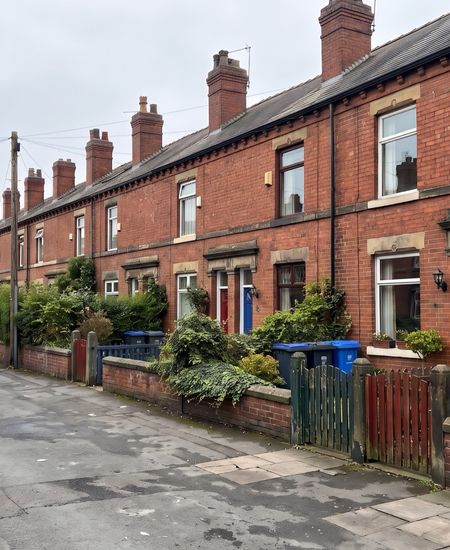
Around the town centre, in streets like those of Freetown, Fishpool and Pimhole, the terraces went up next to the cotton mills, and the drains beneath them are often very old. Clay pipes shift and crack with age, an old branch drain from a demolished outhouse may have been left open, and a single missing airbrick grille opens the void under the floor. Rats in these houses usually come from below rather than across the garden.
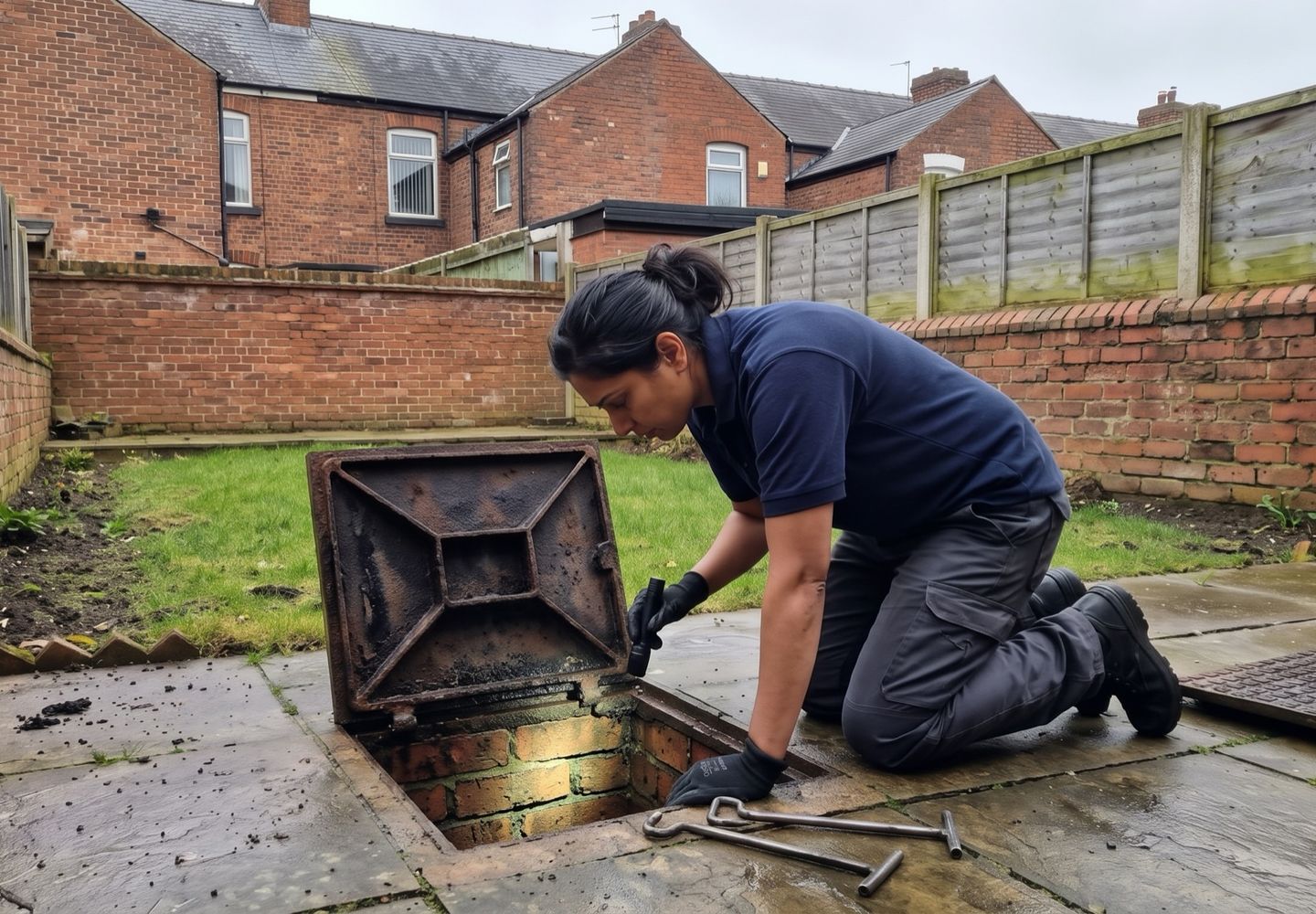
The signs tend to be heard before they’re seen: thumping or scratching under the kitchen or bathroom floor at night, a fresh hole at the base of a cupboard, droppings where the waste pipe leaves the house. We lift the inspection covers on every terrace visit. If a broken drain is the route, we’ll say so plainly, because a camera survey and repair is the only lasting fix, and a one-way rat blocker can stop them coming up from the sewer while that’s arranged.
New estates, building sites and disturbed ground
Radcliffe’s newer estates stand on old mill land, and more building is planned, including as many as 3,500 homes proposed west of Elton Reservoir and 1,350 on the Bury side of the Simister/Bowlee site. Clearing ground that has sat quiet for years moves its rats on. Around newer homes we tend to find rats outside first: under decking, beneath sheds, along the base of fences and around gaps where service pipes enter the wall.
Bins and the long wait between collections
Bury’s councillors were the first in England to move grey-bin rubbish to a three-weekly round, in 2014. Check your current collection calendar, but wherever rubbish sits for a while, rats notice. A lid propped open by an overfull bin, a split bag left beside it, or food scraps in an open compost heap will keep rats visiting long after treatment. Keep lids flat, bag food waste tightly and stand bins on hard ground.
How a rat job runs in Bury
First, a quick conversation: what you’ve noticed, where, and who shares the house, animals included. We’ll offer the earliest slot we have, often the same day. On that first visit we survey the whole property, starting outside. Inspection chambers get lifted, airbricks and the points where pipes leave the walls get checked, and if you’re close to the river or the canal we walk the boundary that faces it. Inside, we follow the noise: kitchen units, under the stairs, up into the roof space.
Any traps or bait sit in lockable, tamper-resistant boxes fixed in place on the rats’ runs, out of reach of little ones and pets, and we’ll walk you round each one. Rats distrust new objects, so it’s common for the boxes to go untouched at first. The second visit, roughly seven to ten days on, is for checking, moving and refilling, and a third usually confirms they’ve gone, so most Bury homes are finished after three visits, the last one two to three weeks after the first. When activity has stopped we remove everything and proof what we can on the spot, and anything bigger, such as a cracked drain run or a broken wall, is written up so you, a builder or your landlord can sort it.
Keeping rats out of a Bury home
On streets near the Irwell or the Roch, check airbricks and drain covers after any big flood or repair work, and replace any cracked airbrick with a mesh-backed one rather than blocking it. Skirt the base of decking with galvanised mesh dug a few centimetres into the ground, stand compost bins on a paving slab or a mesh base, and put a tray under bird feeders. In a terrace, talk to the neighbours, because a rat that’s cleared from one yard can simply move to the next.
What we tend to find in Bury
- South Bury and North Radcliffe saw the heaviest property flooding in the borough on Boxing Day 2015, so on those riverside streets the drains, gullies and airbricks are the first things we check.
- Culverts at Tottington and Black Lane were overwhelmed in the same storm, a reminder that water runs underground in parts of the borough, and rats travel culverts as readily as open riverbanks.
- Radcliffe's stretch of the old Manchester Bolton & Bury Canal, long out of use, gives rats a sheltered, wet corridor that passes close to plenty of back gardens.
- The terraced streets of Freetown, Fishpool and Pimhole date from the mill era, and homes of that age often have old clay drains and suspended timber floors, the usual route for a rat to reach a kitchen from below.
- The council sells its rat treatment as three visits bundled together, and our own rat jobs usually take three visits as well, so comparing the two is straightforward.
What happens when you call us
- 1
Tell us what you've seen
A quick chat about what you've seen or heard, where, and who lives in the house, pets included. We'll offer the earliest slot we have, often the same day.
- 2
A proper look round
Inside and out: decking, sheds, airbricks, pipe holes, the loft and the drain inspection covers, so we know where the rats are living, feeding and getting in.
- 3
Treatment set up for your home
Traps and, where it suits, bait in locked boxes fixed along the routes rats use, well away from little hands and paws. We show you where every box is.
- 4
Follow-up checks
We come back about a week to ten days later to check the boxes, move or top them up, and take away any dead rats we can reach.
- 5
Close the way in
Once the signs stop, we clear everything away and seal the gaps we found, or tell you plainly what a builder or drain specialist needs to put right.
Rat Control in Bury: your questions
We back onto the Irwell in Radcliffe. Won't the flood defences keep rats out?
They're built to hold back water, not wildlife. The scheme at Radcliffe and Redvales raised defences along a stretch of more than 2.5 kilometres, with up to 870 properties behind them, but rats live in the banks on both sides and move through drains that pass under walls. What keeps them out of your house is the house itself: sound drains, mesh-backed airbricks, sealed pipe holes and no food in the garden. We check all of those on a riverside visit and tell you which ones need work.
I saw a rat on the old canal towpath. Does that mean we've got them at home?
Not necessarily. Most waterways have rats along them, and the disused canal through Radcliffe is no exception, so seeing one on the towpath doesn't mean it's living in your garden. Check your side of the fence for fresh holes a few centimetres across, droppings near the shed or bins, and gnawing on the compost bin or bird-food bags. Take away easy food, especially fallen seed and open compost. If you find signs on your own property, that's the point to book a survey.
They're building near us. Will that push rats into our street?
It can. When land that's been left alone for years is cleared, the rats living in it have to move, and the nearest gardens and sheds are where they usually go. With large schemes planned in the borough, including land west of Elton Reservoir and the Simister/Bowlee site, homes next to groundworks are worth keeping an eye on. Clear clutter from behind sheds, keep bins shut and lift bird feeders for a while. If rats do arrive, an early visit keeps the job small.
Rats are coming from the yard next door in our terrace. Can you deal with both houses?
We can, with both households' agreement, and it's often the quickest way to finish the job. In Bury's older terraces rats move along the row through yards, under floors and through shared drain runs, so treating one house while the source stays next door rarely holds. If a neighbour won't act and their rubbish is feeding rats, the council can serve notice on the owner or occupier under the Prevention of Damage by Pests Act 1949. Our written notes can help if it gets to that point.
Will rats go away on their own if I leave them?
Rarely. If your garden or home gives them food, water and shelter, rats have every reason to stay, and a pair can turn into a colony within a few months because young rats can breed themselves at around three months old. They sometimes seem to vanish for a while, then come back when the weather turns. The sooner the food is taken away and the way in is found, the smaller and quicker the job, so a single rat seen by the back door is worth getting looked at.
Can I legally put rat poison down in my garden?
You can use shop-bought rat poison, but only exactly as its label allows. Products sold to the public are generally meant for bait points inside or close around buildings, not scattered across lawns, borders or the back entry, and the bait should sit in a tamper-resistant box. Loose poison is a real danger to dogs, cats, children and to wildlife such as hedgehogs and birds of prey that eat poisoned rats. Professional-use rodenticides can only be supplied to people who can show certified competence under the UK Rodenticide Stewardship Regime.
Can rats really come up through the toilet?
It's uncommon, but it does happen. Rats swim well and live in sewers, and where a drain is cracked, badly joined or left open under the floor after old building work, they can find their way into the house or up through a toilet. If you hear scratching under a bathroom floor or see droppings near an inspection cover, we'll check the drains on our visit. Keeping the toilet lid down is a sensible stopgap, and a one-way rat blocker fitted in the drain can stop rats coming in from the sewer side.
More help in Bury
Last updated: