Manchester Pest Solutions clears rats from Stockport homes and gardens, including canal-side streets in Marple, houses near the Mersey in the town centre and gardens in Bramhall. We check drains and entry points, use locked boxes kept away from children and pets, revisit over two to three weeks and close the gaps. Phone or message us for a visit.
Why are rats so at home in Stockport?
Water, cover and food, usually within a short run of each other. Two rivers, the Goyt and the Tame, merge here into the Mersey, which then disappears into a culvert under the Merseyway shops. Brooks thread through the suburbs, the Lower Peak Forest Canal cuts across the eastern side of the borough on its way over Marple Aqueduct, and almost half the borough is green space. Beneath the older parts of town sit drains, mill tunnels from the Goyt and a part-filled branch of the Ashton Canal that have been in the ground for well over a century. Brown rats swim, dig and climb, and a mix like that suits them very well.
The council’s own guidance adds a wider point: rat numbers are rising across the UK, which it links to a warming climate and to rats becoming resistant to some poisons. That’s one more reason to deal with a rat early rather than waiting to see whether it moves on.
Did the recent floods make things worse?
They can. When water rises along a brook or river, it fills burrows on the banks, and the rats living there move to drier ground nearby. The council’s flood investigation reports on December 2024 to January 2025 cover a string of locations across the borough, the Mersey among them, alongside earlier reports from 2016 and 2019. Floodwater can also shift or crack old drains, giving rats a new route under a house long after the water has gone. If rats turned up in your garden or under the floor after a flood, mention it when you call and we’ll look at the drains first.
What we find around Stockport homes
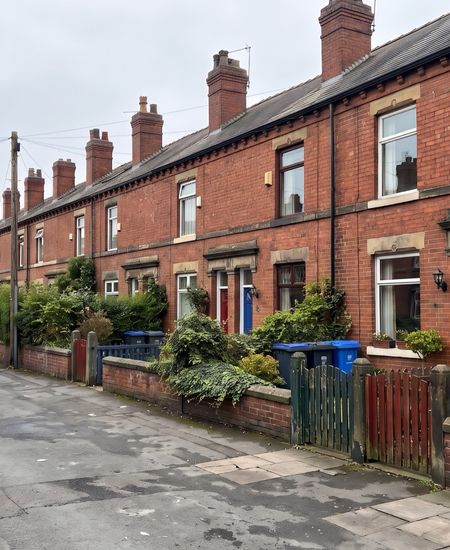
In Edgeley’s terraces and the older streets near the town centre, rats tend to arrive from underneath, through a clay drain that’s cracked with age, a disconnected pipe left when a kitchen was refitted, or an airbrick whose grille has broken. In the bigger gardens of the Heatons and the southern suburbs, it’s more often decking, a shed with a gap under the door, a compost heap fed with cooked scraps, or a bird table dropping seed every day. Houses near the canal or a brook see rats travelling along the bank and into gardens, and in blocks of flats, shared bin stores are the usual draw.
How a rat job runs here
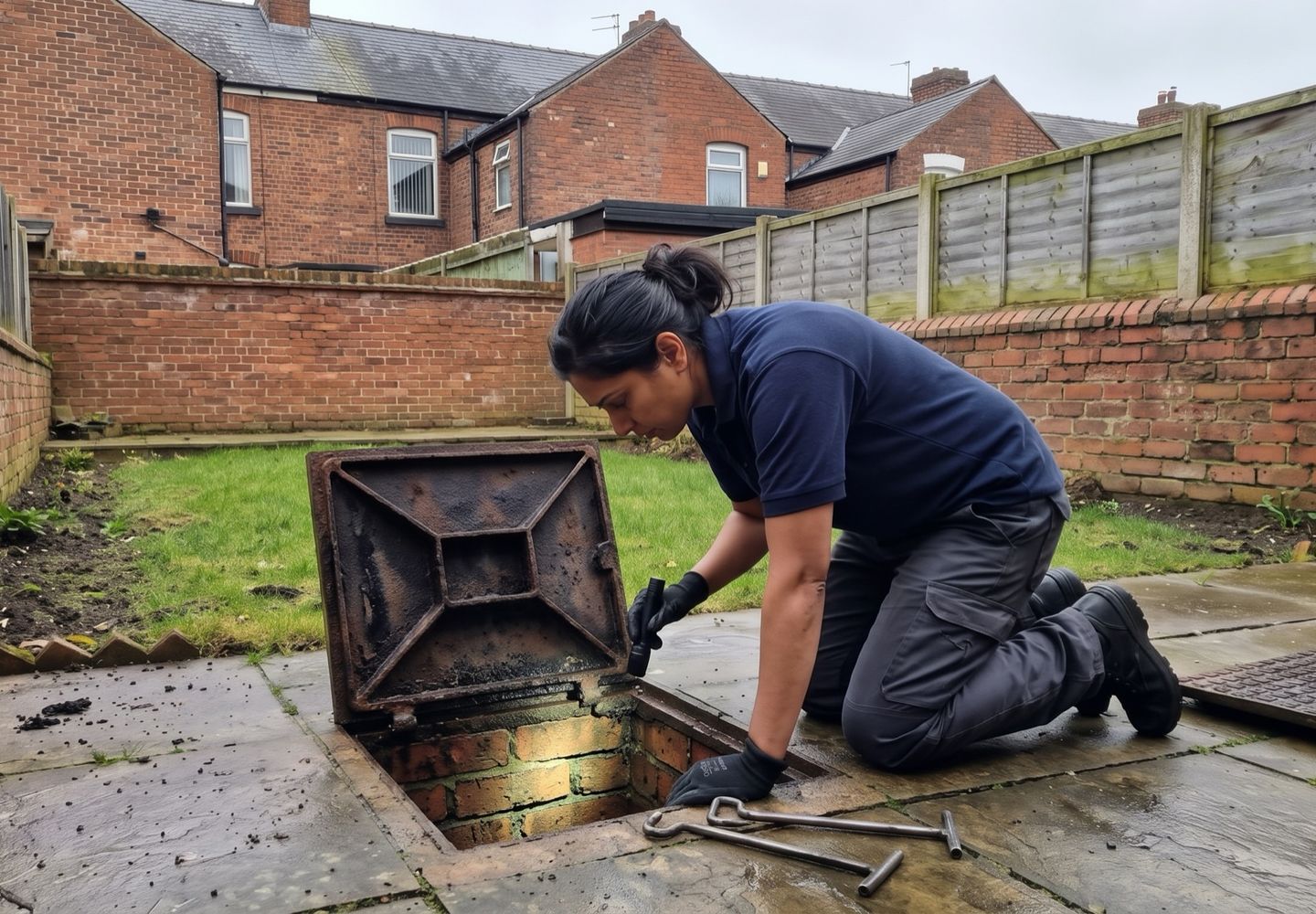
First we’ll want to know what you’ve spotted and who shares the home, animals included. Our opening visit surveys the whole property. Outside, that means lifting drain covers and checking airbricks and the ground round decking and sheds; inside, it’s pipe entries, the back of the kitchen units and the loft if you’re hearing noises overhead. The council reminds residents that a rat can squeeze through a 25mm gap, about an inch, so we look closely.
Traps and, where it’s right, bait go into locked boxes fixed down on the runs, placed where children and pets can’t reach them. If the dog or cat spends a lot of time outside, traps do more of the work. Seven to ten days on, we’re back to see what’s been taken and move boxes if needed, then a final visit clears everything away. Expect three visits in all, spread across two to three weeks. If rats nearby seem to be shrugging off a bait, we change the product or lean on trapping instead.
Whose job is it to deal with rats?
Legally, the council’s guidance says, rats on a property are the occupier’s or owner’s problem to solve, under the 1949 Prevention of Damage by Pests Act. If you rent, anything structural, such as a broken drain or a hole in an outside wall, is usually your landlord’s to fix, so report it in writing. Renting from Stockport Homes? Check Stockport Council’s website for current pest control services and charges.
Keeping rats away this winter
What needs proofing depends on the house. In an Edgeley or Reddish terrace it’s usually at ground level, around airbricks and the pipes entering the back kitchen. In the larger Heatons gardens, the open sides of decking and the gap under a shed door matter more. Near the town centre, where the drains are often the route in, a camera survey is often the quickest way to find the break, and a one-way blocker can be fitted once it’s repaired.
Food is the other half. A bird table that scatters seed onto the lawn every morning will keep rats visiting, so feed little and often, or use a feeder with a catch tray. Keep cooked scraps off the compost heap altogether. With blue-bin collections going fortnightly in December, rinse food packaging and keep the lid down. If your house shares a boundary with a canal-side path or a park, a quick look along the bottom of the fence every few weeks will spot a new burrow before it becomes a colony.
What we tend to find in Stockport
- The Mersey begins in Stockport, where the Goyt and the Tame meet, and it is culverted beneath Merseyway, so rats in town-centre homes often trace back to drains, culverts and old underground spaces.
- Fortnightly blue-bin collections from December, and the paid garden-waste permit needed since April 2026, make overfull bins and loose garden-waste heaps worth watching this winter.
- Poison use outside is restricted for wildlife's sake, as the council's guidance says, so in gardens that run down to one of Stockport's local nature reserves we start with traps and proofing.
What happens when you call us
- 1
Tell us what you've seen
A quick chat about what you've seen or heard, where, and who lives in the house, pets included. We'll offer the earliest slot we have, often the same day.
- 2
A proper look round
Inside and out: decking, sheds, airbricks, pipe holes, the loft and the drain inspection covers, so we know where the rats are living, feeding and getting in.
- 3
Treatment set up for your home
Traps and, where it suits, bait in locked boxes fixed along the routes rats use, well away from little hands and paws. We show you where every box is.
- 4
Follow-up checks
We come back about a week to ten days later to check the boxes, move or top them up, and take away any dead rats we can reach.
- 5
Close the way in
Once the signs stop, we clear everything away and seal the gaps we found, or tell you plainly what a builder or drain specialist needs to put right.
Rat Control in Stockport: your questions
My neighbour's garden is full of rubbish and rats. What can I do?
Start with a friendly word if you can, because rats in a neighbouring garden won't stay on their side of the fence. If that gets nowhere, report it to Stockport Council. Its guidance places the duty on whoever owns or occupies the land, and the Prevention of Damage by Pests Act 1949 lets a council require an owner or occupier to deal with rats and clear what's attracting them. Meanwhile we can protect your side with locked boxes along the boundary, proofing under sheds and decking, and a check of any shared drain.
Are Stockport's rats getting harder to poison?
In some places, yes. The council's rat advice links rising rat numbers partly to growing resistance to rodenticides, and some UK rat populations can survive certain common anticoagulant baits. That's why we don't just put more poison down when bait isn't working. We check whether rats are taking it at all, switch to a different active ingredient where that makes sense, use traps, and put most of the effort into finding and closing the way in. Shop-bought bait used for weeks with no result is a good sign it's time to call someone.
Will fortnightly blue-bin collections in Stockport attract more rats?
Not if the bin is looked after. Rats are after food, so the risk comes from recycling with food left on it and from bins so full the lid won't close. Rinse tins, trays and tubs before they go in, squash things down, and keep extra bags indoors or in the garage rather than beside the bin. If you're not buying the garden-waste permit that started in April 2026, keep clippings in a closed compost bin, not an open heap by the fence where rats find dry cover.
I've seen a rat on the canal towpath near my house. Should I be worried?
Not on its own. Rats live along most waterways, and the Peak Forest Canal and Stockport's rivers are no exception. What matters is whether they're coming into your garden or home. Look for burrows beside the shed or under decking, droppings near the bins, gnawed bags of bird seed, or a worn track along the bottom of the fence. If you spot any of those, or see a rat in your garden in daylight, get it checked before they settle. Tidy food sources are the best defence for homes backing onto water.
Will rats go away on their own if I leave them?
Rarely. If your garden or home gives them food, water and shelter, rats have every reason to stay, and a pair can turn into a colony within a few months because young rats can breed themselves at around three months old. They sometimes seem to vanish for a while, then come back when the weather turns. The sooner the food is taken away and the way in is found, the smaller and quicker the job, so a single rat seen by the back door is worth getting looked at.
Can I legally put rat poison down in my garden?
You can use shop-bought rat poison, but only exactly as its label allows. Products sold to the public are generally meant for bait points inside or close around buildings, not scattered across lawns, borders or the back entry, and the bait should sit in a tamper-resistant box. Loose poison is a real danger to dogs, cats, children and to wildlife such as hedgehogs and birds of prey that eat poisoned rats. Professional-use rodenticides can only be supplied to people who can show certified competence under the UK Rodenticide Stewardship Regime.
Can rats really come up through the toilet?
It's uncommon, but it does happen. Rats swim well and live in sewers, and where a drain is cracked, badly joined or left open under the floor after old building work, they can find their way into the house or up through a toilet. If you hear scratching under a bathroom floor or see droppings near an inspection cover, we'll check the drains on our visit. Keeping the toilet lid down is a sensible stopgap, and a one-way rat blocker fitted in the drain can stop rats coming in from the sewer side.
More help in Stockport
Last updated: