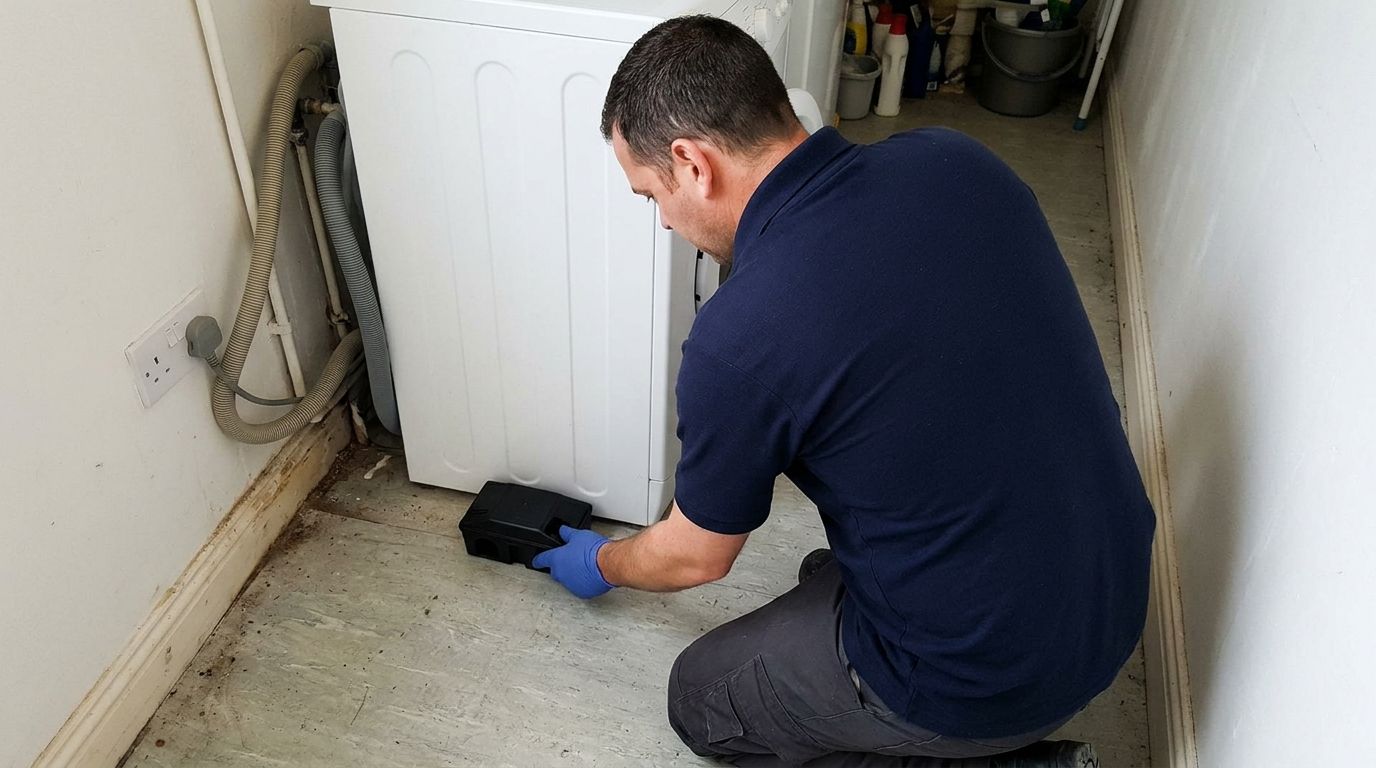
Manchester Pest Solutions gets rid of mice in Stockport homes, including Reddish's older streets, the terraces of Edgeley and flats across the borough. We survey first, place covered traps or locked bait boxes well out of reach of children and pets, return to check, then block the gaps. Ring or message us and we'll book you in.
Why do mice move into Stockport homes in autumn?
Mice spend the summer outdoors, in hedges, compost heaps, sheds and the long grass at the edges of parks. Almost half of Stockport is green space, counting country parks, nature reserves and big back gardens, so there’s plenty of summer housing. When the nights turn colder from October, they go looking for warmth, and the nearest warm building with a gap in it wins. That’s why so many Stockport households first hear scratching in a kitchen ceiling around this time of year, and why it rarely has anything to do with how clean the house is.
Building work plays a part as well. Groundworks on a big site, such as the new homes where Stockport College’s Buckingham Road campus once stood, or the Interchange scheme by Wellington Road, disturb mice living in the soil, hoardings and gardens nearby. They move into whatever older buildings are closest.
What we find in Edgeley’s terraces and the Reddish streets
In a Victorian terrace like those around Alexandra Park in Edgeley, mice usually live under the floor and behind the kitchen units. The void below a suspended timber floor can stretch beneath several houses, which is why the problem so often turns out to be shared. Typical ways in are a cracked or grille-less airbrick at the front, the hole round the gas or water pipe where it enters, the joint between floorboards and skirting in the back room, and the space behind a dishwasher where its waste pipe exits the wall.
The older homes of Reddish, including the model village built for Houldsworth Mill workers, have the same kind of weak spots. Because the floor void is shared, we’ll ask whether next door has seen droppings and suggest a word over the fence if they have.
Bigger houses in the Heatons
Heaton Moor’s Victorian and Edwardian houses are larger, and mice make use of more of them. As well as kitchens, we find them in lofts, behind bath panels and moving up through the gaps beside chimney breasts and pipe runs. Extensions are a common weak point, where new walls meet old brick and floor levels change. Generous gardens with sheds and compost bins give mice a comfortable base just a few metres from the back door.
Flats and council blocks
Many councils run a pest control service for residents, but what is covered, who can book and the charges all vary and can change, so check the council’s own pest control pages before you book. If you rent, report the problem to your landlord first. If you would rather book a private firm, call or message us and we’ll offer the earliest slot we have.
How a mouse job runs in Stockport
The steps match the rest of our work. When you get in touch we’ll ask where you’ve noticed signs and who’s at home, including any pets. Visit one is a thorough look round, indoors and out. Traps go down first, inside covered boxes on the routes the mice are using; if there’s a lot of activity, or it’s out of reach under the floor, we may add bait, which always sits in a locked box. Any gaps we can close there and then, we close.
We’re back roughly a week later to empty and reset traps, look for fresh droppings and complete the sealing. Two or three visits covers most Stockport homes. Where mice are shared with the house next door or the flat downstairs, it can take a little longer, and we’ll tell you honestly if it does.
Keeping mice out through the winter
Blue-bin collections move to fortnightly in December, so recycling will sit around for longer. Rinse food tins and trays before they go in and keep the lid shut. Bird seed and pet food kept in a garage or shed want lidded metal or hard plastic bins, because mice will chew through a paper sack overnight. If you’re not buying a garden-waste permit this year, don’t let clippings pile up against the house wall, where they give mice cover right beside an airbrick.
Once we’ve sealed the gaps, keep an eye on them after any plumbing, electrical or kitchen work. A fresh hole cut through the wall for a new pipe is a classic way for mice to find their way back in.
What we tend to find in Stockport
- Around Alexandra Park in Edgeley, Victorian terraces share walls and underfloor voids, so mice often travel along a row and treating one house on its own can leave the problem next door.
- Heaton Moor's houses, built between the 1850s and 1890s with infilling into the Edwardian years, often hide gaps where later extensions, boiler flues and pipework meet the original brick.
- With almost half the borough green space, homes that back onto parks often see wood mice as well as house mice once the weather turns cold.
- New homes such as the apartments at Stockport Interchange and the houses on the old Stockport College site start out well sealed, but nearby groundworks can push mice into the closest older buildings.
What happens when you call us
- 1
Tell us what you've noticed
Call or message us with what you've seen or heard and where. We'll ask about children, pets and anyone vulnerable at home, and we'll offer the earliest slot we have, often the same day.
- 2
A proper look round
We check under kitchen plinths, behind the cooker and washing machine, around pipes and meters, under the stairs, in the loft and along the outside walls to find where mice are living and getting in.
- 3
Treatment chosen for your home
Snap traps inside covered boxes, locked tamper-resistant bait boxes, or both, placed along the runs and out of reach. We show you where every box is before we leave.
- 4
Sealing the way in
We block the gaps we found with materials mice can't easily chew through, such as wire wool packed in with sealant, metal mesh, airbrick covers and door brush strips, and flag anything that needs a builder or your landlord.
- 5
Follow-up and clear-up
We come back to check traps and boxes, remove any mice, look for fresh droppings and finish the proofing, then take all our equipment away once things have gone quiet.
Mice Control in Stockport: your questions
The whole terrace seems to have mice. Can you treat our neighbours' houses as well?
Yes, and in Edgeley's Victorian rows it often makes sense. Mice use the shared floor voids and party walls, so if only one house is treated they tend to move along the row and drift back later. Each household books its own visit, but we can arrange them back to back and share what we find, so everyone knows which gaps to close. If any of the houses are rented, bring the landlords in early, since sealing holes in the structure usually falls to them.
How are mice getting up to my flat on a high floor?
From inside the building, almost always. Mice climb well and use the boxed-in pipework, service risers and cable runs that link every floor of a block, often starting from a bin store or a ground-floor flat. In your own flat, check the boiler cupboard, under the kitchen sink and behind the fridge, wherever pipes pass through walls. We'll treat your flat and seal the gaps we can reach, and if you're in a council or housing association block, we'll explain what the landlord needs to look at in the shared areas.
We back onto a park in Stockport. Could these be wood mice rather than house mice?
Quite possibly. Homes beside green space, and Stockport has a lot of it, often get wood mice coming in over the colder months. Wood mice have warm, gingery-brown backs, pale bellies, prominent ears and eyes and long tails; house mice are a duller grey-brown with smaller eyes and ears. Wood mice tend to stay near the edges of the house, in garages, sheds and kitchens by the back door. They get in the same way and are treated the same way, and they'll still raid food stores and loft insulation.
Mice are in the loft of our Heaton Moor house. Where are they getting in?
In big Victorian and Edwardian houses, mice often reach the loft from below rather than through the roof. They climb between floors alongside chimney breasts and up the pipe and cable runs from the kitchen or bathroom. Outside, look where an extension roof meets the main wall, at gaps under the eaves, and wherever ivy or a climber reaches the gutter. We check both ends, the loft and the rooms beneath it, because blocking the loft hatch on its own just keeps the mice in the walls.
Why have I suddenly got mice when I've never had them before?
It's usually a mix of season and opportunity. Mice move indoors as the weather turns in autumn, and a new gap is often all it takes: a pipe replaced under the sink, a broken airbrick, or a neighbour having building work done or clearing out a shed. In terraces and converted flats, mice can also travel through shared floor voids, so the problem may have started next door. It doesn't mean your home is dirty. Mice find warmth and crumbs in the tidiest of kitchens.
If I've seen one mouse, are there more?
Probably. Mice are shy and mostly active at night, so the one you spot is rarely the only one. A female can start breeding at around six weeks old and have a new litter every few weeks when food and warmth are easy to find, which is how a couple of mice in October can become a busy kitchen by Christmas. Fresh droppings in more than one room, or scratching in the ceiling as well as the kitchen, suggest they're already well settled.
Is mouse treatment safe with a baby, a cat or a dog at home?
Yes, with the right set-up. We ask who lives with you before we choose anything. Traps go inside covered boxes, and any bait is locked inside tamper-resistant boxes placed out of reach, so there's nothing loose for a crawling baby or a nosy dog to find. In homes with cats we lean on trapping, because a cat that eats a poisoned mouse can be harmed. We show you where everything is and take it all away when we're done.
More help in Stockport
Last updated: