Manchester Pest Solutions clears mice from Withington homes in M20, including Victorian terraces, semis, converted flats and the Old Moat estate. We trace the runs and entry points, set covered traps or locked bait boxes, then block the gaps, usually over two or three visits. Call or message us to book and we'll offer the earliest slot we have.
Why do Withington homes get mice?
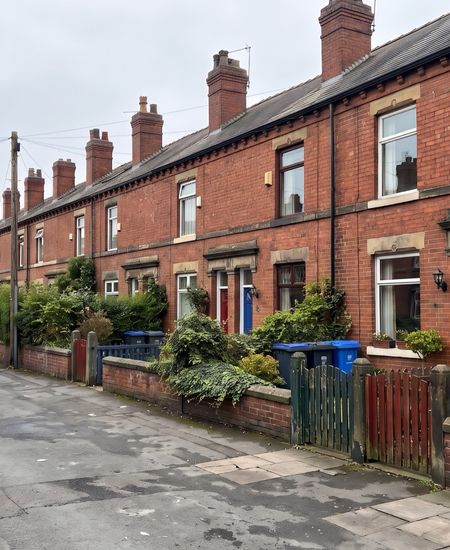
Withington’s housing is old, varied and busy, which suits mice very well. The streets around the village date largely from Victorian times. Davenport Avenue and its neighbours went up between 1862 and 1892, Marriott Street around 1880, and the back entries off Hazelbank Road date from the late 1880s. Houses built then often have suspended timber floors, airbricks that have lost their grilles and more than a century of pipes and cables pushed through the walls. A mouse needs only a pencil-width gap, and the space under one floor can connect to several houses.
Then there are the conversions. Many of the larger family houses have been divided into student flats, and close to one household in eleven in the ward lives in a converted or shared house, bedsits included. Shared floor voids, risers and stairwells link flats that have separate front doors but one set of mice.
Timing matters too. Mice move indoors as the weather turns, and here that happens just as September’s new tenants have filled the kitchen cupboards. In a house where five or six people store food, a few crumbs behind the toaster add up quickly.
What do we usually find?
Each type of home in Withington has its own pattern.
In the terraces, we tend to find runs along the back of the kitchen units, droppings under the stairs and activity in the void beneath the front room. The weak points are where the house meets the back entry: waste pipes, a door that no longer seals and old airbricks low on the back wall.
In the semis, which make up 43% of households in the ward, mice often come in at the side or back, around a boiler flue, a newer waste pipe or the wall between the house and an attached garage. Lofts are common nesting spots, with noises in the ceiling after dark.
In converted villas and flats, the picture is about the building rather than the flat. We look at the meter cupboard, the gaps around pipes in shared hallways, and any cellar or roof void that links the units. On the Old Moat estate, built as social housing in the 1920s, we check the same entry points, and Southway Housing Trust tenants should report gaps and repairs to their landlord.
How does a mice job run in Withington?
It follows the same steps we use everywhere, adjusted to the house. You tell us what you’ve seen or heard and who’s at home, including children and pets. On the first visit we look round properly: kitchen plinths, behind appliances, under the stairs, the loft and the outside walls, with extra attention on the back entry or shared areas where they apply.
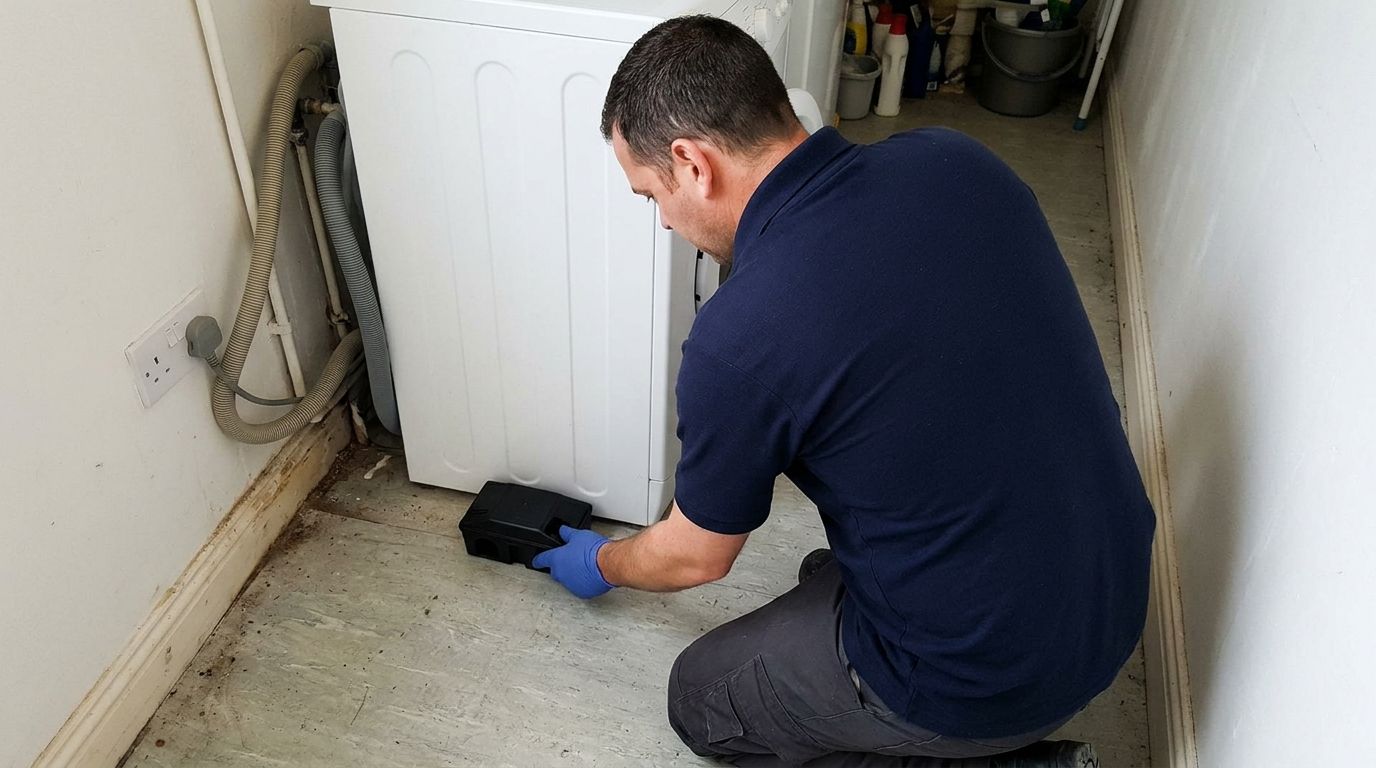
We then set snap traps inside covered boxes along the runs, or add bait locked in tamper-resistant boxes where activity is heavier or hidden in a floor void. In homes with cats we lean on trapping. We show you where every box is and start sealing gaps straight away.
Most Withington homes need two or three visits about a week apart. In a converted house where several flats are involved, it can take a little longer, because the job isn’t done until the shared routes are closed. If a fix needs a builder or your landlord, we’ll say so plainly and put it in writing.
How can you keep them out this winter?
Proofing does most of the work. Pack the gaps around pipes under the sink and behind the washing machine with wire wool and sealant, fit a brush strip to a back door that has a gap beneath it, and replace any broken airbrick covers. In a shared kitchen, agree on sealed tubs for cereal, rice and pasta, and empty the bin before bed. If you’re renting, report holes in the brickwork or worn doors to your landlord in writing.
And if a neighbour along the terrace or another flat in the building has mice too, it’s worth a word, because sorting both homes at once lasts far longer than tackling them one at a time. For mice that turn out to be rats, see our rat control page.
What we tend to find in Withington
- Terraces on streets such as Davenport Avenue and Marriott Street went up between the 1860s and 1890s, and in houses that old the void beneath the floor and the walls along the back entry often give mice a route along the whole row.
- Semis are the most common home in Withington ward, at 43% of households, and their weak points tend to be gaps cut around newer boiler flues, waste pipes and garage walls rather than the floors.
- Many of Withington's larger Victorian houses have been divided into student flats, where shared floor voids and service risers mean the mice in one flat are usually visiting several.
- Autumn, when mice come indoors for warmth, arrives just as new tenancies are settling in, and a shared kitchen with several people's food in the cupboards gives them an easy start.
What happens when you call us
- 1
Tell us what you've noticed
Call or message us with what you've seen or heard and where. We'll ask about children, pets and anyone vulnerable at home, and we'll offer the earliest slot we have, often the same day.
- 2
A proper look round
We check under kitchen plinths, behind the cooker and washing machine, around pipes and meters, under the stairs, in the loft and along the outside walls to find where mice are living and getting in.
- 3
Treatment chosen for your home
Snap traps inside covered boxes, locked tamper-resistant bait boxes, or both, placed along the runs and out of reach. We show you where every box is before we leave.
- 4
Sealing the way in
We block the gaps we found with materials mice can't easily chew through, such as wire wool packed in with sealant, metal mesh, airbrick covers and door brush strips, and flag anything that needs a builder or your landlord.
- 5
Follow-up and clear-up
We come back to check traps and boxes, remove any mice, look for fresh droppings and finish the proofing, then take all our equipment away once things have gone quiet.
Mice Control in Withington: your questions
Our Withington terrace has a back entry. Could the mice be getting in from there?
Quite possibly. Back entries behind Victorian terraces often collect bins, garden waste and old outbuildings, which give mice cover right up against the back wall of the house. From there the usual way in is a gap where a waste pipe leaves the kitchen, a cracked airbrick or a worn strip under the back door. We check that whole back elevation, along with the yard wall and any outhouse, and seal what we find. Keeping bins lidded and clutter off the back wall helps a lot.
We live on the top floor of a converted house. How have mice got all the way up here?
Mice are good climbers and rarely need the stairs. In a big Victorian house split into flats, they travel up inside wall cavities, along pipe and cable runs and through the gaps around old chimney breasts, so a top-floor kitchen can be just as busy as the ground floor. The source is often lower down or in the roof space. We'll look at the shared parts of the building as well as your flat, and it helps to let your landlord or agent know so the other flats can be checked too.
We're near Fog Lane Park. Is that why we've got mice?
It may play a part. Homes beside parks and big gardens sometimes get wood mice coming in for the winter, alongside the ordinary house mice that live around buildings all year. Wood mice are sandy brown with big ears and eyes, and they're often found in sheds, garages and kitchens nearest the garden. The treatment and proofing are much the same for both, so you don't need to identify which it is. Clearing leaf litter and log piles from against the walls makes your house less inviting.
Will you need to take up floorboards in our old Withington house?
Rarely. In most Victorian and Edwardian houses we can reach the floor void through existing gaps: behind the kitchen plinths, under the stairs, around the meter cupboard or through an access hatch if there is one. That's usually enough to place covered traps or locked bait boxes where the mice are running. If we think a board needs lifting to reach a nest or seal a hole, we'll explain why and ask first. In a rented home, that's a conversation to have with your landlord too.
Why have I suddenly got mice when I've never had them before?
It's usually a mix of season and opportunity. Mice move indoors as the weather turns in autumn, and a new gap is often all it takes: a pipe replaced under the sink, a broken airbrick, or a neighbour having building work done or clearing out a shed. In terraces and converted flats, mice can also travel through shared floor voids, so the problem may have started next door. It doesn't mean your home is dirty. Mice find warmth and crumbs in the tidiest of kitchens.
If I've seen one mouse, are there more?
Probably. Mice are shy and mostly active at night, so the one you spot is rarely the only one. A female can start breeding at around six weeks old and have a new litter every few weeks when food and warmth are easy to find, which is how a couple of mice in October can become a busy kitchen by Christmas. Fresh droppings in more than one room, or scratching in the ceiling as well as the kitchen, suggest they're already well settled.
Is mouse treatment safe with a baby, a cat or a dog at home?
Yes, with the right set-up. We ask who lives with you before we choose anything. Traps go inside covered boxes, and any bait is locked inside tamper-resistant boxes placed out of reach, so there's nothing loose for a crawling baby or a nosy dog to find. In homes with cats we lean on trapping, because a cat that eats a poisoned mouse can be harmed. We show you where everything is and take it all away when we're done.
More help in Withington
Last updated: